 Solid-Reviews
Best Air Purifiers for Wildfire Smoke 2026: 4 Picks That Actually Work
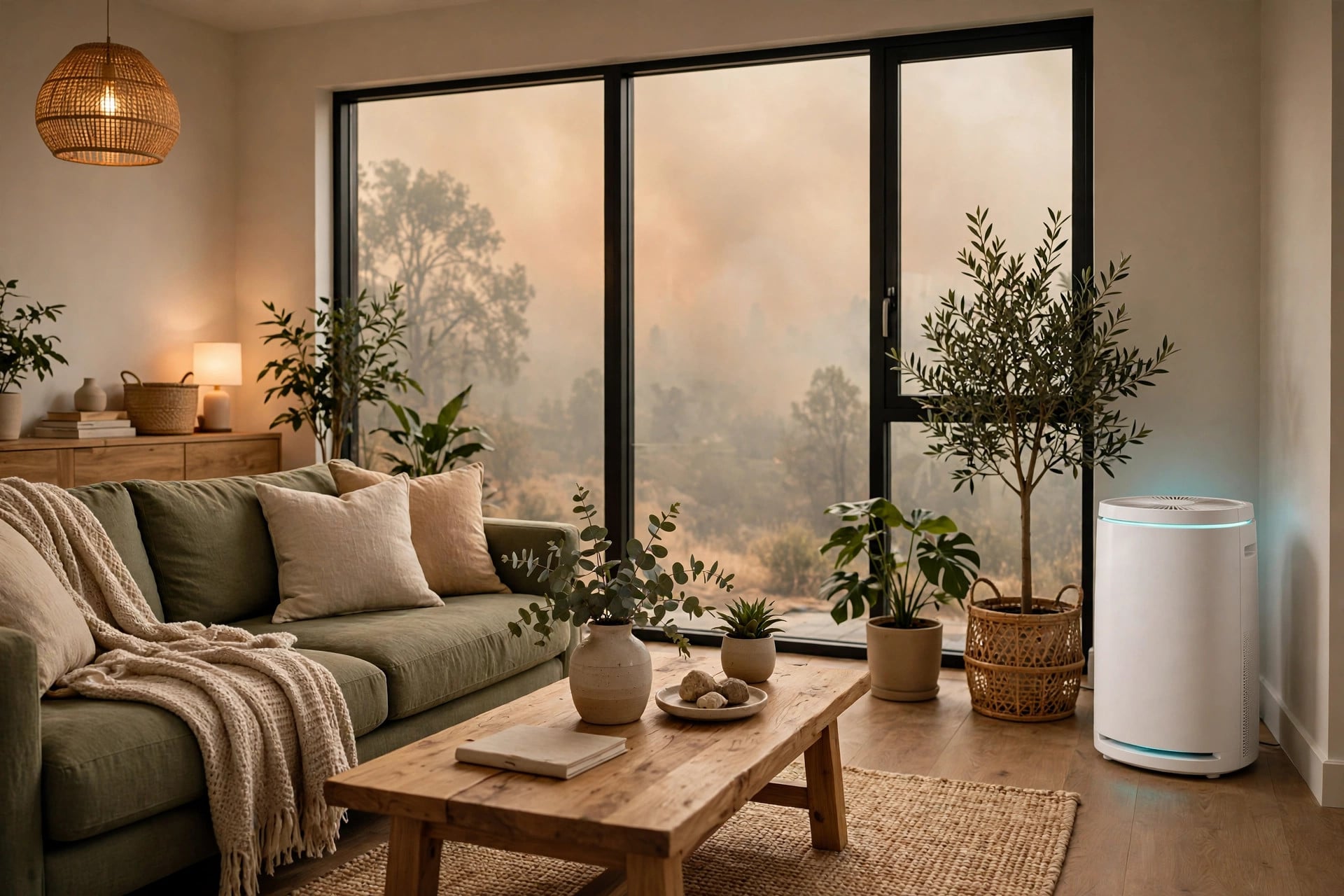
Best Air Purifiers for Wildfire Smoke 2026: 4 Picks That Actually Work
The short version: wildfire smoke is a particle problem first and a gas problem second, so the number that matters most is smoke CADR, not the marketing square footage. The Coway Airmega 400S has the highest smoke CADR here (328 CFM) and the most substantial carbon setup of the four, making it the strongest pick for large rooms. The Levoit Vital 200S-P ($189.99, 250 CFM smoke CADR, 23 dB noise floor) is the smart buy for bedrooms and mid-size rooms. The Blueair Blue Pure 311i Max (250 CFM, night mode) is the quietest smoke option at low fan speeds, and the Levoit Core 300-P (~$85-100, 141 CFM) is the cheapest way to get real filtration, one small room at a time.
How this guide works: we don't run a test lab, and nothing below is a reprinted review. We've read the published verdicts from review outlets, and synthesized them in our own words (key findings, and where the sources agree or disagree), with links to the originals. See "How we compiled this" below for the full method.
The prices
| Typical price | Smoke CADR | |
|---|---|---|
| Coway Airmega 400S | ~$650 (MSRP $749) | 328 CFM |
| Levoit Vital 200S-P | $189.99 | 250 CFM |
| Blueair Blue Pure 311i Max | ~$190-230 | 250 CFM |
| Levoit Core 300-P | ~$85-100 | 141 CFM |
Typical street prices, September 2026. Smoke CADR figures are the AHAM-verified numbers where published.
What wildfire smoke actually demands from a purifier
A few things worth knowing before you buy, because this is where marketing and reality diverge:
- Smoke CADR measures particle removal, not gas removal. Wildfire smoke is both: fine particles (PM2.5, which drive the health risk) and gases/VOCs (which drive the smell). A high smoke CADR means the purifier clears particles fast. Gas-phase removal is a separate question and depends on how much activated carbon the unit carries.
- None of these are heavy-carbon machines. That framing shows up in buyer searches, but the honest version is: this shortlist mostly uses modest carbon layers. The Airmega 400S has the most substantial dual Max2 carbon/HEPA setup of the four (Coway has not published exact carbon weight), and the rest handle light odors, not heavy gas loads. Don't buy expecting any of these to fully erase a strong smoke smell.
- Ignore the giant coverage claims. The Airmega 400S is marketed at up to 3,120 ft², but that's at one air change per hour, a number that's nearly useless during an active smoke event. Use AHAM's rough rule of thumb instead: the smoke CADR should be at least two-thirds of the room's square footage, and during smoke events higher air changes (around 4.8-5 ACH) are preferable. All room guidance below uses that standard.
- "Two mid-range purifiers beat one premium unit" is anecdotal, from a field comparison by one writer, not a universal lab result. That said, distributing filtration across rooms is genuinely reasonable advice for multi-room homes.
Coway Airmega 400S: Best overall for wildfire smoke
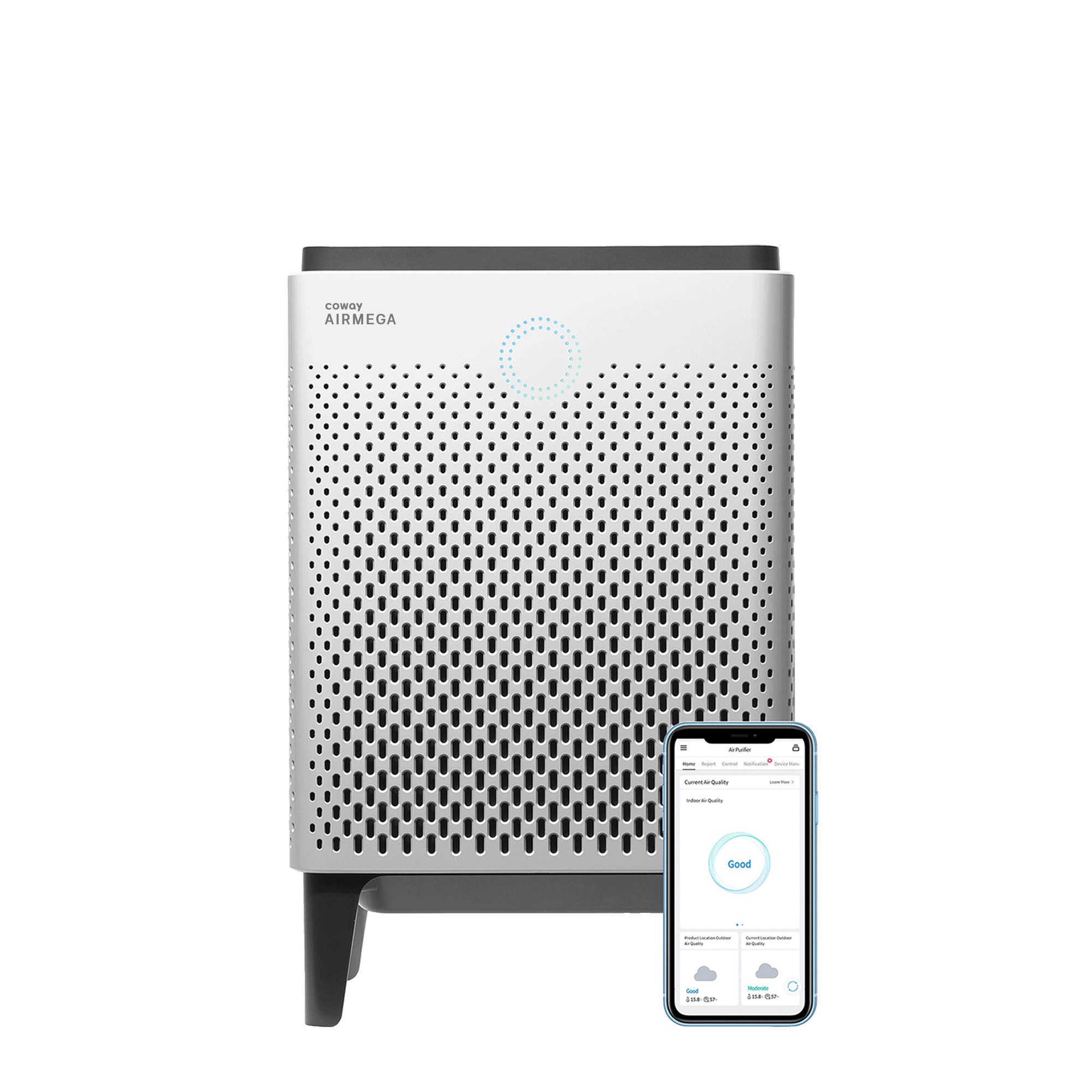
The Airmega 400S is the heavy lifter here. A 328 CFM smoke CADR is meaningfully above everything else in this guide, and Coway rates it for 1,560 ft² at 2 air changes per hour (or 3,120 ft² at the less meaningful 1 ACH). It pairs a Max2 filter (combined HEPA and activated carbon) with Coway's real-time air-quality display, auto mode, and app control. Noise runs 22-52 dBA, so it can get loud at the top end, exactly what you want available when smoke rolls in, and it can sit near 22 dBA on low.
What the reviews say
- SlashGear reviewed the 400S and found it a strong performer for large spaces, with the air-quality display and app being genuinely useful during heavy pollution events (review).
- Consumer Analysis rates the Airmega line highly overall, noting replacement Max2 filters run roughly $120-130 and that the 400 and 400S differ mainly in app/smart control (review).
- Breathe Quality gives a detailed teardown of the 400S's specs and filtration stages (review).
- One field anecdote (not lab data): a writer who lived through two wildfire seasons credits the Airmega line with making his home livable (first-person account).
Best for: large open rooms or anyone who wants the highest smoke CADR available in this class. The carbon setup is also the most credible of the four for odor.
Not for: tight budgets. At roughly $650 street with ~$129 yearly Max2 filter sets, it's a premium commitment.
Levoit Vital 200S-P: Best mid-size smart pick
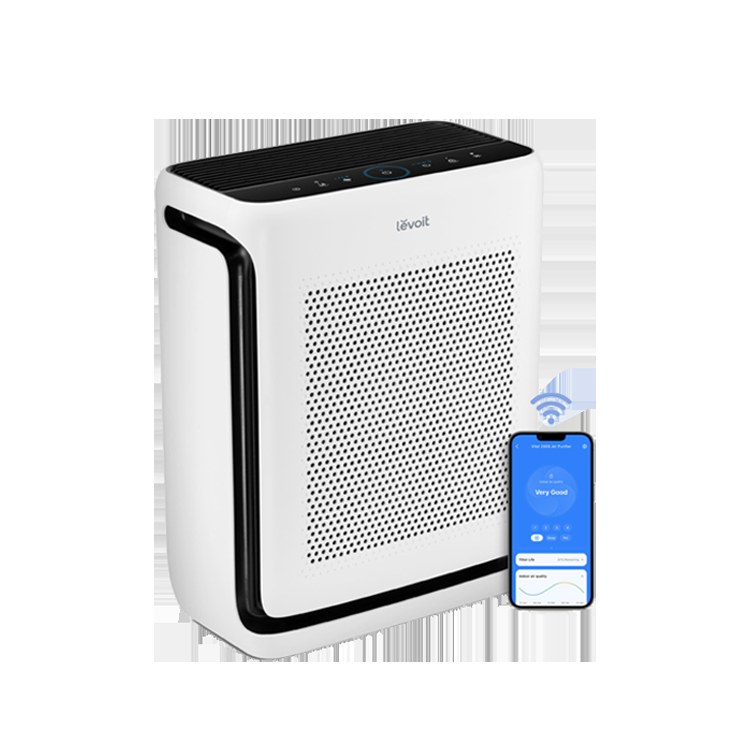
The Vital 200S-P hits a sweet spot: 250 CFM smoke CADR (per AHAM figures; Levoit's own page lists 242 CFM), app control, a PM2.5 sensor with true auto mode, a washable prefilter, and a 23 dB noise floor, all for $189.99. Replacement filters are a reasonable ~$49 roughly annually. It's the pick if you want app and sensor smarts without paying Coway money.
What the reviews say
- Breathe Quality reviewed the Vital 200S and found its auto mode and sensor responsiveness genuinely useful for pollution events (review).
- Garage Tested scored it 8.4/10, praising the balance of filtration power, quiet operation, and app features at the price (review).
- A smoke-focused roundup includes it among the better options for wildfire season (roundup).
Best for: bedrooms and mid-size rooms where you want the purifier to react to smoke on its own via the sensor, and to check/adjust it from your phone.
Not for: large open-plan spaces. At 250 CFM it's sized for roughly a 375 ft² room at 2 ACH, not a whole floor.
Blueair Blue Pure 311i Max: Quietest for bedrooms
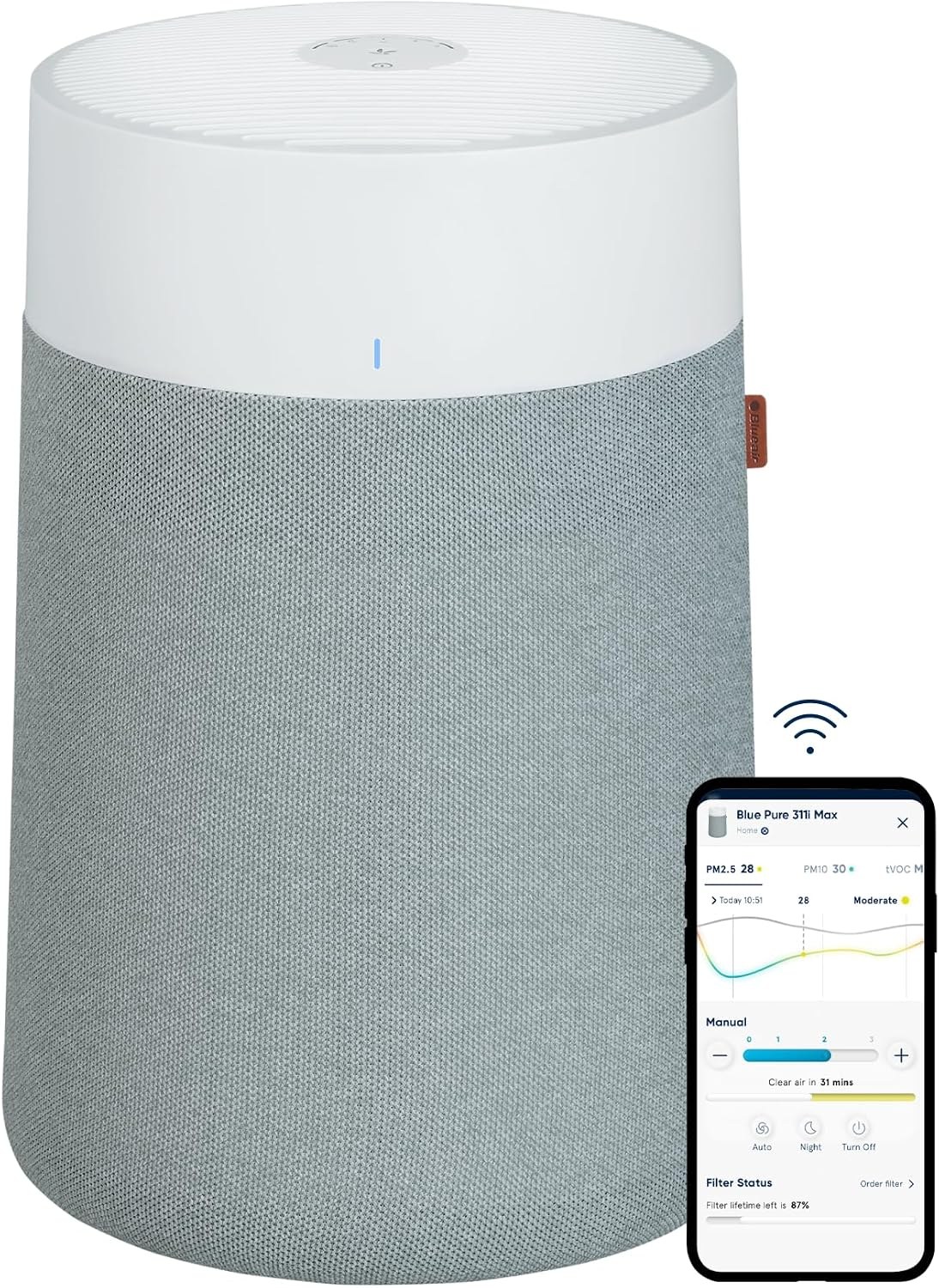
The 311i Max also clears 250 CFM of smoke CADR, which TechHive's measurements corroborate (their testing showed 250 CFM and effective cleaning of 387 ft² at 4.8 air changes per hour). Its edge is quiet operation at low fan speeds plus a dedicated night mode that dims the lights. One important technical note from TechGearLab: it does not use a conventional True HEPA filter; Blueair's HEPASilent system is an electrostatic/mechanical combination. It still earned their "Best Overall" nod with an 80 overall score (9.1 cleaning, 7.2 noise, 7.6 operating cost).
What the reviews say
- TechHive measured 250 CFM and found it effective in real-room testing, highlighting the night mode (review).
- TechGearLab named it Best Overall with strong cleaning scores, while noting the non-traditional filter tech (review).
- A point of disagreement: AirPurifierFirst compared it against the Winix T810 and preferred the Winix for filtration specifics (comparison).
Best for: bedrooms during smoke season, where quiet low-speed running and a dimmable display matter as much as raw CADR.
Not for: buyers who insist on conventional True HEPA, or heavy odor loads (its carbon layer handles light odors, not heavy gas loads).
Levoit Core 300-P: Best budget option
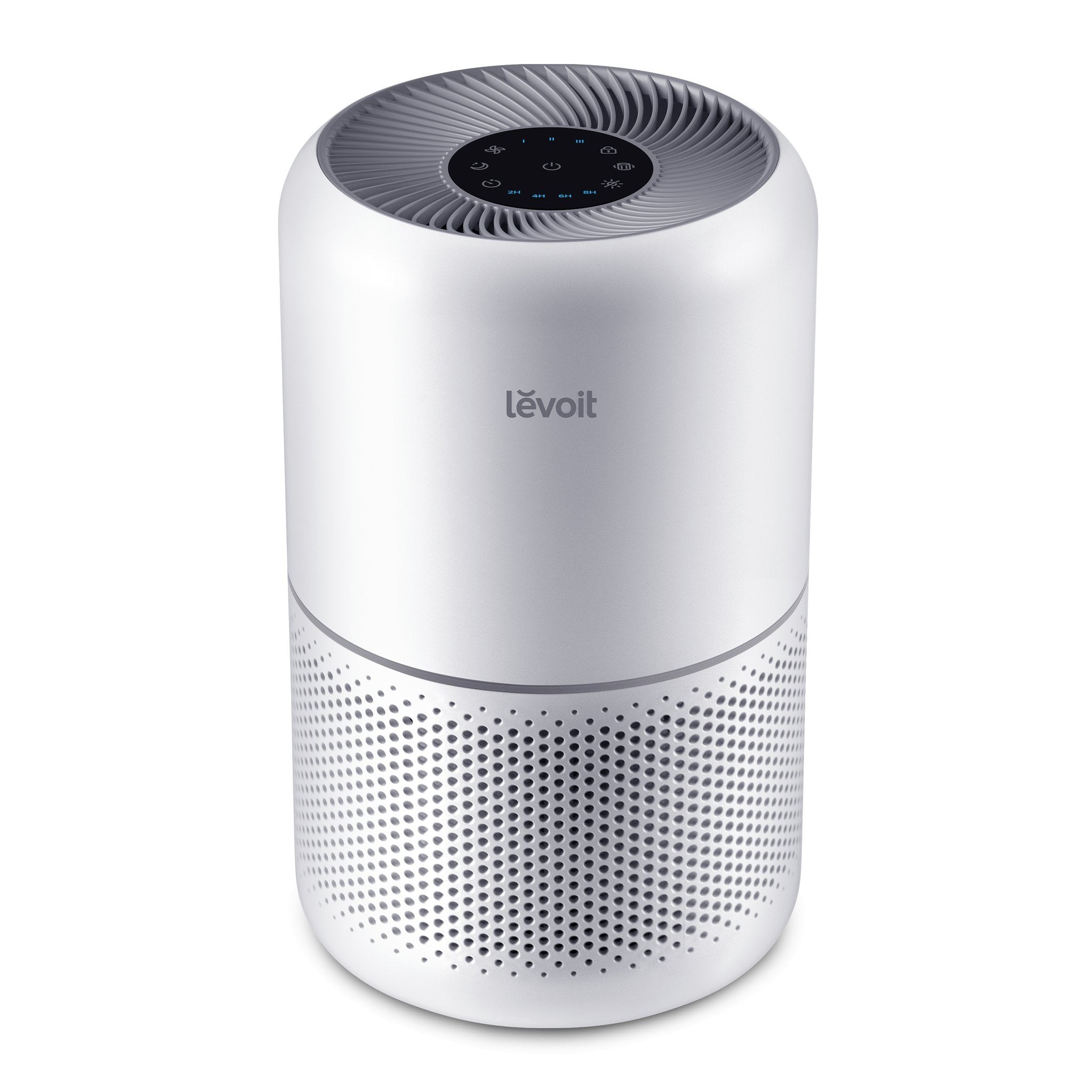
The Core 300-P is the cheapest credible answer: 141 CFM smoke CADR, a 24 dB sleep mode, and a street price around $85-100. At 141 CFM it's realistically a ~219 ft² room purifier at frequent air changes, so think one bedroom, not a living room. Caveats from the specs: no particle sensor and no true auto mode on the standard Core 300-P (ignore listings that claim otherwise), and its carbon layer is thin, so it will take the edge off light odors but won't neutralize heavy smoke smell. Replacement filters are sold in a 2-pack for $54.99 with a 6-8 month interval; there's also a dedicated smoke-remover filter variant ($39.99) worth knowing about for fire season.
What the reviews say
- TechGearLab scored it 71 and gave it "Best Bang for Your Buck," with strong marks for quiet operation at the price (review).
- Gizmodo noted a sale price of $84.98 alongside 4.7 stars from 108,000+ Amazon reviews (article).
- A 3-month field comparison of two Levoit models found the Core 300-P held its own in a small room (field report).
- It's a regular in smoke-focused roundups (roundup).
Best for: budget buyers who need smoke filtration in one bedroom, or a second unit to distribute across rooms.
Not for: large rooms, odor-heavy situations, or anyone who wants sensor-driven auto mode.
Head-to-head: the dimensions that matter
Smoke CADR: Airmega 400S (328 CFM) stands alone. The Vital 200S-P and 311i Max tie at 250 CFM. The Core 300-P trails at 141 CFM but costs a fraction of the others.
Realistic room size: Using AHAM's rough two-thirds rule at 2 ACH, the 400S handles about 490 ft², the 250 CFM pair handles about 375 ft² each, and the Core 300-P handles about 210 ft². During an active smoke event, size up or run higher fan speeds: targeting 4.8-5 ACH shrinks each room accordingly.
Carbon and odor: the 400S has the most substantial carbon setup; the other three use modest carbon layers aimed at light odors. For smoke gases, none of these is a heavy-carbon machine.
Noise: the Core 300-P (24 dB sleep) and Vital 200S-P (23 dB floor) are the quietest on paper; the 311i Max is the quietest in real-room low-speed use per reviewer consensus; the 400S is the loudest at full tilt, which is the price of moving the most air.
Smarts: the 400S and Vital 200S-P both have app control and particle sensors with auto modes. The 311i Max has an app and auto mode plus night mode. The Core 300-P has neither a sensor nor an app.
Running costs: Core 300-P filters are ~$41-55/year, the Vital 200S-P ~$49/year, the 311i Max ~$60-90/year (filter every 6-9 months), and the 400S ~$129/year. See our filter cost guide for the full three-year math.
Who should buy each one
- Get the Airmega 400S if: you have a large room or open-plan space and want the strongest smoke CADR and the most credible carbon setup in this group.
- Get the Vital 200S-P if: you want a mid-size room purifier with a real sensor, auto mode, and app control at a mid-range price.
- Get the 311i Max if: it's going in a bedroom and quiet low-speed running matters as much as the spec sheet.
- Get the Core 300-P if: budget is the binding constraint, or you want cheap units in multiple bedrooms. Consider the smoke-remover filter variant during fire season.
Frequently asked questions
Do air purifiers actually help with wildfire smoke?
Yes for the particle component, which is the main health concern. HEPA-type filtration captures the fine PM2.5 particles that make wildfire smoke dangerous. The gas/odor component is harder: only units with substantial activated carbon make a dent, and the machines here are particle-first. Run the purifier on high in a closed room for the best effect.
What smoke CADR do I need for my room?
A rough AHAM rule: the smoke CADR should be at least two-thirds of your room's square footage for 2 air changes per hour. During active smoke events, higher air changes (4.8-5 per hour) are preferable, which means sizing up or running the fan faster than you would for everyday dust.
Is the Coway Airmega 400S worth it over the 400?
They differ mainly in app/smart control, per Consumer Analysis. If you don't care about the app, the non-S 400 is the same filtration machine and sometimes cheaper. (Consumer Analysis)
Can the Core 300-P handle wildfire smoke?
In a small room, yes for particles: 141 CFM is real filtration. It won't cover a living room, and its thin carbon layer won't do much for the smell. During bad smoke weeks, the dedicated smoke-remover replacement filter is the better pick for this unit.
Do I need to replace filters more often during fire season?
Probably. Heavy smoke loads the filter faster. Watch the filter indicator and the air-quality readings rather than the calendar; if the purifier is working harder, the filter's life shortens.
How we compiled this
We don't run a lab. We read the published verdicts from review outlets and synthesize them in our own words, naming each source and linking to the original. For this guide we consulted SlashGear, Consumer Analysis, Breathe Quality, TechHive, TechGearLab, Gizmodo, Garage Tested, AirPurifierFirst, plus smoke-focused roundups from SmartMarketPicks and NorthShoreCrafts, and first-person field reports.
Where sources disagree, we say so: TechGearLab flags the Blueair's non-traditional filter tech even while naming it Best Overall, and AirPurifierFirst prefers the Winix T810 over the 311i Max for filtration specifics. Coverage isn't uniform: we couldn't verify current wildfire-specific testing from Wirecutter or RTINGS, and we note that gap rather than filling it in. CADR figures come from manufacturer specs and AHAM-published ratings; coverage guidance uses AHAM's rough sizing rules, not marketing square footage.
Our recommendations
- Best overall for smoke: Coway Airmega 400S. Highest smoke CADR, most substantial carbon, strongest reviewer track record.
- Best value: Levoit Vital 200S-P. Sensor, app, 250 CFM, and quiet for $189.99.
- Best for bedrooms: Blueair Blue Pure 311i Max. Night mode and genuinely quiet low-speed running.
- Best budget: Levoit Core 300-P. Real 141 CFM filtration for ~$85-100; one small room at a time.