 Solid-Reviews
Black Friday TV Deals 2026: 4 TVs to Watch (and Why Last Year's Models Win)
Black Friday TV Deals 2026: 4 TVs to Watch (and Why Last Year's Models Win)
The short version: Black Friday 2026 (November 27) is the best time to buy a 2025-model TV. The LG C5 OLED evo (55", ~$1,250 in September) remains the best all-around OLED value, and it's the one TV Tom's Guide gave a perfect score in 2025. The Samsung S90F OLED (55", ~$1,028-$1,100) is the brighter QD-OLED alternative with the best gaming spec sheet of the four, if you can live without Dolby Vision. The Hisense U8QG Mini-LED (55", ~$728) is the brightness bargain: measured HDR brightness that embarrasses TVs costing twice as much. And the TCL QM7K QD-Mini LED (65", ~$800) is the most screen per dollar here, a 65-inch set for less than most 55-inch OLEDs.
How this guide works: we don't run a test lab, and nothing below is a reprinted review. We've read the published verdicts from review outlets, and synthesized them in our own words (key findings, and where the sources agree or disagree), with links to the originals. See "How we compiled this" below for the full method.
The prices (September 2026)
| Typical street price | |
|---|---|
| LG C5 OLED evo, 55" | ~$1,250 |
| Samsung S90F OLED, 55" | ~$1,028-$1,100 |
| Hisense U8QG Mini-LED, 55" | ~$728 |
| TCL QM7K QD-Mini LED, 65" | ~$800 |
Street prices observed in September 2026 (sources below), already well below launch MSRP. Black Friday typically pushes these lower still; see "What discounts to expect" for last year's patterns.
How we compiled this
We synthesize verdicts from named review sources; we don't reprint their text. For this guide we consulted the TV reviews and TV-deal coverage from Tom's Guide, RTINGS, TechRadar, What Hi-Fi?, CNET, 9to5Google, and Digital Trends. Price figures are September 2026 street prices: the LG C5 55" at $1,249.99 from Walmart's listing, the Samsung S90F 55" at $1,027.93 via Smartprix's US price tracking (Target, out of stock at that price) with major retailers around $1,098, the Hisense U8QG 55" at $727.99 at Amazon and Best Buy per a September 2026 Verge deals roundup, and the TCL QM7K 65" at $799.99 per a September 2026 GadgetReview deal post.
Each product section names which outlets covered that model, with their verdict summarized in our own words and linked to the original page. Where the sources disagree, or where a spec detail changes the recommendation (like the S90F's panel lottery), we say so instead of smoothing it over. Coverage isn't uniform: we couldn't verify current Wirecutter coverage of any of these four models, and we captured RTINGS' verdict text but not a numeric score for the TCL QM7K, so we note those gaps rather than filling them in.
Why last year's models win Black Friday
Every November, the same pattern repeats: the new model year (2026 sets like the LG C6 and Samsung S90H) is on shelves at launch premiums, while retailers clear out the previous year's stock. The 2025 models below launched at $1,299 to $1,999 and are already 30-45% below that in September. Black Friday is when the clearing gets aggressive.
The other reason is how small year-over-year TV improvements have become. Tom's Guide compared the Samsung S90F against its predecessor the S90D and called it nearly a tie, with "no major leap in performance." Reviewers said the same about the LG C5 versus the C4: a brighter, sharper refinement, not a revolution. When the new model is 5-10% better and costs 50-80% more, last year's flagship on a Black Friday discount is the rational buy.
What discounts to expect (based on Black Friday 2025)
We can't know 2026's sale prices in advance, and any site quoting them as fact is guessing. What we can do is look at what these same models did last Black Friday, when they were the current models:
- LG C5 55": $1,196 at Amazon (TechRadar's early Black Friday roundup), down from a $1,999 launch price.
- Samsung S90F 65": $1,397.99-$1,497 at Amazon (TechRadar, Tom's Guide), down from $2,499.
- Hisense U8QG 55": $797.99 at Amazon (TechRadar), down from a $1,499 launch price.
- Samsung S90F (all sizes): hit a record low of $1,399.99 at Samsung's own store during the Super Bowl 2026 sales (TechRadar).
The reasonable expectation for Black Friday 2026: discounts in line with or deeper than those, since these are now prior-year models that retailers need to move. A 55" C5 in the $1,000-$1,150 range and a 55" S90F under $1,000 would fit the historical pattern, but treat those as expectations, not promises.
LG C5 OLED evo (55"): Best all-around OLED
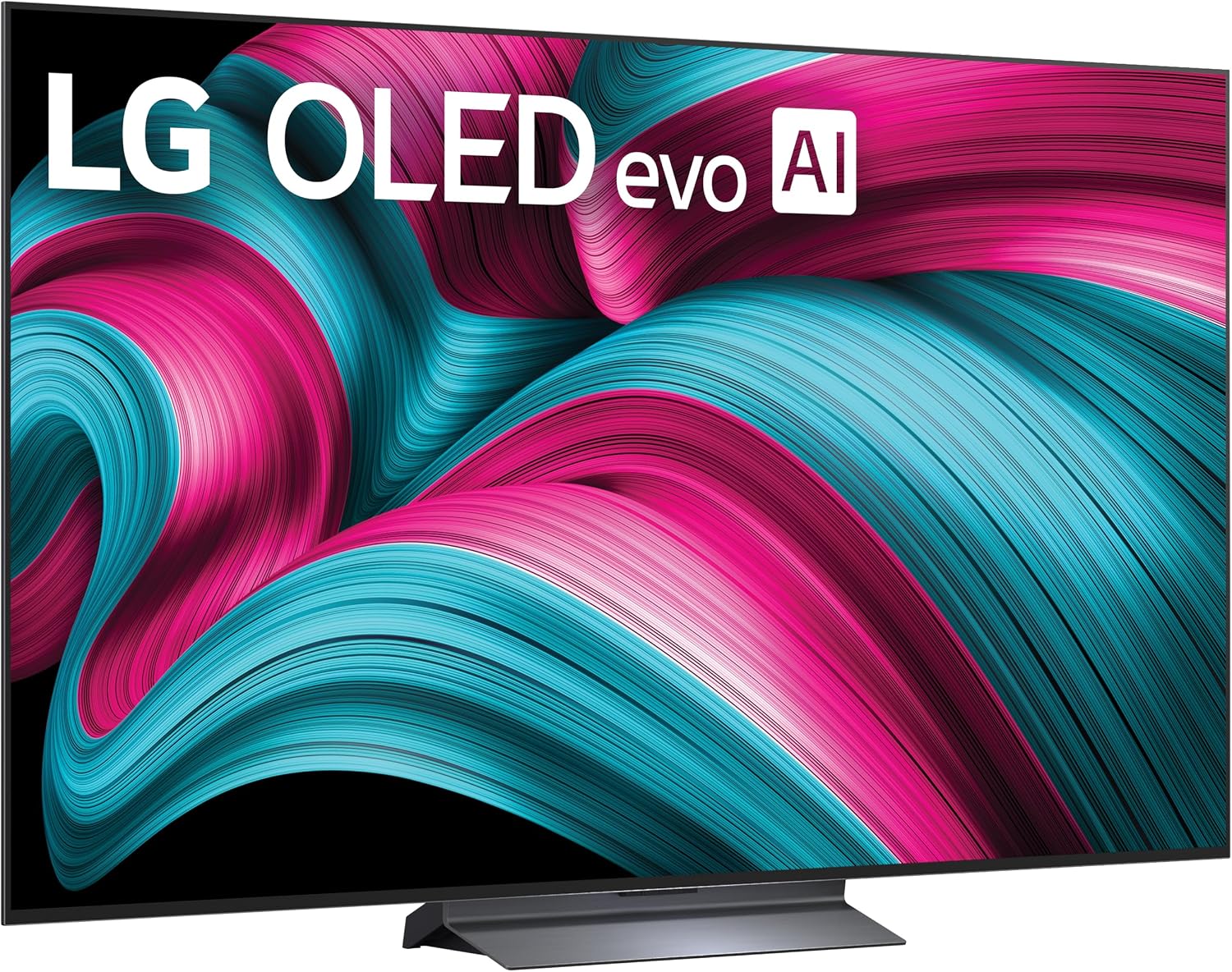
The LG C5 is the safest premium TV recommendation of this group, and the review record backs that up. It's the only TV Tom's Guide gave a five-star rating in all of 2025, with their senior TV editor calling it his favorite TV of the year for its performance, features, and value. It's a WOLED evo panel driven by LG's a9 AI Processor 4K Gen8, with a 120Hz native refresh rate (up to 144Hz with VRR), four full HDMI 2.1 ports, and Dolby Vision, HDR10, and HLG support on webOS 25.
What reviewers keep coming back to: perfect OLED blacks and contrast, noticeably improved brightness over the C4, and a gaming feature set (VRR, ALLM, G-Sync, FreeSync, Dolby Vision game mode) that needs no compromises. What Hi-Fi? gave the 55-inch model five stars and swept it into their 2025 Awards.
What the reviews say
- Tom's Guide, 5/5. Their senior TV editor named it his favorite TV of 2025, the only five-star TV they awarded that year, citing the balance of performance, features, and value. Their review said it "gets enough right to set the standard for OLED TVs in 2025."
- RTINGS, 85/100. "Excellent for mixed usage," with perfect black levels and vivid colors; bright enough to handle indirect light, though it struggles more with light sources directly facing the screen.
- CNET, 87/100. Called it a great way to watch movies, play games, or follow sports, while noting there's little separating it from the cheaper C4.
- TechRadar, 5/5. Praised excellent picture quality, superb gaming performance, and intuitive smart TV platform, while flagging it as only a slight upgrade over its predecessor.
- What Hi-Fi?, 5 stars. "Bright, punchy picture," flawless app support, and solid gaming features; a 2025 Awards winner.
Consensus: the default premium pick. Reviewers agree it's the best-balanced OLED of 2025, and agree the step up from the C4 is evolutionary, which is exactly why buying it discounted is the smart move.
Coverage note: we couldn't verify current Wirecutter coverage of the C5.
Honest drawbacks: No HDR10+ support, so Samsung-shot HDR content won't get dynamic metadata (Dolby Vision is covered, which matters more for Netflix and Disney+). It's not as bright as flagship OLEDs like the LG G5 or Samsung S95F, so very bright rooms still favor Mini-LED. Built-in audio is mediocre; plan on a soundbar. And CNET's caution is worth hearing: if a C4 shows up cheaper, there's little separating the two.
Best for: movie lovers and gamers who want the best-reviewed OLED of 2025 at a discount; anyone who watches a lot of Dolby Vision content.
Not for: very bright rooms (see the Mini-LEDs below), or buyers who need HDR10+.
- Panel: WOLED evo | Refresh: 120Hz native, up to 144Hz VRR | HDMI 2.1: 4 | HDR: Dolby Vision, HDR10, HLG (no HDR10+) | Smart: webOS 25 | Launch MSRP: $1,999 (55") | Typical price: ~$1,250 (55", September 2026)
Samsung S90F OLED (55"): Best QD-OLED for gamers
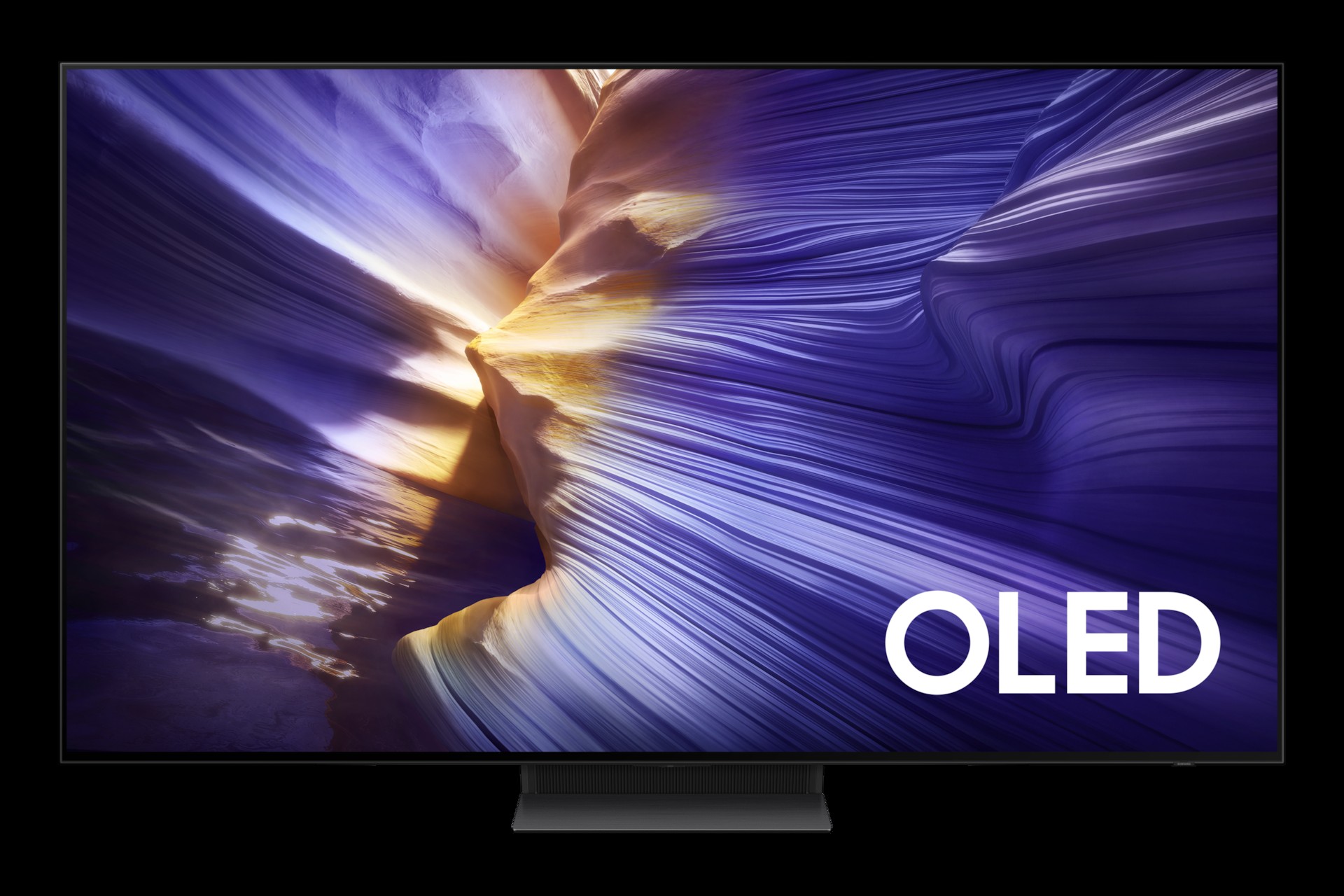
The Samsung S90F is the enthusiast's alternative to the LG C5: a QD-OLED panel (at 55, 65, and 77 inches) with wider color volume and higher brightness than WOLED, driven by Samsung's NQ4 AI Gen3 processor. It runs a 120Hz native panel up to 144Hz with VRR, has four HDMI 2.1 ports, FreeSync Premium Pro, and Samsung's typically excellent low input lag (around 9ms in Tom's Guide testing). Tom's Guide gave it an Editor's Choice award, with one editor calling it "my favorite TV of the year" and their "value pick of the year."
Two caveats define this TV. First, the panel lottery: only the 55", 65", and 77" sizes use QD-OLED; the 42", 48", and 83" sizes use standard WOLED panels. At 55 inches you're getting the good panel, but know the quirk exists. Second, no Dolby Vision, Samsung's long-standing refusal. It supports HDR10+ instead.
What the reviews say
- Tom's Guide, Editor's Choice. "Incredible picture performance for HDR movies, gaming, sports, and so much more," with wide viewing angles and brilliant contrast. The two knocks: no Dolby Vision support and a lackluster speaker system. Scored 94/100 in their QN90F comparison and 95/100 against the S90D.
- What Hi-Fi? (48" model), Picture 5/5, Features 5/5, Sound 3/5. "Bright, punchy" picture and flawless gaming specs, with sound the clear weak point.
- TechRadar, 5 stars. Called it "a true 2025 TV hero," noting it delivers much of the flagship S95F's performance for a more reasonable price.
- RTINGS. Reviewed the S90F; as with all Samsung OLEDs, confirmed no Dolby Vision support.
Consensus: the best gaming OLED of the four on paper, and reviewers agree the picture punches above its mid-range price. They also agree on the two caveats: no Dolby Vision, and weak built-in speakers.
Coverage note: we captured RTINGS' verdict but not a numeric score for the S90F; we couldn't verify current Wirecutter coverage.
Honest drawbacks: No Dolby Vision is the big one. If most of your watching is Netflix, Disney+, or Apple TV+ (all heavy Dolby Vision catalogs), you'll get HDR10 fallback instead of dynamic metadata. The panel lottery means you must buy the 55", 65", or 77" to get QD-OLED. No ATSC 3.0 tuner. Tizen is capable but ad-heavy compared to Google TV. And like the C5, the speakers are an afterthought.
Best for: gamers (PS5, Xbox, PC) who want the lowest input lag and best motion handling; buyers who want a brighter, more colorful OLED than the C5.
Not for: Dolby Vision devotees; anyone buying the 42", 48", or 83" size (different panel).
- Panel: QD-OLED (55"/65"/77"; WOLED at 42"/48"/83") | Refresh: 120Hz native, up to 144Hz VRR | HDMI 2.1: 4 | HDR: HDR10+, HDR10, HLG (no Dolby Vision) | Smart: Tizen | Samsung list: $1,799.99 (55") | Typical price: ~$1,028-$1,100 (55", September 2026)
Hisense U8QG Mini-LED (55"): The brightness bargain
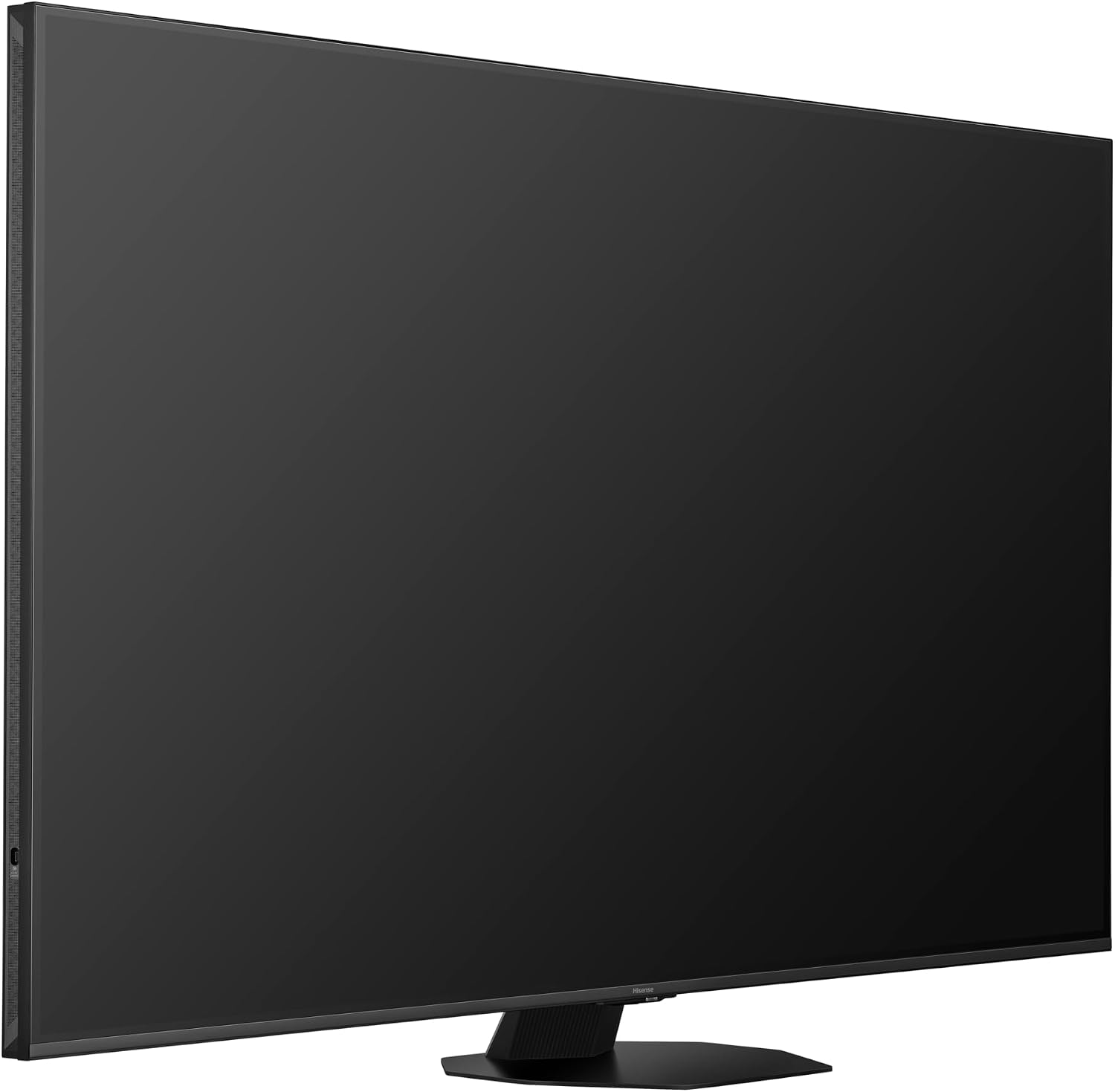
The Hisense U8QG is the "skip OLED and save a ton of money" pick. It's a Mini-LED TV with a native 165Hz panel, and Hisense claims up to 5,000 nits of peak brightness. Tom's Guide measured 2,908 nits in SDR and 3,916 nits in HDR on the 65-inch model. For context, that's roughly triple the HDR brightness they measured on the LG C5. You get Dolby Vision IQ, HDR10+, HDR10, and HLG (every major HDR format), FreeSync Premium Pro, VRR, ALLM, and Google TV.
The honest framing: this is a bright-room and HDR-impact TV, not an OLED replacement for dark-room movie purists. RTINGS calls it great for mixed usage with excellent black levels and exceptional HDR brightness, but only okay viewing angles.
What the reviews say
- RTINGS, 8.2/10 overall. Great for mixed usage: excellent black levels, exceptional HDR brightness, vibrant colors, and a full gaming feature set. Viewing angle is only okay, so it's not the pick for wide seating.
- Tom's Guide. Measured class-leading brightness (2,908 nits SDR, 3,916 nits HDR on the 65"), but flagged weaker-than-expected glare mitigation: brightness wins, reflections still show. Also notes the 55" model measures roughly half the brightness of the 65".
- TechRadar. Reviewed positively as a brighter, better all-around Hisense Mini-LED.
- 9to5Google. Praised the vibrant, inky panel and good Google TV software pairing, but found the anti-reflective coating didn't work super well, especially with dark content.
Consensus: unmatched brightness per dollar, with every reviewer agreeing it's the value Mini-LED to beat. They also converge on the weaknesses: average off-angle viewing and reflection handling that doesn't match the brightness story.
Coverage note: we couldn't verify current Wirecutter coverage of the U8QG.
Honest drawbacks: Only three HDMI ports, which gets tight with two consoles, a soundbar, and a streaming box. Off-axis viewing is average; the picture degrades from the side. The 55" panel is substantially dimmer than the 65" (Tom's Guide estimates roughly half), so the headline brightness numbers mostly apply to larger sizes. Built-in speakers strain on heavy bass. And Google TV is good, but Hisense's update track record is shorter than LG's or Samsung's.
Best for: bright living rooms, sports, and HDR spectacle on a budget; gamers who want 165Hz without OLED prices.
Not for: wide seating arrangements (viewing angles); dark-room purists who want OLED-level blacks.
- Panel: Mini-LED (VA) | Refresh: 165Hz native | HDMI 2.1: 3 | HDR: Dolby Vision IQ, HDR10+, HDR10, HLG | Smart: Google TV | Launch MSRP: $1,499 (55") | Typical price: ~$728 (55", September 2026)
TCL QM7K QD-Mini LED (65"): Most screen per dollar
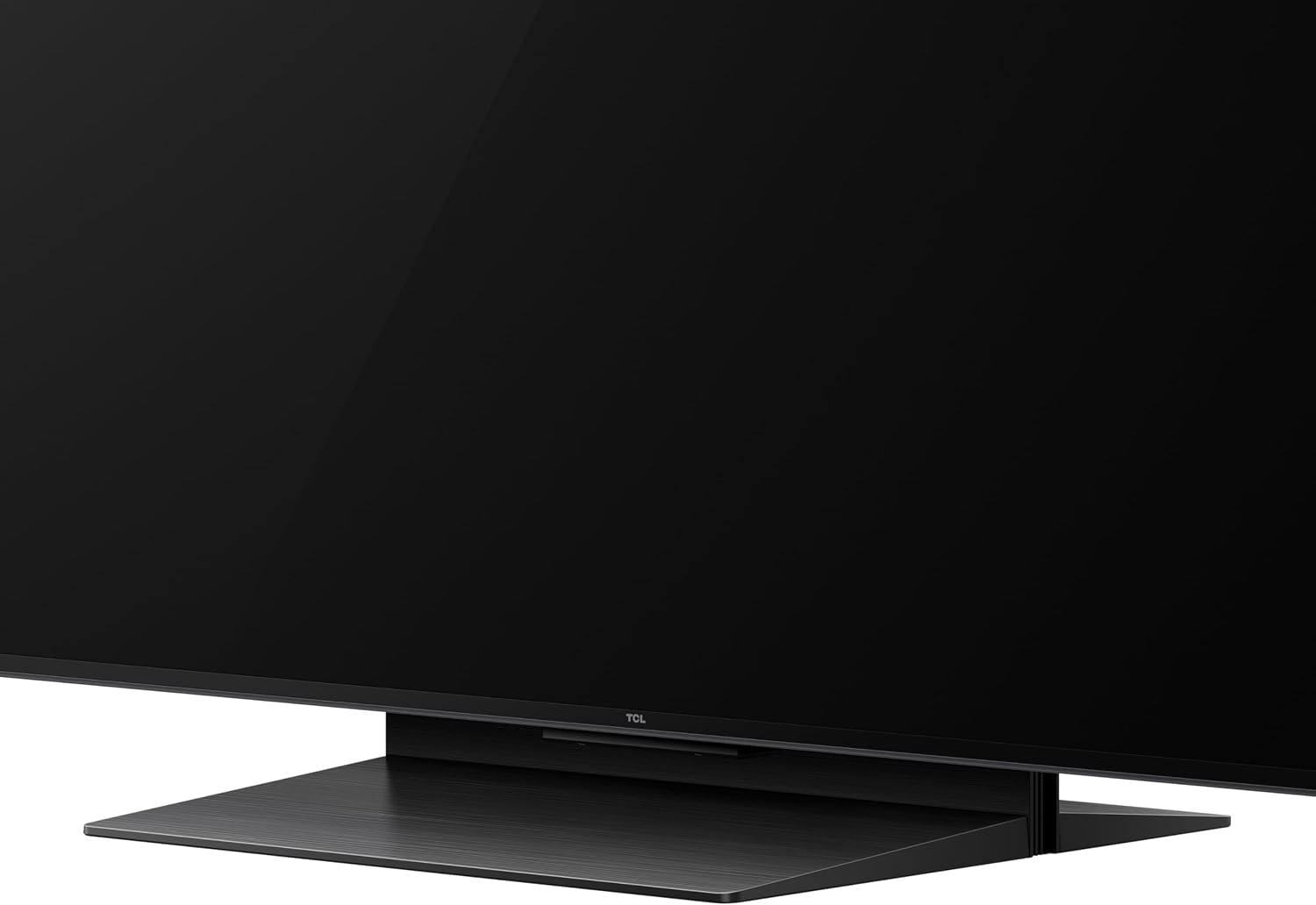
The TCL QM7K is the value play of this guide: a 65-inch QD-Mini LED TV for around $800, less than the 55-inch OLEDs above. You get a 144Hz native panel (up to 288Hz at 1080p via Game Accelerator), TCL's LD2500 precise dimming with up to 2,500 local dimming zones, Dolby Vision IQ, HDR10+, HDR10, HLG, Google TV, and FreeSync Premium Pro. It even won a Digital Trends Top Tech of CES 2025 award.
RTINGS calls it a very good mixed-usage TV: very bright in SDR, fantastic contrast, deep blacks even with bright highlights on screen. The catch they flag is noticeable blooming around bright objects, and HDR color accuracy that "color purists might want to get calibrated."
What the reviews say
- RTINGS. "A very good mixed-usage TV": very bright (especially SDR), fantastic contrast, decent HDR brightness even with noticeable blooming. Not very accurate in HDR out of the box.
- Tom's Guide. Pros: good color in SDR and HDR, impressive HDR brightness, excellent Google TV, high VRR capabilities. Cons: off-angle and bright-room viewing issues, only two HDMI 2.1 ports, poor audio. Their verdict: the low sale price makes up for the small missteps.
- Digital Trends, Top Tech of CES 2025 award. Highlighted the LD2500 dimming and Bang & Olufsen audio integration as standouts for the price.
Consensus: the price-to-performance champion. Reviewers agree nothing else at this price does this much, and agree the compromises (blooming, viewing angles, audio) are the price of admission.
Coverage note: we captured RTINGS' verdict text but not a numeric score for the QM7K; we couldn't verify current Wirecutter coverage.
Honest drawbacks: Noticeable blooming around bright objects on dark backgrounds; this is the Mini-LED tradeoff and the QM7K shows it more than the pricier QM8K. Only two of the four HDMI ports are full HDMI 2.1. Off-angle viewing is weak. And despite the Bang & Olufsen branding, the built-in audio disappoints: Tom's Guide lists "poor audio" as a con and owners report the same. Budget for a soundbar.
Best for: buyers who want the biggest good screen for the money; bright-room sports and gaming on a budget.
Not for: dark-room movie purists sensitive to blooming; anyone needing more than two HDMI 2.1 devices.
- Panel: QD-Mini LED (VA) | Refresh: 144Hz native, up to 288Hz at 1080p | HDMI 2.1: 2 of 4 | HDR: Dolby Vision IQ, HDR10+, HDR10, HLG | Smart: Google TV | Launch MSRP: $1,499 (65") | Typical price: ~$800 (65", September 2026)
Head-to-head: the dimensions that matter
Price: the TCL QM7K is in a different league on value: 65 inches for ~$800, undercutting the 55-inch models by hundreds. The Hisense U8QG (~$728 for 55") is the cheapest way into a premium picture. The Samsung S90F (~$1,028-$1,100) and LG C5 (~$1,250) cost more, but you're paying for OLED.
Picture quality: the two OLEDs win on contrast and black levels; that's physics, not opinion. Between them, the S90F's QD-OLED is brighter and more colorful, while the C5 counters with Dolby Vision support. The U8QG wins on sheer HDR brightness, measuring roughly 3x the C5's HDR output on the 65-inch size. The QM7K trades some refinement for size: great contrast, but the most blooming of the four.
Bright rooms: Mini-LEDs take this. The U8QG's brightness overpowers ambient light, and the QM7K is very bright in SDR. The S90F is the brightest OLED here and handles indirect light well. The C5 is fine with ambient light but struggles against light sources directly facing the screen, per RTINGS.
Gaming: all four are strong, but the S90F edges it with ~9ms input lag, four HDMI 2.1 ports, and 144Hz VRR. The C5 matches the port count and adds a Dolby Vision game mode. The U8QG's 165Hz panel is the fastest on paper (matters mostly for PC gaming). The QM7K is the weakest here only by comparison: two HDMI 2.1 ports and 288Hz limited to 1080p.
HDR formats: the LG supports Dolby Vision but not HDR10+; the Samsung is the mirror image (HDR10+, no Dolby Vision). The Hisense and TCL support everything. If you mostly watch Netflix, Disney+, or Apple TV+, Dolby Vision support favors the LG, Hisense, and TCL.
Smart platform: Google TV (Hisense, TCL) is the most app-complete and neutral. LG's webOS 25 is polished with five years of promised updates. Samsung's Tizen is capable but carries more ads and no Dolby Vision app support quirks to worry about beyond the panel itself.
Audio: none of these have good built-in sound. Every reviewer across all four models flags the speakers as a weakness, and the B&O branding on the TCL doesn't save it. Budget $150-$300 for a soundbar regardless of which you pick.
Who should buy each one
- Get the LG C5 if: you want the best-reviewed OLED of 2025 and watch a lot of Dolby Vision content. Buy the LG C5 OLED evo
- Get the Samsung S90F if: you're a gamer who wants the brightest, most colorful OLED panel and don't care about Dolby Vision. Buy the Samsung S90F OLED
- Get the Hisense U8QG if: your room is bright and you want maximum HDR punch per dollar. Buy the Hisense U8QG Mini-LED
- Get the TCL QM7K if: you want the biggest screen for the money and can live with some blooming. Buy the TCL QM7K QD-Mini LED
Frequently asked questions
Should I buy a 2025 TV or wait for a 2026 model on Black Friday?
Buy the 2025 model. Year-over-year TV improvements are incremental (reviewers found little separating the S90F from the S90D, or the C5 from the C4), while the price gap on Black Friday is enormous: prior-year flagships routinely sell for 40-50% off launch MSRP as retailers clear inventory for the new models. A discounted 2025 flagship beats a full-price 2026 mid-range set.
OLED or Mini-LED: which is better for a bright living room?
Mini-LED, specifically the Hisense U8QG here. OLEDs win on black levels and contrast, but even the brightest OLED can't match a good Mini-LED's light output in a sunlit room. The U8QG measured around 3,900 nits HDR on the 65-inch size, roughly triple the LG C5. If your TV faces windows, go Mini-LED.
Does Samsung's lack of Dolby Vision actually matter?
It depends on what you watch. Netflix, Disney+, and Apple TV+ all stream heavily in Dolby Vision; on the S90F you'll get HDR10 instead, which lacks scene-by-scene metadata. Reviewers call it the S90F's biggest weakness. If you're a movie buff with those subscriptions, the LG C5 (or either Mini-LED, which support both formats) is the safer pick. If you mostly game or watch sports, it matters much less.
What size TV should I buy?
The old rule still holds: buy the biggest your room and budget allow. At typical 8-10 foot viewing distances, 65 inches is the sweet spot for 4K; at 55 inches you're leaving immersion on the table unless the room is small. That's part of the TCL QM7K's appeal: it's the only 65-inch set in this guide anywhere near $800.
Are Black Friday TV "was" prices real?
Often not. Retailers inflate reference prices so the discount looks bigger. Ignore the "was" and compare against the street price history: the LG C5 55" launched at $1,999 and sold around $1,250 in September 2026, so a Black Friday price near $1,100-$1,150 is a genuine deal while "$1,999 was, now $1,499" is not. Also watch for "derived" models: Black Friday doorbusters with similar model numbers but fewer dimming zones or ports.
Do I need a soundbar with these TVs?
Yes. Every review outlet flagged weak built-in audio on all four of these TVs, and owners agree. Even a basic $150-$200 soundbar is a bigger upgrade to movie night than spending the same money on a step-up TV model.
Our recommendations
- Best overall: LG C5 OLED evo. The best-reviewed TV of 2025, now 35%+ below launch. The default pick if you don't have a specific reason to choose otherwise.
- Best for gamers: Samsung S90F OLED. QD-OLED color, ~9ms input lag, four HDMI 2.1 ports. Just know about the Dolby Vision gap before you buy.
- Best for bright rooms: Hisense U8QG Mini-LED. Absurd brightness per dollar, every HDR format, 165Hz panel.
- Best value, biggest screen: TCL QM7K QD-Mini LED. 65 inches for ~$800 with flagship-adjacent specs. Accept the blooming and buy the soundbar.