 Solid-Reviews
Best Smart Light Bulbs 2026: 4 Picks From Premium to Budget
Best Smart Light Bulbs 2026: 4 Picks From Premium to Budget
The short version: The Philips Hue White and Color Ambiance A19 remains the bulb to beat if you want lighting that simply never misbehaves. The deepest ecosystem, the most reliable mesh, and Matter support via the Hue Bridge. Hate hubs? The LIFX SuperColor A19 screws straight into Wi-Fi with arguably the best color in the business and no bridge on your shelf. On a budget, the Wyze Bulb Color gives you 1,100 lumens and 16 million colors for the price of a fancy coffee. And the Nanoleaf Essentials A19 is the Matter-native pick that talks to every major ecosystem. Just check which SKU you're buying (more below).
How this guide works: we don't run a test lab, and nothing below is a reprinted review. We've read the published verdicts from review outlets, and synthesized them in our own words (key findings, and where the sources agree or disagree), with links to the originals. See "How we compiled this" below for the full method.
The prices
| Typical price | |
|---|---|
| Philips Hue White and Color Ambiance A19 | ~$55/bulb (starter kits ~$200) |
| LIFX SuperColor A19 | ~$35-$50/bulb |
| Wyze Bulb Color | ~$10/bulb |
| Nanoleaf Essentials A19 | ~$20-$25/bulb |
Typical street prices, September 2026. The Wyze is the per-bulb bargain; Hue is a whole-system investment, so buy a starter kit, not single bulbs.
How we compiled this
We synthesize verdicts from named review sources; we don't reprint their text. For this guide we consulted the smart-bulb roundups and reviews from Engadget, PCWorld, Digital Trends, CNN Underscored, and TechRadar, the smart-home site SmartHomeReview, independent tester Thehomepicker (Medium), plus aggregated Amazon owner ratings for each model.
Each product section names which outlets covered that model, with their verdict summarized in our own words and linked to the original page. Where the sources disagree, or where owners report something the labs didn't catch, we say so instead of smoothing it over. Coverage isn't uniform: we couldn't verify current smart-bulb coverage from Wirecutter, RTINGS, or Tom's Guide, and we note that gap rather than filling it in.
What smart bulb buyers should look for
- Hub or no hub. Hue needs its Bridge for the full experience; LIFX and Wyze are Wi-Fi and hubless; Nanoleaf's needs depend on the SKU. A hub is one more box on the shelf, but it also means your bulbs don't crowd your Wi-Fi.
- Brightness. Look for 800+ lumens (60W equivalent) for main lighting; 1,100 lumens is genuinely bright.
- Color quality. Spec sheets all say "16 million colors." Reviewers consistently find real differences in saturation and accuracy. Reds and blues are where cheap bulbs show their limits.
- Ecosystem and Matter. Check the bulb works with your platform. Matter-certified bulbs pair natively with Apple Home, Alexa, Google, and SmartThings.
- White temperature range. For daily lighting (not party colors), a wide tunable-white range (2700K–6500K) matters more than RGB party tricks.
Philips Hue White and Color Ambiance A19: Best ecosystem and reliability
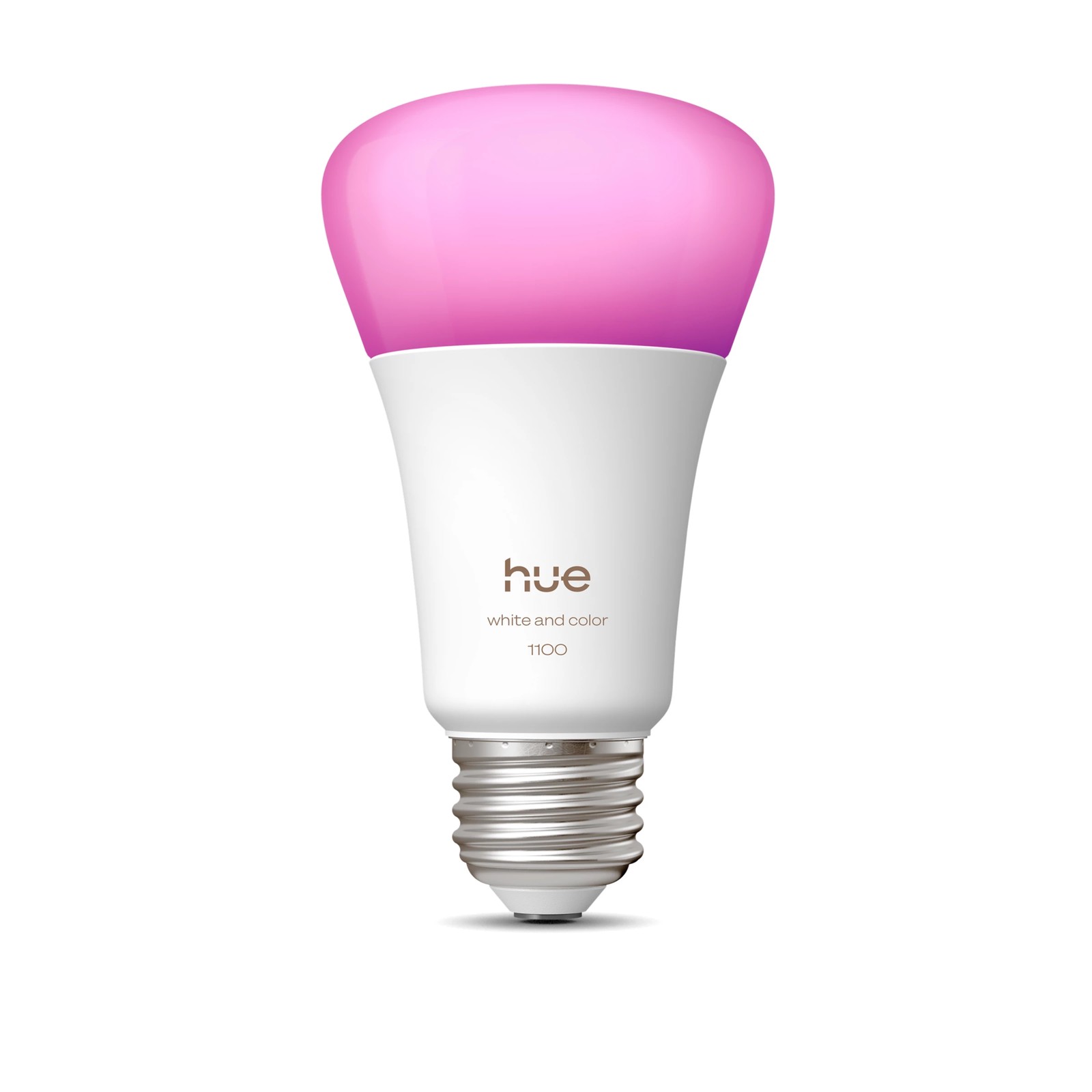
The Hue A19 color bulb is the premium default for a reason: it's the bulb reviewers describe as the one that "just works, every single time." The Hue Bridge creates its own Zigbee mesh, bulbs relay for each other instead of crowding your Wi-Fi, which is why Hue stays responsive in houses full of bulbs where Wi-Fi bulbs start dropping. The Bridge also enables Matter, so the system plays natively with Apple Home, Alexa, Google, and SmartThings. Color quality, dimming smoothness, scenes, and third-party app support are all best-in-class.
The price is the whole argument against it: bulbs cost more than double the budget picks, and the Bridge is an added cost if you don't buy a starter kit. For one or two bulbs it's hard to justify; for a whole home, reviewers say the reliability is worth it, and then the costs really add up.
What the reviews say
- PCWorld, best color smart bulb. Praises excellent light quality and smooth dimming and the unmatched Hue ecosystem; notes Bluetooth covers up to 10 devices without a Bridge, but the Bridge is needed for rooms and full features.
- Digital Trends, best smart bulb kit. Calls the starter kit "the best by far," highlighting range, responsiveness, and extensive third-party app compatibility across Alexa, Siri, and Google Assistant.
- SmartHomeReview, best smart ecosystem. Highlights stable connectivity, advanced automations, and remote access via the Bridge, with Matter compatibility positioning it as a long-term investment.
- Thehomepicker (Medium), "if you want smart lighting that your non-techy family won't complain about, the kind where everything just works, every single time, the Hue is still the one to beat."
- CNN Underscored. Found it hard to justify the cost for casual buyers ("more than double the price of the next most expensive competitor"), while conceding the reliability may be worth it for whole-home setups.
- Amazon owners: roughly 4.5/5, with reliability and the app experience leading praise.
Consensus: the reliability and ecosystem story is unanimous. Nobody disputes Hue is the safest, most capable system. The only disagreement is the price: reviewers split on whether it's worth it for small setups.
Coverage note: we couldn't verify current coverage from Wirecutter, RTINGS, or Tom's Guide.
Honest drawbacks: Expensive per bulb, and the Bridge is a required extra unless you buy a starter kit (Bluetooth alone caps at 10 devices and no rooms). You're buying into a walled garden, albeit the nicest one.
Best for: whole-home setups, households that mix iPhones and Echo speakers, anyone who values reliability over upfront cost.
Not for: one-or-two-bulb setups (the Bridge cost is hard to justify), or strict budgets.
- Brightness: 800 lumens | Colors: 16M + tunable white | Connectivity: Zigbee via Hue Bridge (Matter-enabled), Bluetooth | Hub: Hue Bridge for full features | Typical price: ~$55/bulb, starter kits ~$200
LIFX SuperColor A19: Best hubless color
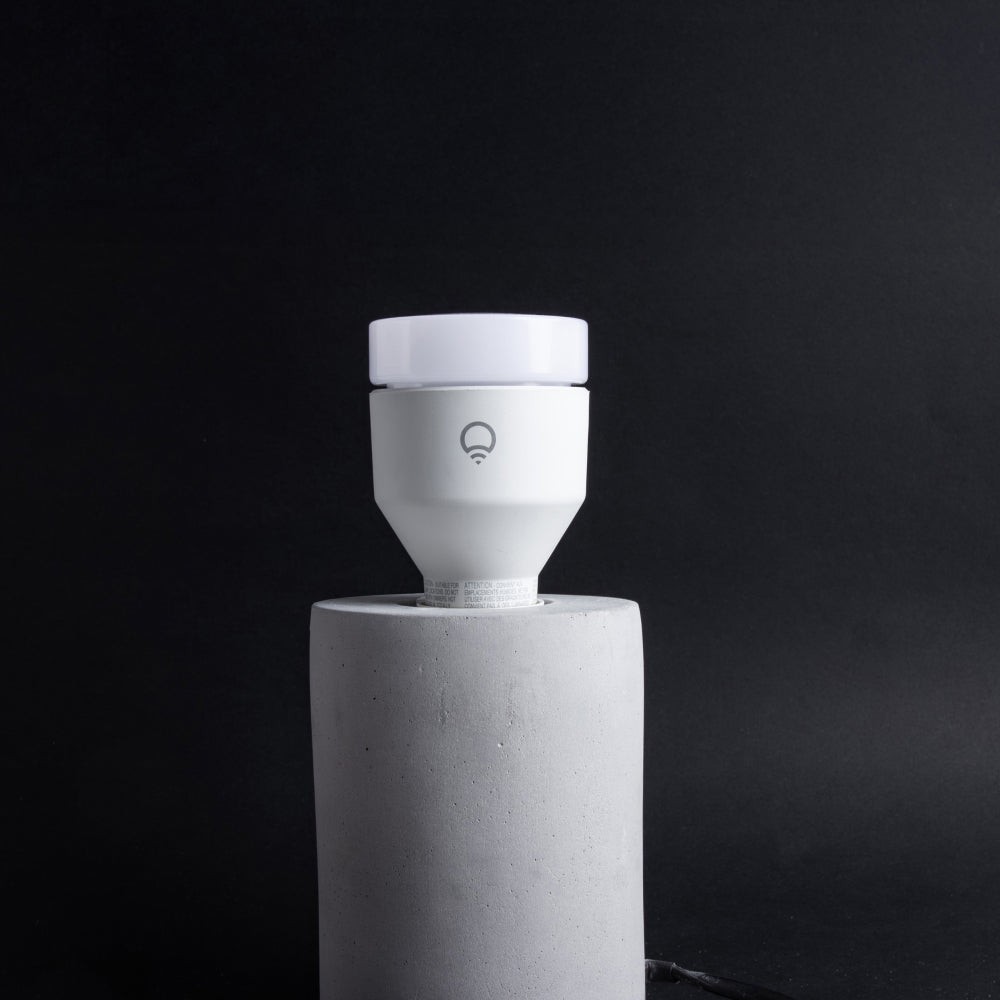
The LIFX SuperColor A19 is for people who hear "hub required" and lose interest. It connects directly over Wi-Fi, screw it in, connect, done, with no bridge, no gateway, no extra hardware. And the colors are the real story: multiple reviewers say LIFX produces better color than Hue, with deeper reds and more vivid greens. At 1,100 lumens it's genuinely bright, the app is widely called the slickest in the category, and it works with Alexa, Google Assistant, HomeKit, and SmartThings with no subscription fees.
The trade is Wi-Fi dependency: every bulb is another device on your router, and in a house already juggling dozens of devices you may see occasional dropouts. Note we could not verify Matter support for this model from the review sources. Treat it as a Wi-Fi bulb with native platform integrations, not a Matter bulb.
What the reviews say
- Engadget, best smart light bulb overall, runner-up. Praises striking, saturated colors, easy setup, compatibility with Alexa, Google, and HomeKit, and "the slickest" mobile app tested. Notes it's Wi-Fi only. No hub option even if you wanted one.
- Thehomepicker (Medium). The surprise pick: "LIFX produces better colors than Philips Hue. The reds are deeper. The greens are more vivid. At 1,100 lumens with Wi-Fi built in, it just works out of the box."
- SmartHomeReview, best no-bridge lighting. Highlights extremely bright output, rich accurate colors, and no hub required.
- Amazon owners: roughly 4.3/5, with color quality and brightness the top praise.
Consensus: the color-quality crown and the hubless convenience are the two things every source agrees on. Reviewers also agree Wi-Fi congestion is the thing to watch in big deployments.
Coverage note: we couldn't verify current coverage from Wirecutter, RTINGS, or Tom's Guide, and we couldn't verify Matter support from primary sources. Don't buy it for Matter.
Honest drawbacks: Wi-Fi only, so a crowded network can cause dropouts, and there's no hub fallback. At ~$35–50 per bulb it's cheaper than Hue (no bridge to buy) but far from budget. Expandability is thinner: LIFX doesn't have Hue's universe of switches, sensors, and fixtures.
Best for: color enthusiasts who refuse to buy a hub, renters lighting a few rooms.
Not for: big deployments on crowded Wi-Fi (no hub fallback), or Matter-required setups.
- Brightness: 1,100 lumens | Colors: 16M + tunable white | Connectivity: Wi-Fi (2.4GHz) | Hub: none | Typical price: ~$35–50/bulb
Wyze Bulb Color: Best budget
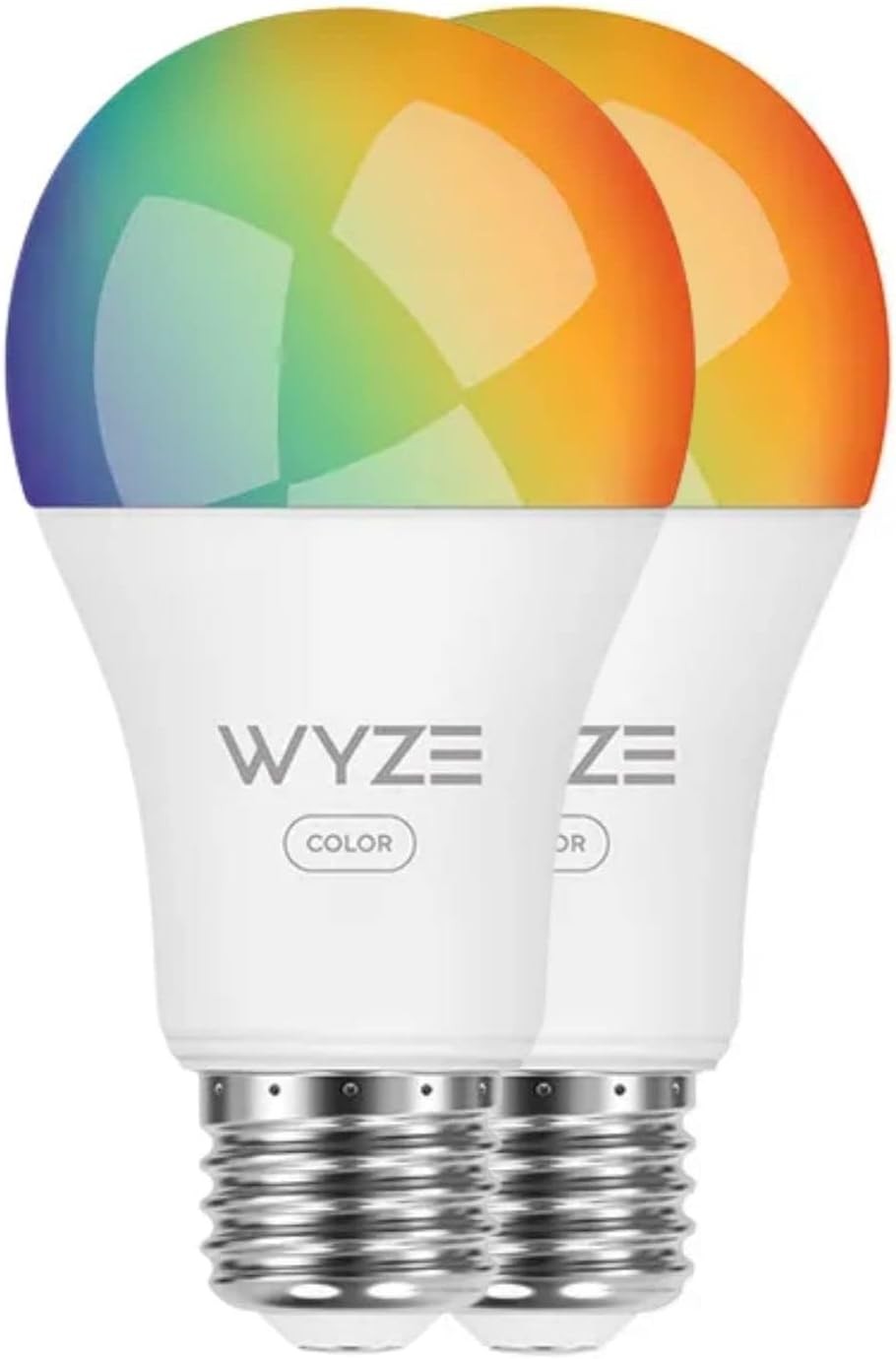
The Wyze Bulb Color costs about as much as a fancy coffee and delivers 1,100 lumens, 16 million colors, and a surprisingly solid app with vacation mode and sleep routines built in. No hub, no bridge. You can light an entire apartment for less than the cost of two Hue bulbs.
Reviewers are blunt about what you give up: color accuracy isn't on Hue or LIFX's level, reds lean orange, blues drift purple, and side by side with a premium bulb you can tell. There's no Apple HomeKit support, and it's 2.4GHz Wi-Fi only. If neither is a dealbreaker, it's the obvious value pick.
What the reviews say
- PCWorld, best color smart bulb, runner-up. Praises the very low price, no hub requirement, and surprising brightness; notes it can't match the Hue lighting ecosystem.
- Digital Trends, best budget bulb. "At under $10 (and under $40 for a four-pack), the Wyze bulb is a no-brainer," with bright output and saturated colors.
- Thehomepicker (Medium). "if you're not putting a Wyze next to a Hue for comparison, you probably won't care."
- CNN Underscored. Tested it among 10 bulbs; we couldn't verify its exact placement from the excerpt.
- Amazon owners: roughly 4.4/5, with value dominating the praise.
Consensus: the value pick is undisputed. Reviewers agree nothing else gives you this much bulb per dollar. They also agree the color accuracy gap is real, just not bothersome unless you're comparing side by side.
Coverage note: we couldn't verify current coverage from Wirecutter, RTINGS, or Tom's Guide, and we couldn't verify the warranty terms from a primary source. Check Wyze's current warranty before buying.
Honest drawbacks: No HomeKit. Apple-household buyers should look elsewhere. Color accuracy lags the premium bulbs. It's 2.4GHz-only, and Wyze sells it in multi-packs, so single-bulb buyers pay a small premium per bulb.
Best for: budget whole-apartment lighting, Alexa/Google households.
Not for: Apple Home users (no HomeKit), or anyone who'll compare color side by side with a premium bulb.
- Brightness: 1,100 lumens | Colors: 16M + tunable white (2700K–6500K) | Connectivity: Wi-Fi (2.4GHz) | Hub: none | Ecosystems: Alexa, Google (no HomeKit) | Typical price: ~$10/bulb
Nanoleaf Essentials A19: Best Matter-native pick
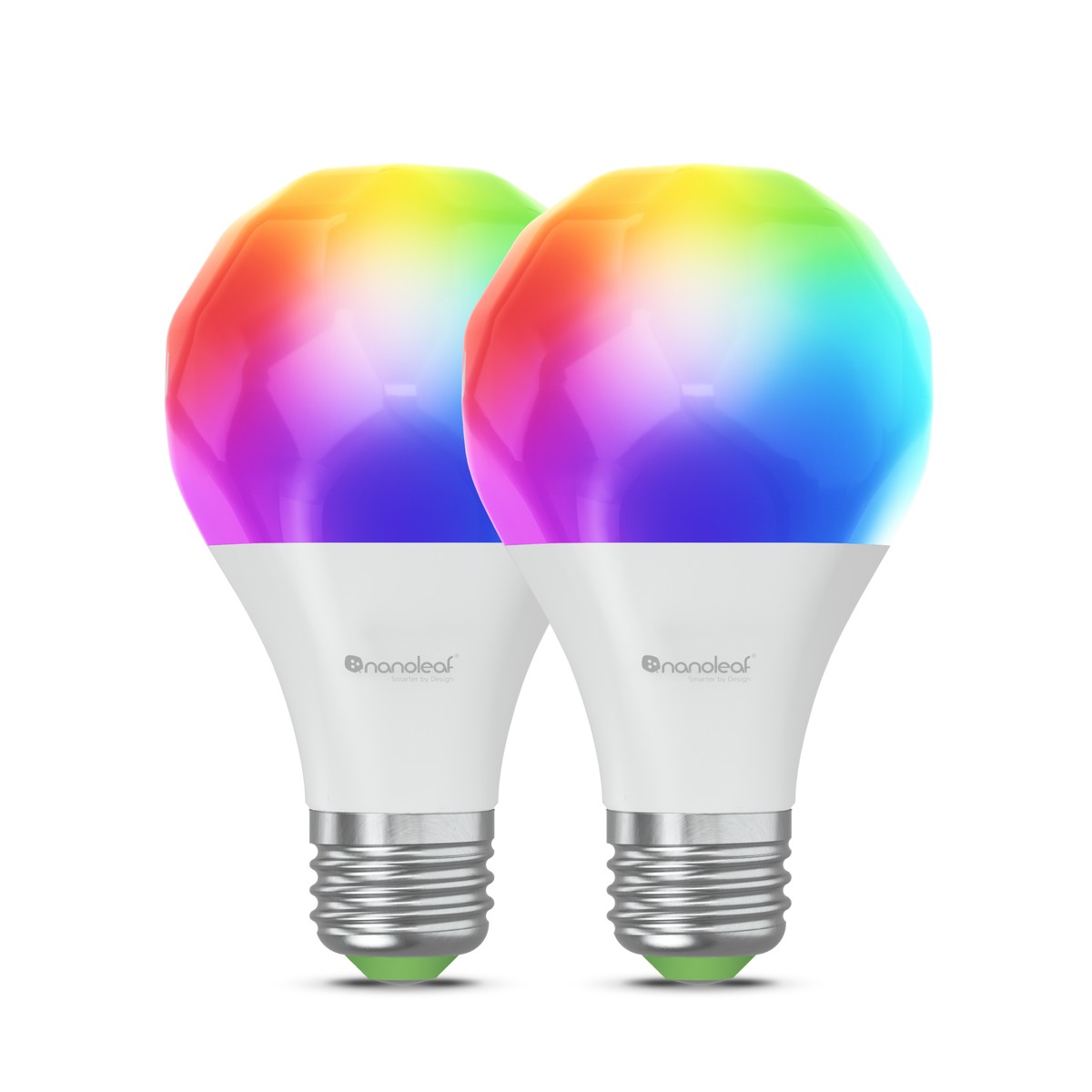
The Nanoleaf Essentials A19 is the future-proof pick: a Matter-certified bulb that pairs natively with Apple Home, Alexa, Google Home, and Samsung SmartThings. At up to 1,100 lumens with 16M+ colors and tunable white, it's bright and capable, with the distinctive faceted design Nanoleaf is known for.
Read this before buying: the SKU matters. There are two different Essentials A19 generations in the wild: an older Matter-over-Thread version (reviewed by TechRadar, which requires a Thread border router like a HomePod mini or Nest Hub) and the current Matter-over-Wi-Fi SKU sold on Amazon (connectivity listed as Wi-Fi + Bluetooth + Matter, no border router needed). Check the listing's connectivity specs before you buy so you know which one you're getting.
What the reviews say
- TechRadar. Reviewed the Matter-over-Thread version: 4.5/5 on price and design, 1100-lumen max brightness, Matter + Thread + Bluetooth, noting the Thread border router requirement.
- Amazon owners: roughly 4.2/5 on the current Wi-Fi SKU, with Matter setup ease and brightness leading praise.
Consensus: reviewers treat it as the straightforward Matter choice. Native everywhere, no vendor lock-in. The main caveat in every source is the two-SKU confusion, which we've spelled out above.
Coverage note: coverage is thinner than the Hue/LIFX/Wyze picks; we couldn't verify current reviews from Wirecutter, RTINGS, Tom's Guide, Engadget, PCWorld, or Digital Trends.
Honest drawbacks: The two-SKU situation is genuinely confusing and Nanoleaf hasn't made it easy. Verify the listing. The Nanoleaf app is fine but not as polished as LIFX's or Hue's. And while Matter guarantees compatibility, advanced features (like Nanoleaf's Screen Mirror) still need Nanoleaf's own app.
Best for: Matter-first smart homes, anyone who wants native compatibility with every ecosystem.
Not for: buyers who won't check the SKU (two generations with different connectivity are in the wild).
- Brightness: up to 1,100 lumens (806 avg) | Colors: 16M+ RGBCW, 2700K–6500K | Connectivity: Matter over Wi-Fi (current SKU) or Matter over Thread (older SKU, needs border router) | Hub: none (Wi-Fi SKU) | Typical price: ~$20–25/bulb
Head-to-head: the dimensions that matter
Price: the Wyze (~$10/bulb) is the value king; Nanoleaf (~$20-$25) is mid-range; LIFX (~$35-$50) is premium without a hub; Hue (~$55/bulb plus a Bridge) is the expensive whole-home system.
Brightness: LIFX, Wyze, and Nanoleaf hit 1,100 lumens. Hue's A19 is 800 lumens, still plenty for most rooms, but the dimmest of the four on paper.
Hub: Hue needs its Bridge for the full experience (Bluetooth alone caps at 10 bulbs). The other three are hubless.
Matter: Nanoleaf is Matter-certified; Hue gets Matter via the Bridge. LIFX's Matter support couldn't be verified, and Wyze has none.
HomeKit: Hue, LIFX, and Nanoleaf all work with Apple Home. Wyze does not.
Color quality: reviewers give LIFX the edge on saturated color and Hue the edge on dimming smoothness and consistency. Wyze is good enough unless compared side by side.
Who should buy each one
- Get Hue if: you're lighting a whole home and want the system that never misbehaves. Buy a starter kit. Buy the Hue A19
- Get LIFX if: you want the best color with no hub on your shelf. Buy the LIFX SuperColor A19
- Get Wyze if: you want the most bulb per dollar and don't need HomeKit. Buy the Wyze Bulb Color
- Get Nanoleaf if: you want a Matter-native bulb that works everywhere. Check the SKU's connectivity first. Buy the Nanoleaf Essentials A19
Frequently asked questions
Do smart bulbs work with a regular wall switch?
They fit and light up, but a switched-off bulb is offline: no app, no voice, no schedules. If your household flips physical switches, either leave them on or add a smart switch / Hue dimmer instead.
How many Wi-Fi bulbs can my router handle?
Most modern routers handle dozens of devices, but each Wi-Fi bulb (LIFX, Wyze, Nanoleaf Wi-Fi) is one more always-on client. Past ~20–30 smart devices, a hub-based system like Hue (Zigbee mesh, off your Wi-Fi) starts to make real sense.
What's the difference between Matter-over-Wi-Fi and Matter-over-Thread?
Both speak Matter, so both work with every major ecosystem. Wi-Fi bulbs connect straight to your router: no extra hardware. Thread bulbs join a low-power mesh and need a Thread border router (HomePod mini, Apple TV 4K, Nest Hub, Echo 4th gen). Thread scales better; Wi-Fi is simpler to start.
Do smart bulbs save energy?
The LED itself is efficient. That's where the savings are versus incandescents. The "smart" part saves energy only if you use it: schedules, motion-based shutoff, and dimming. A smart bulb left on 24/7 saves nothing.
Our recommendations
- Whole-home reliability: Philips Hue A19. Buy a starter kit, not single bulbs.
- Hubless with the best color: LIFX SuperColor A19, no bridge, no regrets.
- Budget: Wyze Bulb Color. Unbeatable per bulb, skip if you need HomeKit.
- Matter-native: Nanoleaf Essentials A19. Check the SKU's connectivity before buying.