 Solid-Reviews
Best Video Doorbells Without a Subscription (2026)
The short answer
If you refuse to pay a monthly fee for your own doorbell footage, buy the eufy Security Video Doorbell E340. It stores video locally on 8GB of onboard storage, needs no HomeBase or subscription, shoots dual 2K (one camera for faces, one for packages), and owners rate it 4.2/5 across 4,500+ Amazon reviews. The Wyze Video Doorbell v2 at ~$59.98 is the budget pick, but it's wired-only. The Arlo and Ring doorbells below are included so you understand exactly what the subscription trap costs you. Both need a paid plan before they record anything useful.
The prices
| Hardware | 3-year cost | |
|---|---|---|
| eufy Security Video Doorbell E340 | ~$120-$170 | ~$120-$170 (no fees, ever) |
| Wyze Video Doorbell v2 | ~$59.98 | ~$75 (add a microSD card) |
| Arlo Video Doorbell 2K (2nd Gen) | ~$49.99 | ~$340 ($8/month single-camera plan) |
| Ring Battery Doorbell | ~$59.99 | ~$210 ($49.99/year Protect) |
Hardware prices, October 2026. The subscription is the product's real price: over three years the "cheap" Arlo costs more than the eufy and Wyze combined.
By price
| Price band | Pick and price |
|---|---|
| Under $50 | Arlo Doorbell 2K (~$49.99) |
| Under $60 | Wyze Doorbell v2 (~$59.98) |
| Under $60 | Ring Battery Doorbell (~$59.99) |
| Under $300 | eufy E340 (~$120-$170) |
Related guides: Best Home Security Cameras 2026 and Best Smart Plugs 2026.
Why subscriptions are the whole story
Most major doorbell brands sell you hardware cheap and rent the recordings back to you. Ring's Protect plan starts at ~$5/month per device ($49.99/year), Arlo Secure starts at $8/month for one camera. That's $150–$290 over three years, often more than the doorbell itself cost. Worse, with Ring and Arlo there's no local storage fallback: cancel the plan and you get live view and notifications, but no saved clips, no person alerts, and no way to review who rang the bell yesterday.
eufy and Wyze break the model: eufy keeps footage on the device itself, and Wyze records 24/7 to a microSD card you buy once. Everything below is judged first on that axis, because it's the one that determines what the doorbell actually costs you.
eufy Security Video Doorbell E340: Best overall
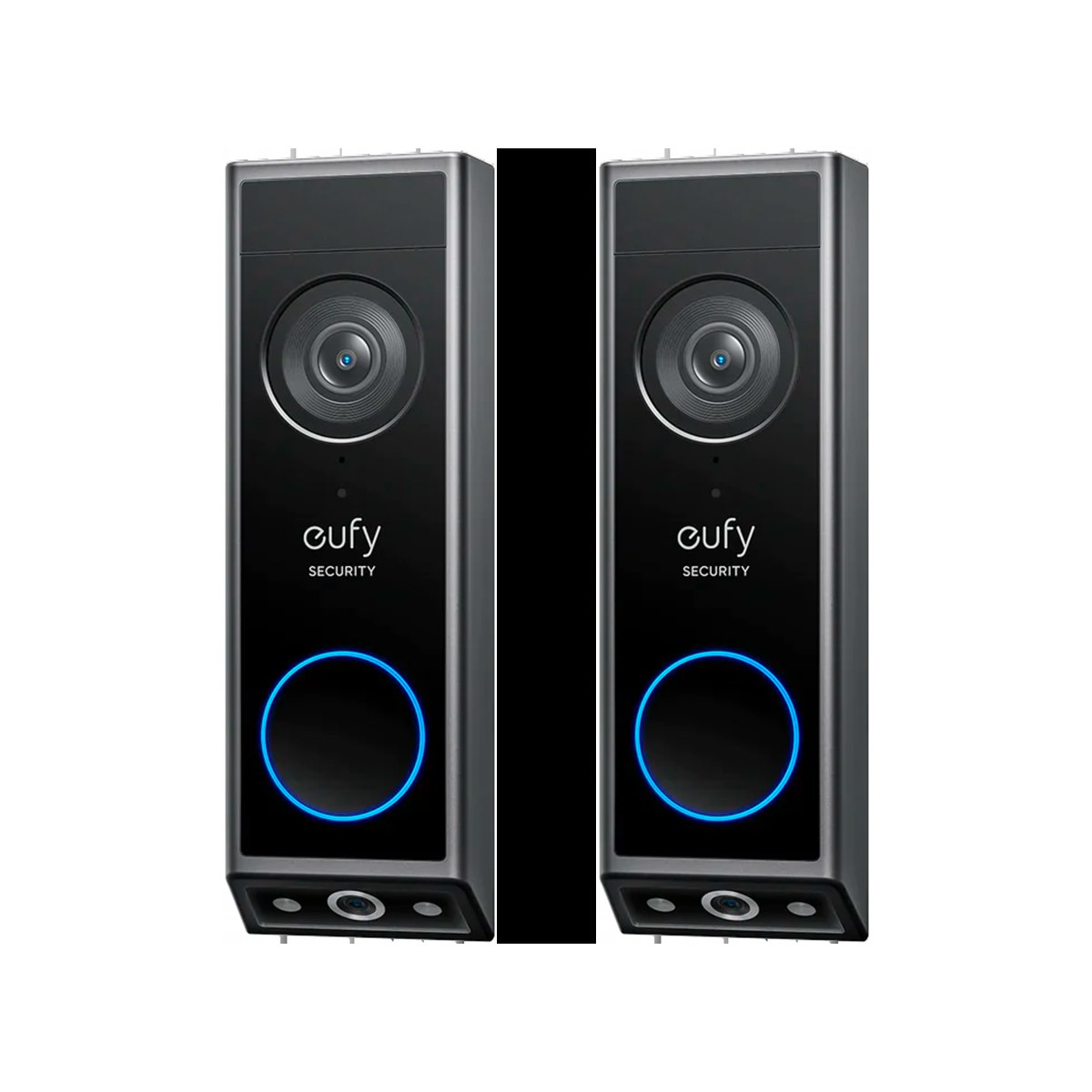
The E340 is the rare doorbell that treats "no subscription" as a design requirement rather than a missing feature. Its signature trick is a dual-lens layout: a front-facing 2K camera aimed at visitors' faces and a downward-facing camera covering the doorstep for packages, both in 2K, both with color night vision out to about 16 feet. Review consensus (TechGearLab scored it 78/100) puts its video quality above most single-lens rivals, and its motion/person/package detection runs on-device, so nothing essential is paywalled.
Key specs
- Video: dual 2K (front + downward package camera), color night vision
- Storage: 8GB onboard local storage (eMMC, non-expandable); no cloud plan needed
- Power: rechargeable 6,500mAh battery or wired to existing doorbell wiring
- Connectivity: 2.4GHz Wi-Fi; works with Alexa and Google Assistant
- Rating: ~4.2/5 across 4,500+ Amazon reviews
- Approx. price: ~$120-170 (about $120 street; $169.99 direct from eufy)
What owners consistently report: clear day and night image quality, genuinely useful package-arrival/pickup alerts, and straightforward installation. The free local storage is the headline. Eufy advertises the math themselves: avoiding a $5–10/month cloud plan saves hundreds over the device's life.
The honest drawbacks. First, the elephant: eufy's privacy record. In late 2022, security researcher Paul Moore demonstrated that eufy cameras uploaded thumbnails and facial-recognition data to eufy's AWS servers even with cloud storage disabled, and The Verge showed live streams could be played through a media player without authentication. Anker (eufy's parent company) admitted the failures, said the encryption gaps were fixed, and later paid a $450,000 settlement with the New York Attorney General, agreeing to proper encryption and regular penetration testing. If cloud-privacy hygiene matters to you, that history deserves a paragraph in your decision. Practically: battery life reports are mixed (high-traffic doors drain it faster), some owners report flaky connection stability, 8GB is modest and can't be expanded, it's 2.4GHz-only, and there's no HomeKit support.
Best for: anyone who refuses to pay a monthly fee and wants the most capable doorbell without one.
Not for: privacy purists (see eufy's 2022 history above), or anyone who wants HomeKit.
Wyze Video Doorbell v2: Best budget pick
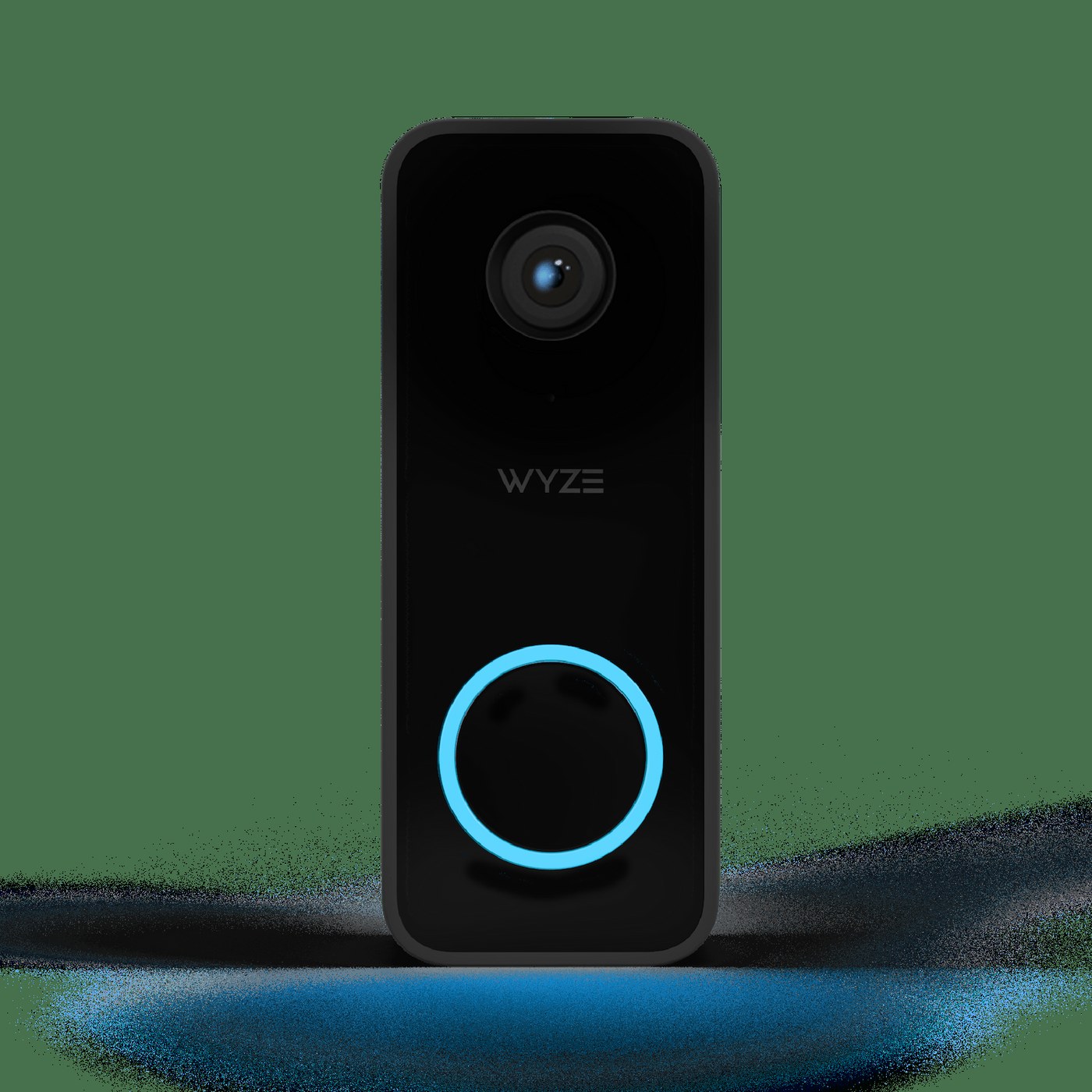
At $59.98, 2K video with free 24/7 local recording is a combination nobody else offers. The Doorbell v2 records 2048×1536 video with a 166.8° diagonal head-to-toe field of view to a microSD card (up to 256GB, sold separately), and even without a card Wyze still gives you free 12-second clips on doorbell presses. Person and package alerts require the Cam Plus plan ($2.99/month per camera), but motion and sound alerts are free.
Key specs
- Video: 2K (2048×1536), color night vision, 166.8° diagonal FOV
- Storage: microSD up to 256GB for local 24/7 recording; free cloud clips for presses
- Power: wired only. Requires existing 16–24V AC doorbell wiring (no battery option)
- Connectivity: 2.4GHz Wi-Fi, IP65 weatherproof; works with Alexa, Google Assistant, IFTTT
- Rating: ~4.3–4.4/5 across several hundred owner ratings
- Approx. price: $59.98 (Wyze direct, plus shipping)
What owners consistently report: absurd value for the money, easy guided installation, and compatibility with existing mechanical chimes via the included chime controller. For a wired replacement on a tight budget, review consensus says nothing touches it.
The honest drawbacks. It's wired-only, full stop: no existing doorbell wiring means no Wyze v2, which rules it out for many renters. The 2.4GHz-only radio keeps the price down but can be finicky on congested networks. The microSD slot sits on the side of the unit where anyone can pop the card out. Reviewers at Tom's Guide and Android Police both flag the placement as a real theft-of-footage risk. Reviewers also note the 2K video quality is decent rather than class-leading, and there's no wireless chime support. Finally, Wyze's own security history: in February 2024 an outage led to ~13,000 users being shown other customers' camera thumbnails (1,500+ tapped through), following a similar 2023 incident, which is partly why the product's value proposition is local storage, not cloud trust.
Best for: wired homes on a tight budget that want 2K and 24/7 recording for almost nothing.
Not for: renters or anyone without existing doorbell wiring; also not for anyone who wants person/package alerts without a subscription.
Arlo Video Doorbell 2K (2nd Gen): Only for Arlo households
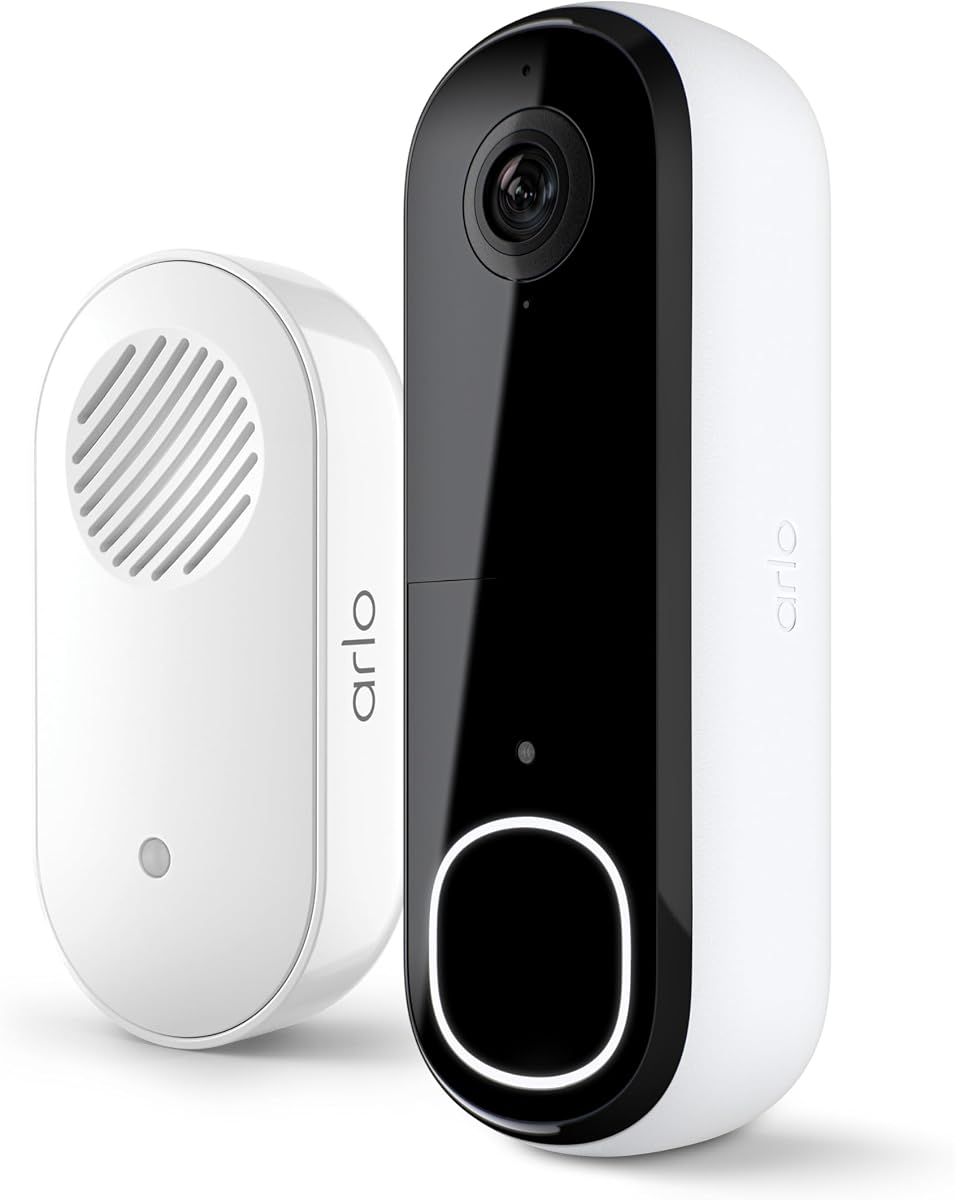
The Arlo 2K doorbell has genuinely good hardware: a 1944×1944 HDR square sensor with a 180° diagonal head-to-toe view, 12x digital zoom, an integrated siren, and battery or wired power. It earns ~7.8/10 composite scores from review aggregators, and it typically sells for around $49.99, less than half the cost of the eufy. So why is it third? Because without Arlo Secure ($8/month for a single camera, $13/month unlimited), you lose cloud recordings, 30 days of video history, activity zones, person/package detection, and video previews in notifications. It's a subscription doorbell wearing a no-subscription price tag.
Key specs
- Video: 2K HDR (1944×1944), 180° diagonal FOV, black-and-white night vision (~20 ft)
- Storage: cloud only. No local storage; effectively requires Arlo Secure plan
- Power: rechargeable battery or 8–24V AC wiring
- Connectivity: 2.4GHz Wi-Fi; Alexa, Google, IFTTT
- Rating: ~7.8/10 composite (review aggregators); owners rate it solidly
- Approx. price: ~$49.99 typical
What owners consistently report: crisp image quality, fast notifications when the subscription is active, easy install, and seamless integration if you already run Arlo cameras.
The honest drawbacks. The subscription is the dealbreaker here, full stop. Many of the features that make it "smart" are paywalled, and there's no local-storage escape hatch. Reviewers also flag slow notification loading at times and inconsistent motion detection, it's 2.4GHz-only, and the value collapses if this is your only Arlo device (the single-camera plan is the worst value tier Arlo sells). Only consider it if you're already in the Arlo ecosystem and already paying.
Best for: existing Arlo households already on an Arlo Secure plan.
Not for: everyone else. This guide exists to save you from exactly this purchase.
Ring Battery Doorbell: Only if you're deep in Alexa
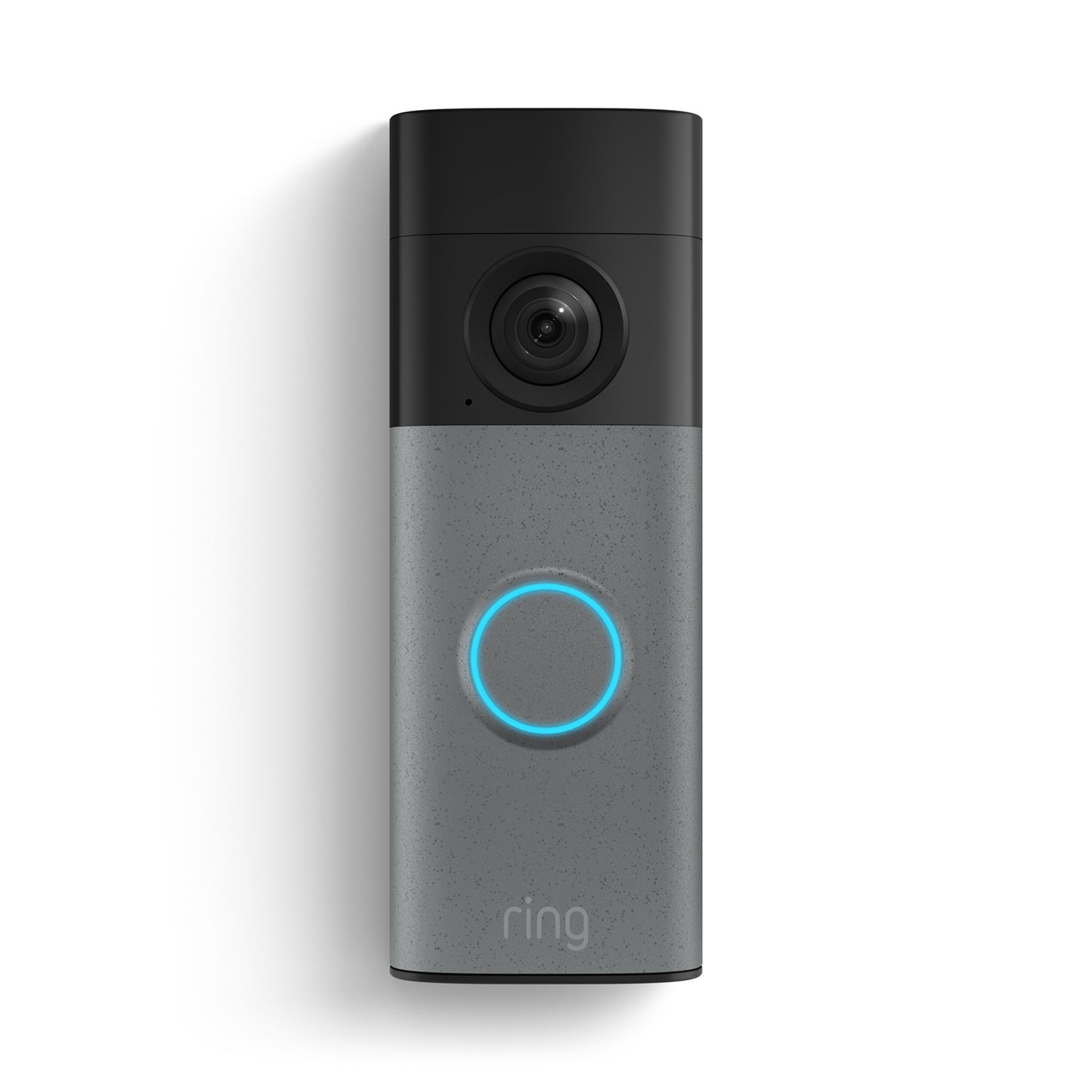
Ring is the best-known doorbell brand in America, and the Battery Doorbell is its most accessible model: ~$59.99, easy tool-free install, 1080p HD video with color night vision, adjustable motion zones, and best-in-class Alexa integration (Echo announcements, live view on Echo Shows). Owners rate it 4.6/5 across roughly 44,000 Amazon reviews. The highest rating and largest review base in this roundup. One catch: Ring now lists this model as discontinued, replaced in the lineup by the Battery Doorbell 2K, so remaining stock is selling through.
But Ring is also the subscription trap made manifest. There is no local storage. Without Ring Protect (~$4.99/month per device or $49.99/year), you get live view, two-way talk, and motion notifications, and no recordings, no video history, no person or package alerts. Ring Protect is not an optional add-on; it's the price of the product working as advertised.
Key specs
- Video: 1080p HD, color night vision, ~155°×90° FOV
- Storage: none onboard. Cloud only, requires Ring Protect for recordings
- Power: rechargeable battery (6–12 months typical) or optional wired trickle charge
- Connectivity: Wi-Fi; Alexa only (no Google Home, no HomeKit)
- Rating: 4.6/5 across ~44,000 Amazon reviews
- Approx. price: ~$59.99 (model discontinued; price is for remaining stock)
What owners consistently report: dead-simple setup, reliable live view, excellent two-way audio, and it just works inside an Alexa household.
The honest drawbacks. The subscription requirement is the biggest single downside on this list: three years of ownership costs $59.99 + ~$150 in fees. Resolution (1080p) trails every other doorbell here. It's Alexa-only with no Google or HomeKit path. Owners in high-traffic areas report battery life draining far faster than advertised. And as The Verge and others have documented, Ring's cloud model ties your footage to Amazon's law-enforcement partnerships (Neighbors/Flock-style sharing frameworks). Worth knowing if that bothers you. If recurring fees don't bother you and your home runs on Alexa, it's a fine device; for a no-subscription guide, it's the cautionary example.
Best for: Alexa households that accept the Protect plan as the cost of doing business.
Not for: anyone reading this guide for its actual purpose. You know who you are.
What about Reolink?
Reolink deserves a mention as the enthusiast alternative: the Reolink 2K doorbell (Wi-Fi or PoE wired versions) records locally to microSD with no subscription, and the wired PoE version is the pick for people who want a doorbell that doesn't depend on Wi-Fi at all. It's less polished than the eufy for the average buyer, the app is more technical, there's no battery option, and package detection isn't as refined, but if you want local storage plus a wired, always-on connection, it's the strongest no-subscription alternative we don't carry a buy link for. For most buyers the E340 remains the easier recommendation.
Frequently asked questions
Is Ring worth it without a subscription?
Honestly, no. Not if "worth it" means the doorbell working as advertised. Without Ring Protect you get live view, two-way talk, and motion alerts, but no recordings, no video history, and no person or package detection. A doorbell that can't show you who rang yesterday is a peephole with extra steps. Ring's free tier is fine as a live intercom; as a security camera, the subscription is effectively mandatory, which is exactly why this guide exists.
What do you lose without a Ring Protect subscription?
Feature by feature: you keep live video, two-way talk, and basic motion notifications. You lose all recorded clips and video history, person/package/animal smart alerts, activity zones in the cloud, snapshot capture, and video previews in notifications. Ring's own support pages now spell this out, and it's the clearest illustration of the subscription trap: the hardware is capable of all of it, the paywall is software.
eufy vs Reolink doorbell: Which is better with no subscription?
For most buyers, eufy: the E340's dual cameras, battery-or-wired flexibility, and polished app make it the easier buy, and its on-device storage needs no extra hardware. Reolink wins for the wired enthusiast. PoE power plus local microSD recording means it keeps working even when your Wi-Fi doesn't, and there's no cloud account in the loop at all. If you have doorbell wiring (or Ethernet at the door) and like tinkering, Reolink; everyone else, eufy.
Can a doorbell camera keep recording if the internet goes down?
Only the local-storage ones, and this is an underrated differentiator. The eufy E340 keeps recording to its onboard storage during an outage (you just can't view it remotely until you're back online), and the Wyze v2 keeps writing to its microSD card. Ring and Arlo record nothing without a cloud connection: no internet, no footage, period. If your internet is flaky, that alone settles the decision.
Head-to-head: the dimensions that matter
Three-year cost: the eufy E340 (~$120-$170) and Wyze v2 (~$75 with a memory card) never charge you again. The Ring (~$210) and Arlo (~$340) keep billing. Over three years the "cheap" $49.99 Arlo costs more than the eufy and Wyze combined.
Subscription: eufy needs none, ever. Wyze needs none for 24/7 local recording; Cam Plus ($2.99/month) only unlocks person/package alerts. Ring and Arlo are functionally subscription doorbells: without a plan you get no recordings, no video history, and no smart alerts.
Storage: eufy records to 8GB of onboard storage (modest, non-expandable). Wyze records 24/7 to microSD up to 256GB, though the slot's side placement is a theft-of-footage risk. Ring and Arlo are cloud-only, so no internet means no footage, period.
Video: eufy's dual 2K (faces + packages) and Arlo's 2K HDR lead; Wyze's 2K is good rather than class-leading; Ring's 1080p trails the group.
Power: eufy and Arlo offer battery or wired. Wyze is wired-only, which rules it out for renters without existing wiring. Ring runs on a rechargeable battery with optional wired trickle charge.
Ecosystem: Ring is Alexa-only. The other three work with Alexa and Google Assistant; none support HomeKit.
Who should buy each one
- Get the eufy E340 if: you want the best doorbell that never asks for another dollar, with package detection and battery-or-wired flexibility. Go in with eyes open about its 2022 privacy history. Buy the eufy Security Video Doorbell E340
- Get the Wyze v2 if: you have existing doorbell wiring and $59.98. Nothing else touches this value. Buy the Wyze Video Doorbell v2
- Get the Arlo 2K if: you're already in the Arlo ecosystem and already paying for Secure. Otherwise, skip it. Buy the Arlo Video Doorbell 2K
- Get the Ring if: your home runs on Alexa and you've accepted the Protect plan as the real price. Buy the Ring Battery Doorbell
The verdict, plainly: the subscription is the product's real price. On a three-year horizon, the eufy costs $120-170 all-in, the $59.98 Wyze costs $59.98 plus a $15 memory card, the $59.99 Ring costs ~$210, and the $49.99 Arlo costs ~$340. If you're reading a no-subscription guide, that math makes the decision for you: eufy E340 overall, Wyze v2 on a budget. Just go into eufy with eyes open about its 2022 privacy history, and into Wyze knowing you need existing wiring.
Prices and ratings shift. Check current pricing before you buy. Subscription prices quoted are manufacturer list as of publication.