 Solid-Reviews
Portable AC: Single-Hose vs Dual-Hose (2026) - 3 Picks Worth Buying
Portable AC: Single-Hose vs Dual-Hose (2026)
The short version: hose design is the single biggest thing that separates good portable ACs from mediocre ones, and the test data backs it up. The Whynter NEX ARC-1230WN is the best dual-hose portable you can buy: RTINGS regards it as the best portable AC it has tested, and its efficiency numbers crush the single-hose competition. If you want the quietest premium single-hose unit and live in the LG ThinQ ecosystem, the LG LP1419IVSM is the alternative, but know the efficiency tradeoff going in. For bedrooms and smaller rooms, the Dreo AC515S costs less and reviewers praise its cooling and low noise.
How this guide works: we don't run a test lab, and nothing below is a reprinted review. We've read the published verdicts from review outlets, and synthesized them in our own words (key findings, and where the sources agree or disagree), with links to the originals. See "How we compiled this" below for the full method.
The prices
| Typical price, September 2026 | |
|---|---|
| Whynter NEX ARC-1230WN | $659.99 |
| LG LP1419IVSM | ~$539-$595 (MSRP $699.99) |
| Dreo AC515S | $529.99 |
Street prices observed September 2026. The LG was $539 at Abt and $594.99 at Best Buy against a $699.99 MSRP.
How we compiled this
We synthesize verdicts from named review sources; we don't reprint their text. For this guide we consulted RTINGS (lab test data for both the Whynter and the LG), the SlashGear 2026 portable AC roundup, TechGearLab, GadgetReview, aggregated Reddit owner sentiment via redditrecs, and owner ratings from Home Depot, Target, and dreo.com.
Each product section names which outlets covered that model, with their verdict summarized in our own words and linked to the original page. Where the sources disagree, or where owners report something the labs didn't catch, we say so instead of smoothing it over. Coverage isn't uniform: the LG portable and the Dreo have thinner editorial coverage than the Whynter, and we note those gaps rather than filling them in.
What portable AC buyers should look for
- Hose design: dual vs single. This is the whole game. A single-hose unit blows hot condenser air out the window, which creates negative pressure that pulls warm air back into the room through every crack. A dual-hose unit draws its condenser air from outside, so it doesn't fight itself. RTINGS' lab data below shows the gap in hard numbers.
- SACC vs ASHRAE BTU. ASHRAE BTU is the old lab rating; SACC (Seasonally Adjusted Cooling Capacity) is the DOE's attempt to reflect real-world performance including the hose penalty. SACC is the number to compare, and it's always lower.
- Inverter compressor. Like inverter window units, an inverter portable ramps the compressor instead of cycling on/off. It's quieter, holds temperature steadier, and uses less power.
- Noise, realistically. Portable ACs sit in the room with you. Anything under ~50 dBA on low is genuinely livable; above 55 dBA on high is normal for the category and will be audible.
- Drainage. Most modern portables self-evaporate condensate in normal humidity, but very humid climates can still fill the tank. Check whether the unit has a continuous-drain option if your summers are sticky.
- Weight and hose length. These are 60-80 lb appliances with a 4-5 foot hose tether to the window. "Portable" means room-to-room, not floor-to-floor.
Whynter NEX ARC-1230WN: Best dual-hose portable AC
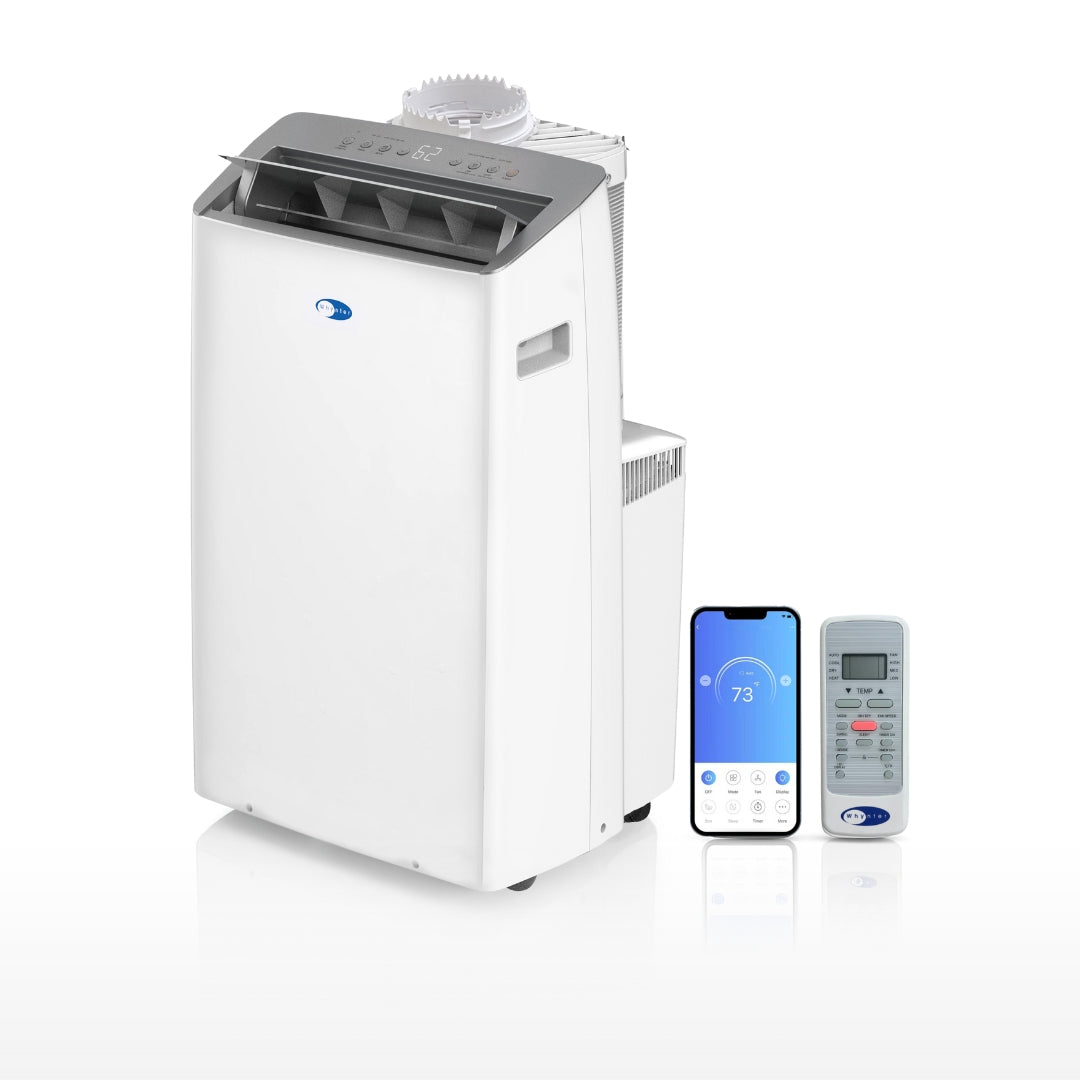
The Whynter ARC-1230WN is the rare portable AC where the marketing claim and the lab data agree. It's a dual-hose inverter unit rated 14,000 BTU ASHRAE / 12,000 BTU SACC for rooms up to 600 sq ft, with Wi-Fi, an R32 refrigerant, and a hose-in-hose design that keeps the two air streams in one tidy duct. At 77.25 lb it's a substantial appliance, not something you'll carry upstairs casually.
One honesty note on specs: Whynter's own page is inconsistent about noise. The marketing copy says "as low as 48 dBA," while the specification table lists 42.5 / 49.5 / 56.5 dBA by speed. We report both because the manufacturer does.
What the reviews say
- RTINGS, lab-tested; regarded as the best portable AC RTINGS has tested as of 2026 (via SlashGear). In RTINGS' head-to-head test data against the LG below, the Whynter scored 8.0 for large-room performance and 7.7 for combined efficiency (vs 6.8 and 4.5), with a tested cooling capacity of 9,256 BTU/hr and a 31-minute test-room cooldown vs 56 minutes for the LG. Noise scored 8.4, tied with the LG.
- TechGearLab. Measured 58.4 dBa at high from four feet and called it "one of the quietest air conditioners we've tested to date, especially when you factor in its superior cooling power."
- GadgetReview. True Score 83, ranked 6th of 20 portable ACs.
- Reddit owners (via redditrecs): 100% positive sentiment across 18 reviews, with the dual-hose efficiency the recurring praise and realistic expectations about portable-vs-window performance the recurring caveat.
- Target / whynter.com owners: mostly 4-5 stars for quiet operation and cooling; one report of a remote that failed after a day. (Target listing)
Consensus: the dual-hose design plus the inverter compressor is why this unit tests so well. RTINGS' efficiency gap over the single-hose LG (7.7 vs 4.2 EER in their testing) is the single-hose penalty made visible.
Honest drawbacks: It's 77 lb and bulky, so "portable" is relative. The hose-in-hose duct still needs the window kit installed. One owner reported a dead remote. And Whynter's own noise specs contradict each other, so treat the dBA claims skeptically.
Best for: large rooms, hot climates, and anyone who wants the most cooling per dollar of electricity. The efficiency story is the whole pitch.
Not for: small bedrooms (it's oversized for them), or anyone who needs to move the unit between floors regularly.
- 14,000 BTU ASHRAE / 12,000 BTU SACC | Up to 600 sq ft | Dual-hose (hose-in-hose) | Inverter | Wi-Fi | R32 | 77.25 lb | Noise: 42.5-56.5 dBA per spec table (page copy says "as low as 48 dBA") | Typical price: $659.99
LG LP1419IVSM: Best premium single-hose
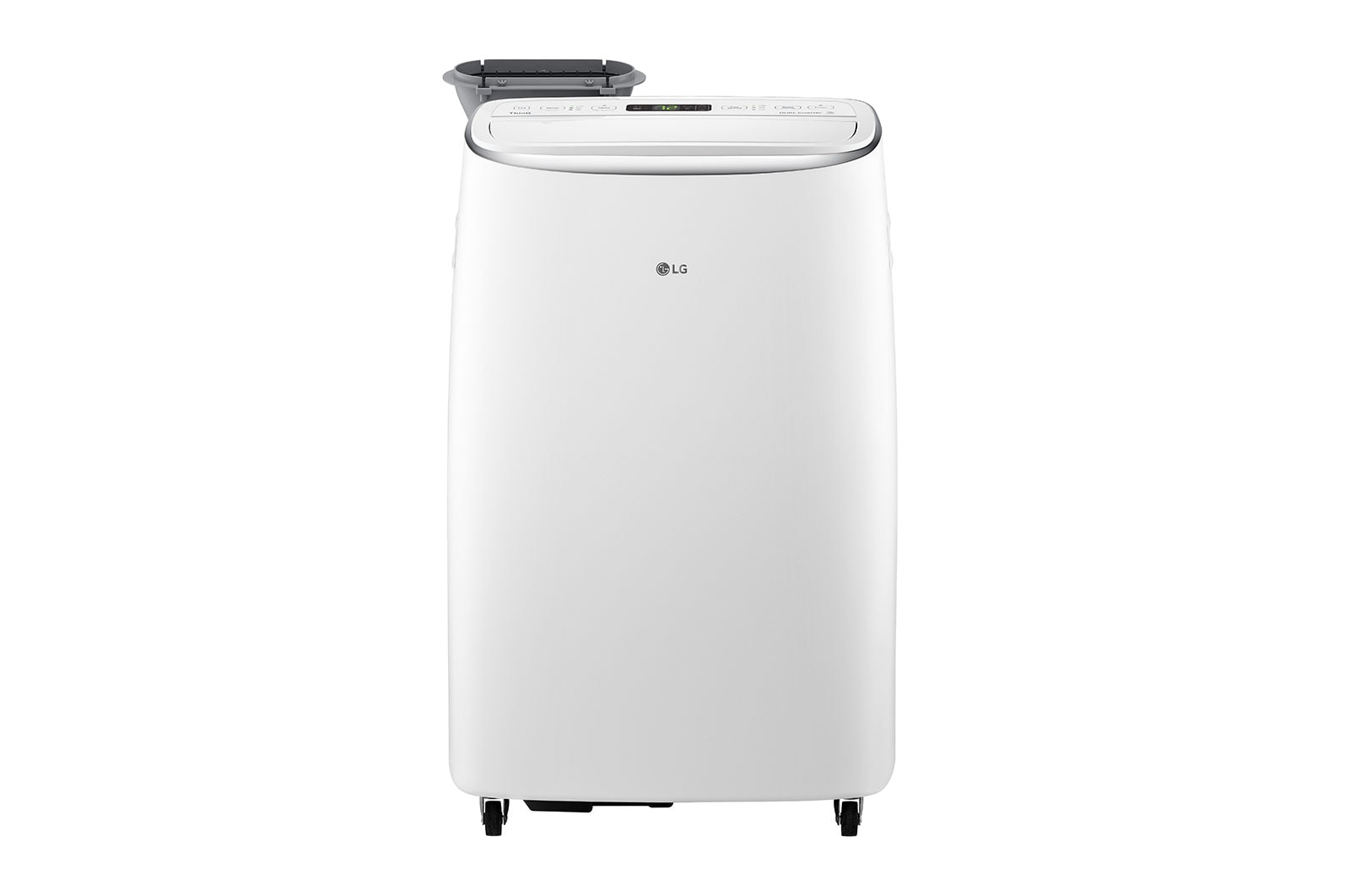
The LG LP1419IVSM is the premium single-hose counterpoint: 14,000 BTU ASHRAE / 10,000 BTU SACC, rated for 450 sq ft, with LG's dual-inverter compressor, ThinQ app control, and a 44-53 dBA noise range. Important clarification: "DUAL Inverter" refers to the compressor, not the hose count. This is a single-hose unit, and that matters for everything below.
RTINGS tested it head-to-head against the Whynter, which makes the comparison unusually clean. The LG tied the Whynter on noise (8.4 both) but trailed badly on the metrics where hose design shows up: 6.8 vs 8.0 large-room, 4.5 vs 7.7 combined efficiency, 5,240 vs 9,256 BTU/hr tested capacity, and nearly double the cooldown time.
What the reviews say
- RTINGS, lab-tested. Scores above; the takeaway is that the inverter compressor keeps it quiet and steady, but the single-hose design caps its real-world efficiency.
- Home Depot owners: 4.5/5 across 1,321 reviews with 82% recommending it, which is a genuinely good owner score. But 2026 reviews include pointed complaints: ineffective cooling in real rooms, loud operation under load, and an awkward window-kit fit. (Home Depot reviews)
Consensus: owners like it more than the lab numbers suggest, which is worth saying. But the disagreement between the strong aggregate owner score and the specific 2026 complaints about cooling performance is real, and the RTINGS efficiency gap vs the Whynter is not close.
Coverage note: we couldn't verify current editorial coverage from Wirecutter, Reviewed, or Tom's Guide for this model. The assessment above leans on RTINGS lab data and owner ratings.
Honest drawbacks: The single-hose efficiency penalty is measurable, not theoretical (see the RTINGS numbers). It costs about as much as the dual-hose Whynter while cooling less efficiently. And the 2026 owner complaints about real-world cooling and window fit are a genuine yellow flag.
Best for: LG ThinQ households, buyers who prioritize quiet operation and are willing to pay for it, and rooms where the efficiency gap won't be felt (mild climates, supplemental cooling).
Not for: maximum cooling per dollar, or hot climates where the dual-hose Whynter's efficiency advantage will show up on the power bill.
- 14,000 BTU ASHRAE / 10,000 BTU SACC | Up to 450 sq ft | Single-hose | Dual-inverter compressor | ThinQ Wi-Fi | 44-53 dBA | 70.99 lb | Typical price: ~$539-$595
Dreo AC515S: Best for smaller rooms
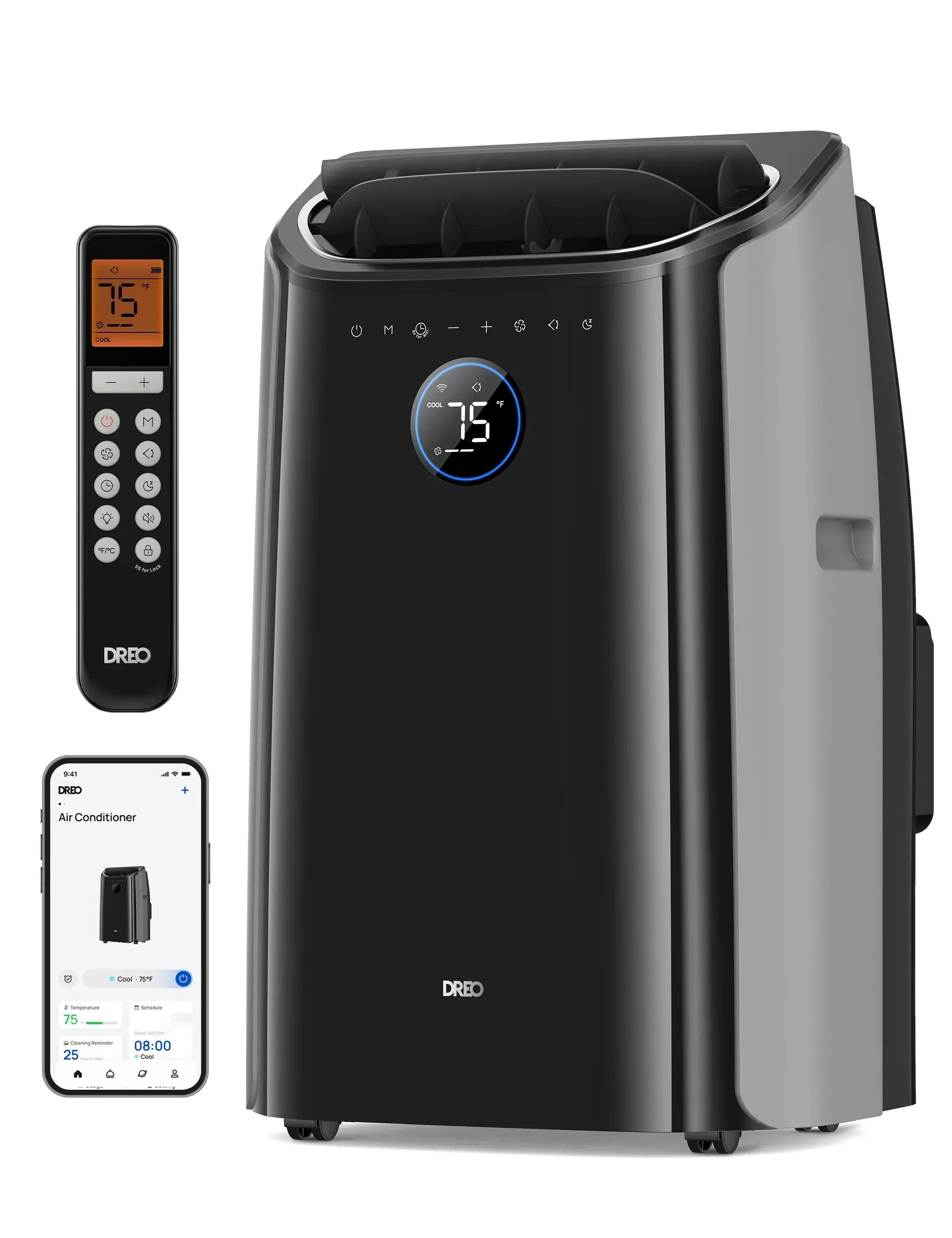
The Dreo AC515S is the small-room value play: 12,000 BTU ASHRAE / 8,000 BTU SACC for rooms around 300-350 sq ft, with a 45-46 dBA noise claim, drainage-free cooling (within stated humidity limits), and app plus remote control. It's a single-hose unit, so the same physics caveats apply, but at this size and price the tradeoff is easier to swallow.
What the reviews say
- Reviewed (via SlashGear's 2026 roundup): ranked it among the top five portable ACs of 2026, describing it as a quiet unit that cools effectively and throws air across 16 feet with ease.
- Popular Mechanics (via SlashGear): praised its cooling capability, the Dreo app's connectivity, the physical remote, and the price point.
- Bob Vila (via SlashGear): praised its cooling, humidity control, and low noise output.
- dreo.com owners: mostly 5/5, with easy install and the app the recurring praise. Dissenting notes: one owner reports a loud clunk and vibration when the compressor shuts off that can wake light sleepers; another notes it's a little noisy at times but fine as white noise. (dreo.com)
Consensus: reviewers agree it's a strong small-room unit for the money, with noise and app quality the standout positives. Nobody we found claims it competes with the bigger dual-hose units on raw cooling.
Coverage note: coverage is roundup-level rather than deep-dive; we couldn't find numeric editorial test scores for this model. The verdicts above come from roundup placements and owner reviews.
Honest drawbacks: 8,000 BTU SACC won't cool a large open space, full stop. It's single-hose, so the efficiency caveat applies. The shutoff clunk one owner reported is worth knowing if you're a light sleeper. And smart features require the Dreo app and account.
Best for: bedrooms, home offices, and renters who need affordable cooling for one room.
Not for: large or open-plan spaces, or anyone expecting dual-hose efficiency.
- 12,000 BTU ASHRAE / 8,000 BTU SACC | ~300-350 sq ft | Single-hose | App + remote | 45-46 dBA claimed | Drainage-free (within humidity limits) | Typical price: $529.99
Head-to-head: the dimensions that matter
Hose design: this is the decisive dimension. The Whynter's dual-hose setup is the reason RTINGS measured nearly double the tested cooling capacity (9,256 vs 5,240 BTU/hr) and a far better efficiency score (7.7 vs 4.5) than the single-hose LG, despite similar ASHRAE ratings. If you remember one thing from this guide, remember that SACC and real efficiency matter more than the big BTU number on the box.
Cooling power: Whynter first by a clear margin (12,000 SACC, 600 sq ft), LG second (10,000 SACC, 450 sq ft), Dreo third (8,000 SACC, ~350 sq ft). Buy for your room size, not your aspirations; an oversized portable short-cycles and a struggling one never catches up.
Noise: closer than you'd expect. RTINGS scored the Whynter and LG identically (8.4), TechGearLab measured the Whynter at 58.4 dBa on high from four feet and still called it one of the quietest it's tested, and the Dreo's 45-46 dBA claim plus Bob Vila's praise put it in the same livable range. On high, they're all audible; on low, they're all fine.
Efficiency: Whynter, and it's not close. The inverter plus dual-hose combination is the efficiency story of this category in 2026.
Smart features: all three have app control (Whynter, LG ThinQ, Dreo). LG's ThinQ integration is the most mature ecosystem play; Dreo's app gets the most owner praise for simplicity.
Price: the Dreo is the value pick at $529.99. The Whynter ($659.99) and LG (~$539-$595 street) cost more; between those two, the Whynter gives you measurably more cooling per dollar.
Who should buy each one
- Get the Whynter ARC-1230WN if: you want the most efficient, most powerful portable AC and have a large room or hot climate. Buy the Whynter ARC-1230WN
- Get the LG LP1419IVSM if: you're in the ThinQ ecosystem, prioritize quiet operation, and accept the single-hose efficiency tradeoff. Buy the LG LP1419IVSM
- Get the Dreo AC515S if: you're cooling a bedroom or office and want the best-reviewed small-room unit for the money. Buy the Dreo AC515S
Frequently asked questions
Is a dual-hose portable AC always better than a single-hose?
In cooling efficiency, yes, and it's measurable: RTINGS' lab testing showed the dual-hose Whynter with nearly double the tested capacity and far better efficiency than the single-hose LG at a similar ASHRAE rating. The physics is straightforward: a single-hose unit exhausts room air and pulls warm replacement air in through cracks, while a dual-hose unit uses outside air for the condenser. The one case for single-hose is when the unit is a premium model you want for other reasons (noise, ecosystem, price on sale), and your climate is mild enough that the efficiency gap doesn't matter.
What does SACC mean, and why is it lower than the BTU on the box?
SACC (Seasonally Adjusted Cooling Capacity) is the DOE's rating that accounts for real-world losses, including the infiltration penalty from the exhaust hose. ASHRAE BTU is the older lab-only number. SACC is the one to compare across models; a "14,000 BTU" portable might be 10,000-12,000 SACC.
Do portable air conditioners need to be drained?
Usually not in normal humidity: all three picks here self-evaporate condensate. In very humid climates the tank can still fill, in which case you'll either empty it or use the continuous-drain hose option. If your summers are sticky, check that the unit you buy has a drain port.
How loud are portable ACs really?
They sit in the room with you, so expect to hear them. On high, 55-58 dBA is typical for the category (about conversational speech); on low, mid-40s is common and most people sleep through it. The RTINGS and TechGearLab data above suggest the Whynter and LG are among the quieter options, and the Dreo gets consistent praise for bedroom-level noise.
Our recommendations
- Most people: Whynter ARC-1230WN. The dual-hose inverter is the efficiency and performance pick, backed by the strongest test data.
- Quiet premium single-hose: LG LP1419IVSM. Tied the Whynter on noise in lab testing; accept the efficiency tradeoff.
- Smaller rooms and budgets: Dreo AC515S. The best-reviewed way to cool one bedroom or office for less.