 Solid-Reviews
ecobee vs Nest (2026): Which Smart Thermostat Should You Buy?
ecobee vs Nest (2026): Which Smart Thermostat Should You Buy?
The short version: Buy the ecobee Smart Thermostat Premium if you want room-by-room comfort. It ships with an occupancy/temperature sensor, monitors your air quality, talks to every major smart-home platform including Apple Home, and carries a 5-year warranty. Buy the Google Nest Learning Thermostat (4th gen) if you want the thermostat to program itself. Its automatic schedule learning is still the best in the business, the display is gorgeous, installation is easier, and it usually works without a C-wire.
They cost about the same (both hover around $240–$260, often less on sale). The $20 difference doesn't matter. Everything else does.
How this guide works: we don't run a test lab, and nothing below is a reprinted review. We've read the published verdicts from review outlets and installer professionals, and synthesized them in our own words (key findings, and where the sources agree or disagree), with links to the originals. See "How we compiled this" below for the full method.
The prices
| Typical price | |
|---|---|
| ecobee Smart Thermostat Premium | ~$249 |
| Google Nest Learning Thermostat (4th gen) | ~$249 |
Typical street prices, September 2026. Both hover around $240-$260 and drop on sale; the gap between them doesn't matter.
How we compiled this
We synthesize verdicts from named review sources; we don't reprint their text. For this guide we consulted the head-to-head testing and installer write-ups from Tech Home Journal, home.renovation.reviews (a professional installer collective), and SmartHomeExplorer's energy-payback analysis, plus aggregated Amazon owner ratings for both models.
Each section names which outlets covered the matchup, with their verdict summarized in our own words and linked to the original page. Where the sources disagree, or where owners report something the labs didn't catch, we say so instead of smoothing it over. Coverage isn't uniform: neither Wirecutter, RTINGS, nor Consumer Reports had a directly comparable current head-to-head we could verify, and we note that gap rather than filling it in.
What actually separates them
Forget the spec-sheet arms race. These two thermostats represent different philosophies:
- ecobee bets on sensors and control. A thermostat on a hallway wall can't feel how hot your bedroom is. ecobee's answer: put wireless sensors where you actually live, and let the system average the temperature by occupancy. It also gives you granular HVAC controls and an air-quality monitor (VOCs, CO2, humidity) built in.
- Nest bets on automation. The Learning Thermostat watches when you adjust the temperature and builds a schedule by itself over a week or two. No programming, no app fiddling. It just figures out that you're out weekdays and home by six.
Which philosophy wins depends on your house and your patience, not on the hardware.
ecobee Smart Thermostat Premium: Best for multi-room comfort and platform flexibility
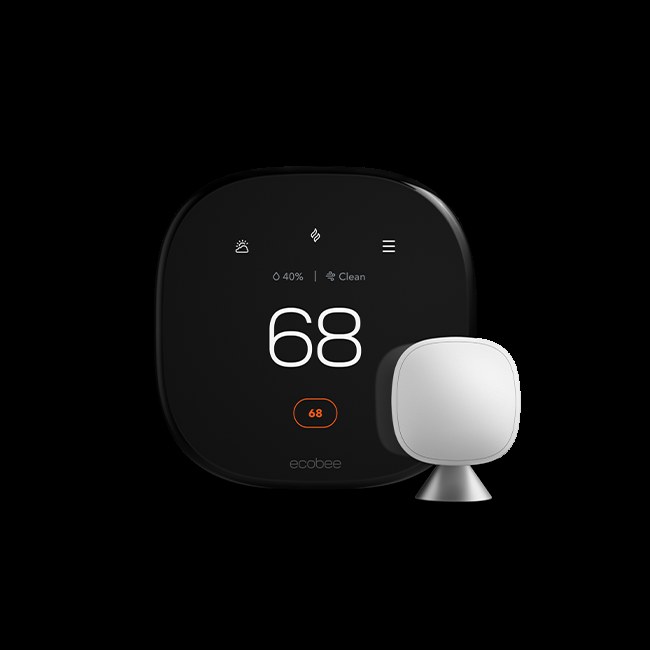
The ecobee Premium is the control freak's thermostat, in the best sense. It ships with a SmartSensor in the box, a wireless occupancy and temperature sensor you place in the room you actually care about, and supports up to 32 of them. The system can average temperatures across sensors or prioritize occupied rooms, which is the single biggest real-world comfort upgrade either thermostat offers for multi-room homes.
It's also the platform-agnostic pick: native support for Alexa, Google Home, Apple Home (HomeKit), and SmartThings, plus Matter. If your household mixes iPhones and Echo speakers, or you just don't want to be locked into one ecosystem, this is the one. The built-in air-quality monitor tracks VOCs, CO2, and humidity and can trigger ventilation reminders: a genuine differentiator, not a gimmick, for anyone with allergies or a stuffy house. And the 5-year warranty is the longest in the category.
On energy, ecobee's eco+ feature optimizes around time-of-use electricity rates and humidity, and the app's energy reporting is the most detailed of any thermostat we've seen summarized. Precise runtimes, temperature trends, and weather correlation.
What the reviews say
- Tech Home Journal. Frames it as the pick for multi-room homes and HomeKit users, crediting the included SmartSensor and air-quality monitoring as the deciding factors. Notes the single most useful buying question: how far is your thermostat from where you actually sit?
- home.renovation.reviews (installer collective). Recommends the Premium for heat-pump and dual-fuel systems, multi-zone homes wanting occupancy-weighted comfort, and Apple Home or Alexa-first households. Praises its clean handling of 2H/2C heat pump plus 2-stage aux heat. Caveats: the interface isn't as polished as Nest's, and eco+ can override your settings in ways some homeowners find annoying until tuned down.
- SmartHomeExplorer, scores it 8.8/10 on their energy-payback index ( disclosed editorial methodology), the highest of the group, citing room-balancing logic and ecosystem breadth. Lists it around $249 with the sensor included.
- Amazon owners: roughly 4.4/5 across thousands of ratings, with sensor-driven comfort the most praised feature.
Consensus: the sensor story is real. Reviewers and installers agree it's the meaningful comfort upgrade, especially in homes where the thermostat sits far from the living spaces. Platform flexibility and the 5-year warranty are uncontested wins.
Coverage note: we couldn't verify a current head-to-head from Wirecutter, RTINGS, or Consumer Reports.
Honest drawbacks: Installation takes longer (25–30 minutes is typical) and while ecobee includes a Power Extender Kit for homes without a C-wire, it's an extra step Nest often skips entirely. The touchscreen interface is functional but not beautiful next to the Nest. eco+'s automatic optimizations can fight your manual settings until you dial it in. And you're paying for an air-quality monitor you may never look at.
Best for: multi-room homes, Apple Home households, heat-pump systems, anyone who wants detailed energy reporting and the longest warranty in the category.
Not for: single-zone apartments where the thermostat already sits in the main room, or anyone who wants the thermostat to program itself with zero input.
- Display: 3.5" color touchscreen | Sensors: 1 SmartSensor included (up to 32 supported) | Air quality: VOC, CO2, humidity | Ecosystems: Alexa, Google, Apple Home, SmartThings, Matter | Voice: Alexa + Siri built in | Warranty: 5 years | Typical price: ~$249
Google Nest Learning Thermostat (4th gen): Best automatic learning and easiest install
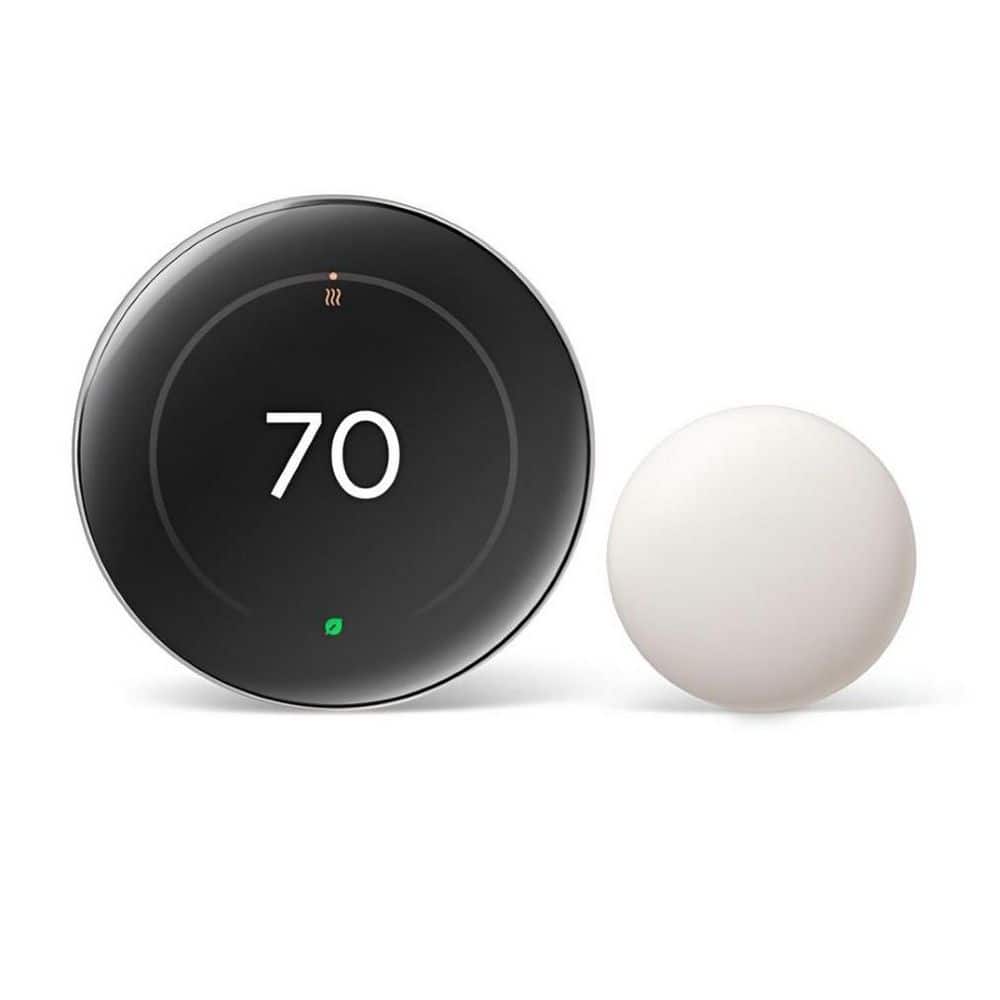
The Nest Learning Thermostat is the thermostat for people who never want to think about their thermostat. Its Auto-Schedule learns from your manual adjustments over the first week or two and builds a program by itself. Reviewers consistently describe going from a dozen daily tweaks to barely touching it within a month. No other thermostat does this as well; ecobee's learning is effectively on-or-off by comparison.
It's also the best-looking thermostat you can buy, the Farsight display lights up with the time, temperature, or weather as you walk past, and the easiest to install, typically 15–20 minutes. Crucially, it usually works without a C-wire, which removes the single biggest installation headache for older homes. It supports Matter and works with Alexa and Google Home.
What the reviews say
- Tech Home Journal. Calls it the pick for Google Home households and single-zone homes, crediting the self-learning schedule and Farsight display. Their rule of thumb: if the thermostat is near where you spend your time, the Nest handles everything you need with no extra hardware.
- home.renovation.reviews (installer collective). Recommends it for most single-zone forced-air installs, citing the best display, the best learning algorithm of the group, and the strongest no-C-wire compatibility story. Flags the ecosystem weakness: integration with non-Google platforms is intentionally weaker, and the Learning model has never supported Apple Home directly.
- SmartHomeExplorer, scores it 8.2/10 on their energy-payback index, close behind ecobee, calling it "the easiest premium thermostat to trust if you want auto-learning to do more of the work."
- Amazon owners: roughly 4.3–4.4/5, with the learning feature and looks drawing the most praise.
Consensus: the learning is genuinely the best in the category, and the no-C-wire installation is a real-world advantage the spec sheet undersells. The ecosystem lock-in is the real cost.
Coverage note: we couldn't verify a current head-to-head from Wirecutter, RTINGS, or Consumer Reports.
Honest drawbacks: No sensor in the box, and Nest's sensor story has always been thinner than ecobee's. Multi-room comfort is not its strength. It runs exclusively through the Google Home app (the old Nest app doesn't support it). Apple Home users should look elsewhere. The 2-year warranty is less than half of ecobee's. And schedule granularity is coarser: Nest requires at least 60 minutes between schedule changes where ecobee allows 30.
Best for: single-zone homes, Google Home households, older wiring with no C-wire, anyone who never wants to program a thermostat.
Not for: multi-room homes where comfort varies by room, or Apple Home users (no native support).
- Display: 2.08" circular Farsight | Learning: Auto-Schedule from manual adjustments | C-wire: usually not required | Ecosystems: Google Home, Alexa, Matter (no native HomeKit) | Warranty: 2 years | Typical price: ~$249
Head-to-head: the dimensions that matter
Price: both hover around $240-$260 and drop on sale. Call it a tie; buy whichever is cheaper the week you shop.
Room comfort: ecobee wins by a mile. The included SmartSensor lets it average temperature by occupancy across rooms; a Nest can only ever feel the hallway wall it's mounted on.
Automation: Nest wins. Auto-Schedule learns your routine in a week or two and keeps refining it. ecobee's learning is effectively on or off by comparison.
Ecosystem: ecobee wins for mixed households, with native Alexa, Google Home, Apple Home, SmartThings, and Matter. Nest works with Google Home and Alexa but has never supported Apple Home.
Installation: Nest wins for older homes. It usually works without a C-wire. ecobee includes a Power Extender Kit that solves the same problem, but it's an extra wiring step.
Warranty: ecobee, 5 years vs 2. Not close.
Extras: ecobee monitors air quality (VOCs, CO2, humidity) and reports energy use in unusual detail. Nest counters with the best-looking display in the category.
Who should buy each one
- Get ecobee if: your thermostat sits far from where you actually live, you run Apple Home, you have a heat pump or multi-zone system, or you want the longest warranty in the category. Buy the ecobee Smart Thermostat Premium
- Get Nest if: you want the thermostat to program itself, your wiring has no C-wire, or your household is all-in on Google Home. Buy the Nest Learning Thermostat (4th gen)
- Either way: both are ENERGY STAR certified, and both beat a manual thermostat left at one temperature all day.
Frequently asked questions
Is ecobee or Nest better for saving energy?
Both are ENERGY STAR certified and both can cut meaningful HVAC waste, but they save it differently. ecobee saves through room-occupancy sensing and detailed optimization (eco+); Nest saves by learning your schedule so you're never heating an empty house. Independent installer write-ups tend to give ecobee the edge in multi-room and heat-pump homes, Nest the edge for set-it-and-forget-it households. Either beats a manual thermostat left at one temperature all day.
Do I need a C-wire for ecobee or Nest?
Nest 4th gen usually works without a C-wire. That's one of its biggest practical advantages. ecobee includes a Power Extender Kit (PEK) that gives most pre-C-wire homes a clean retrofit path, but it's an extra installation step. If your wiring is very old (two-wire systems), check compatibility with both manufacturers before buying.
Does Nest work with Apple HomeKit?
No. The Nest Learning Thermostat has never supported Apple Home directly. If you're an iPhone household running HomeKit automations, ecobee is the straightforward choice.
Which one is better if my thermostat is in a hallway far from my living room?
ecobee, and it's not close. Put the included SmartSensor where you sit and the system weights comfort by occupancy. A Nest on a distant hallway wall can only ever feel the hallway.
Our recommendations
- Most multi-room homes, Apple households, heat pumps: ecobee Smart Thermostat Premium. The sensor, the platform support, and the 5-year warranty make it the safer long-term buy.
- Single-zone homes, Google households, older wiring: Nest Learning Thermostat (4th gen). It'll program itself, install in minutes, and look great doing it.
- On a budget: consider the ecobee Enhanced or the entry-level Nest Thermostat, same ecosystems, fewer frills. (We haven't fully reviewed these; the links go to the closest current listing.)