 Solid-Reviews
Roborock vs iRobot: Which Robot Vacuum Brand Should You Buy?
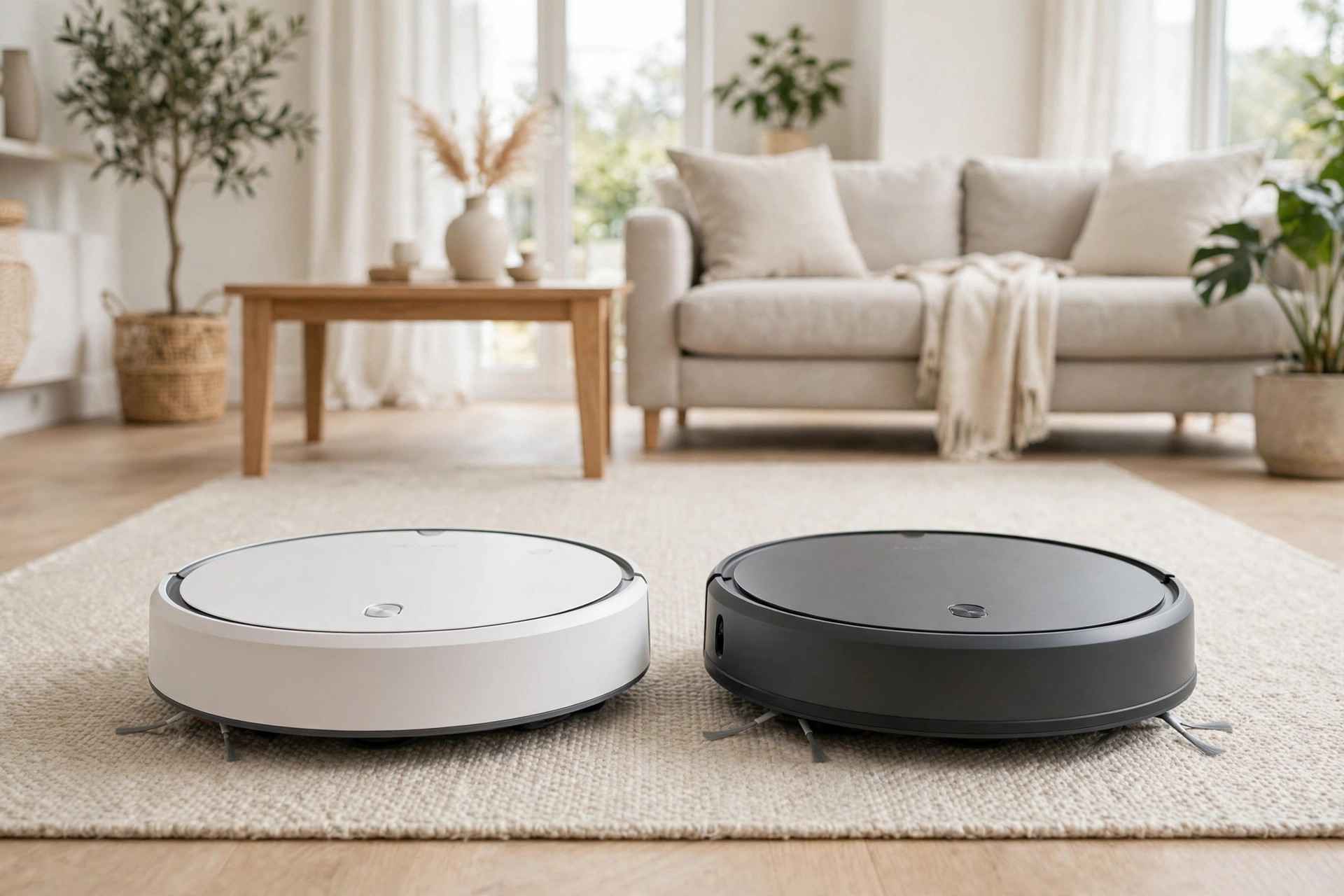
Roborock vs iRobot: Which Robot Vacuum Brand Should You Buy?
The short version: Roborock wins on cleaning performance per dollar — stronger suction, genuinely better mopping, and more configurable software for less money. iRobot wins on obstacle avoidance you can trust — its camera-based navigation and the j7+'s pet-waste replacement guarantee have no real equal — plus deeper brand history and wider parts availability. The market has moved decisively: as of 2026 Roborock is the #1 robot vacuum brand globally (~21.7% share per IDC), while iRobot filed for bankruptcy in December 2025 and was acquired by its Chinese contract manufacturer. For most buyers in 2026, a Roborock is the better value; for pet owners with unpredictable animals, iRobot is still the safer pick.
This is a brand-level comparison grounded in real specs, published review consensus, and aggregated owner ratings — not hands-on testing claims. We'll compare the two brands across the categories that matter, then look at four representative models.
Navigation and mapping
Roborock builds its robots around spinning LiDAR. The result is fast, precise mapping: the Roborock app generates accurate floor plans on the first run, supports up to four stored floor maps (on models like the Qrevo S5V), and offers room-by-room scheduling with no-go zones. Review consensus consistently ranks Roborock's LiDAR navigation among the best in the industry — methodical, rarely lost, efficient routing.
iRobot takes a camera-first approach. The Roomba j7+ uses PrecisionVision (front-facing camera plus floor tracking) instead of a LiDAR turret; the newer Combo 10 Max pairs laser-based mapping with its camera. iRobot's maps are accurate and its Imprint Smart Mapping is easy to use, but mapping runs tend to be slower and the robots navigate less systematically than LiDAR rivals. What iRobot trades in raw mapping speed, it makes back in recognition: its cameras identify specific objects (socks, cords, pet waste) and label them on the map.
Winner for mapping precision: Roborock. Winner for understanding what's on your floor: iRobot.
Mopping ability
This is the least close category. Roborock's mopping hardware is a generation ahead. The Qrevo S5V uses dual spinning mop pads at 200 RPM with FlexiArm edge extension, 10mm lift over carpet, hot-water pad washing, and warm-air drying at the dock. The Qrevo Curv goes further with hot-water mop cleaning and its FlexiArm system. Review consensus and independent tests (Vacuum Wars, TechRadar) rate Roborock's mopping among the best available.
iRobot's approach is conservative. The j7+ doesn't mop at all — iRobot kept it vacuum-only to keep the price down. The Combo 10 Max adds a single SmartScrub mop pad that scrubs back and forth with downward pressure and, cleverly, auto-retracts to the top of the robot over carpet so rugs stay dry (iRobot's D.R.I. system). The AutoWash dock washes and dries the pad. But expert reviews rate the mopping as middling next to Roborock/Dreame dual-pad systems — TechRadar gave the Combo 10 Max just 2.5/5 for value overall, noting competitors are "ahead of the game."
Winner: Roborock, decisively. If mopping matters to you, iRobot only has one competitive option and it's overpriced.
App and software
Roborock's app is the power user's choice: per-room suction and water-flow settings (up to 30 water levels), custom cleaning sequences, SmartPlan auto-optimization, multi-floor maps, live camera views on some models, and broad voice support (Alexa, Google, Siri). It's deep — which means a slightly steeper learning curve for beginners.
iRobot's Home app is simpler and more approachable: Imprint Smart Mapping with room labels, keep-out zones, scheduling, and the Dirt Detective feature on newer models that learns which rooms get dirtiest and prioritizes them. iRobot also leads on smart-home integration at the high end — the Combo 10 Max supports Matter and Apple Home. However, owner reviews for both brands mention occasional app bugginess; the j7+ in particular draws complaints about map resets and firmware hiccups.
Winner: tie, depends on you. Tweakers get more from Roborock; set-and-forget users may prefer iRobot's simpler app.
Obstacle avoidance
iRobot is the standard here. The j7+ recognizes 80+ object types and will steer around pet waste, cords, shoes, and toys. The P.O.O.P. (Pet Owner Official Promise) — iRobot replaces the robot free if it runs over solid pet waste — is unmatched confidence in the category and a genuine differentiator for pet owners.
Roborock is good but not guaranteed. The Qrevo S5V's structured-light sensors handle cables and toys well in independent testing, and the Qrevo Curv adds AI RGB cameras with 200-object recognition. But no Roborock carries a waste guarantee, and Tech Advisor's review of the Curv noted it's "worse with cords that the mops easily get caught in." For tidy homes the difference is academic; for chaotic homes with pets, it isn't.
Winner: iRobot, clearly.
Price-to-performance
Roborock dominates. The Qrevo S5V delivers 12,000Pa suction, LiDAR mapping, zero-tangle brushes, and a full wash/dry/refill dock for a typical price around $500 (list $900). Nothing from iRobot matches that feature-per-dollar ratio. The Qrevo Curv at ~$900–1,150 typical (list $1,600) brings 18,500Pa suction and anti-tangle dual rollers at a price where iRobot's flagship mop combo sits.
iRobot's pricing is the weak spot. The j7+ at $500–600 on sale is fair value for its avoidance tech, but the Combo 10 Max at ~$1,000 typical (list $1,399) is a hard sell: expert reviewers consistently conclude you get more cleaning tech for less from Roborock, Dreame, and Eufy. iRobot also leans on consumables — Clean Base bags run about $20 per 3-pack, and its docks use proprietary bags.
Winner: Roborock, decisively.
Brand trust, parts, and support
iRobot's moat is history. Decades in the business, the most recognizable robot vacuum brand in the US, replacement parts (brushes, filters, bags, wheels) available everywhere, and a reputation for strong phone support. For buyers who keep appliances for 5+ years, that ecosystem matters.
Roborock is the engineering upstart done right — founded in 2014, now one of the top-rated brands across review outlets, with parts readily available online. Its US service network is smaller than iRobot's, but owner satisfaction scores are consistently high.
One honest caveat: iRobot went through bankruptcy proceedings and was acquired by PICEA in late 2025. The brand continues to operate and support its products, but it's worth knowing the corporate backdrop is less stable than it once was — whereas Roborock is on a straightforward growth trajectory.
Winner: iRobot on parts ubiquity; Roborock on momentum. Call it a draw with an asterisk.
The models, head to head
Roborock Qrevo S5V — the value king
12,000Pa suction, SGS-certified zero-tangle dual brushes, LiDAR mapping with four floor plans, dual spinning mops with edge extension, and a dock that empties (~10 weeks of debris), washes and warm-air-dries the mops, and refills water. Rated 4.1/5 across ~1,100 Amazon ratings. Typical price around $500 — it's the robot that makes iRobot's pricing look uncomfortable.
Honest drawbacks: No 5GHz Wi-Fi support (2.4GHz only). Obstacle avoidance is sensor-based, not camera-grade — good for toys and cables, not waste-certified. Long-term durability data is still building as a newer model.
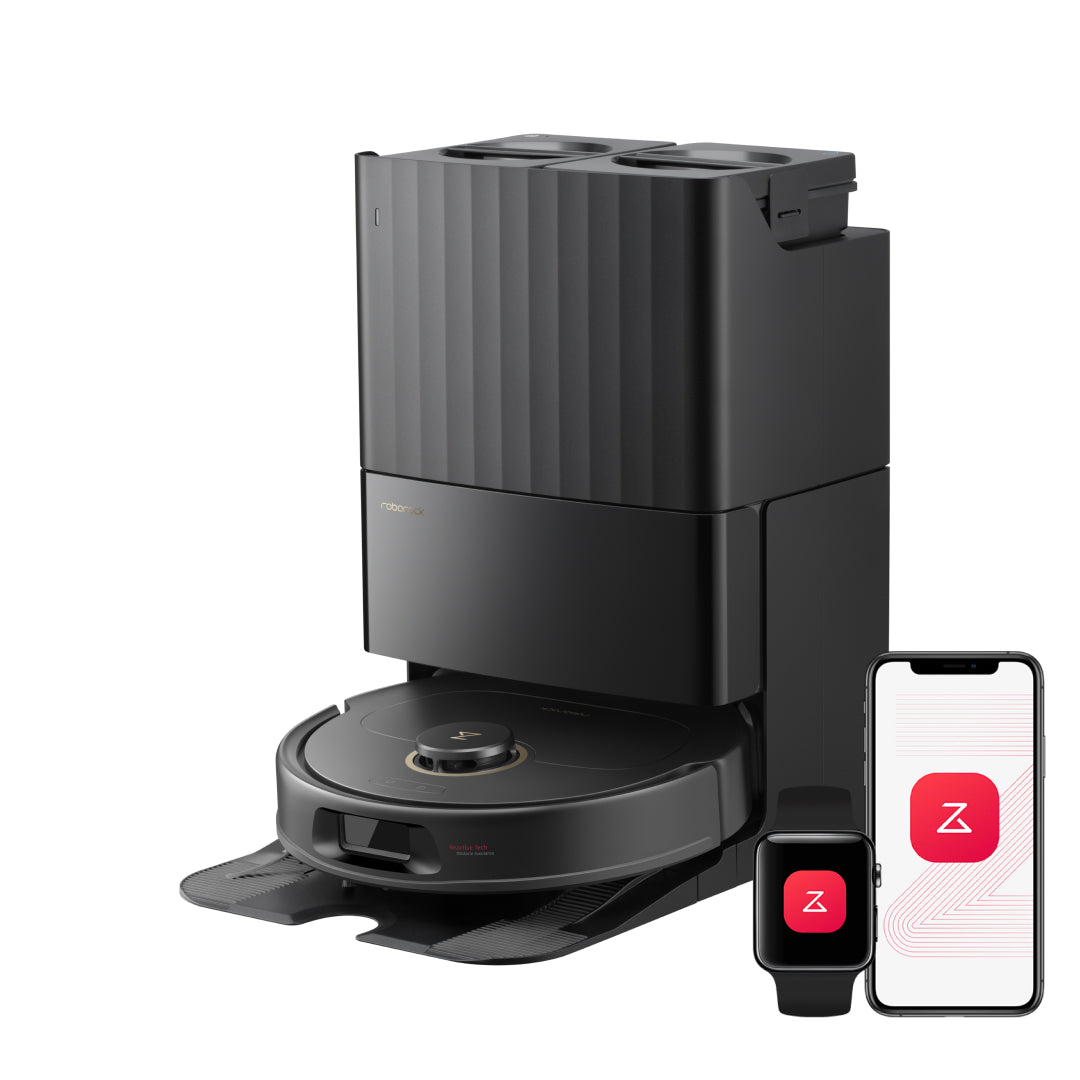
- Suction: 12,000Pa | Runtime: up to 180 min | Mopping: dual spinning pads, 10mm lift | Self-empty: ~10 weeks | Typical: ~$500 | 4.1/5 (~1,100 ratings)
Roborock Qrevo Curv — the flagship
18,500Pa suction, DuoDivide dual-roller brush that scored a 0% hair-tangle result in Vacuum Wars testing, and an AdaptiLift chassis that climbs thresholds up to 4cm — a genuinely unique feature for homes with room dividers or thick rugs. Up to 240 minutes of runtime, FlexiArm mop and side brush, hot-water mop washing and drying, LiDAR + AI RGB navigation. Owner ratings around 4.4/5, though the review base is small.
Honest drawbacks: At ~$900–1,150 typical it's a big step up from the S5 for gains most homes won't fully use. Cable avoidance is a known weak point. The 325ml onboard dustbin is small for a flagship (the dock compensates, but it's worth noting).
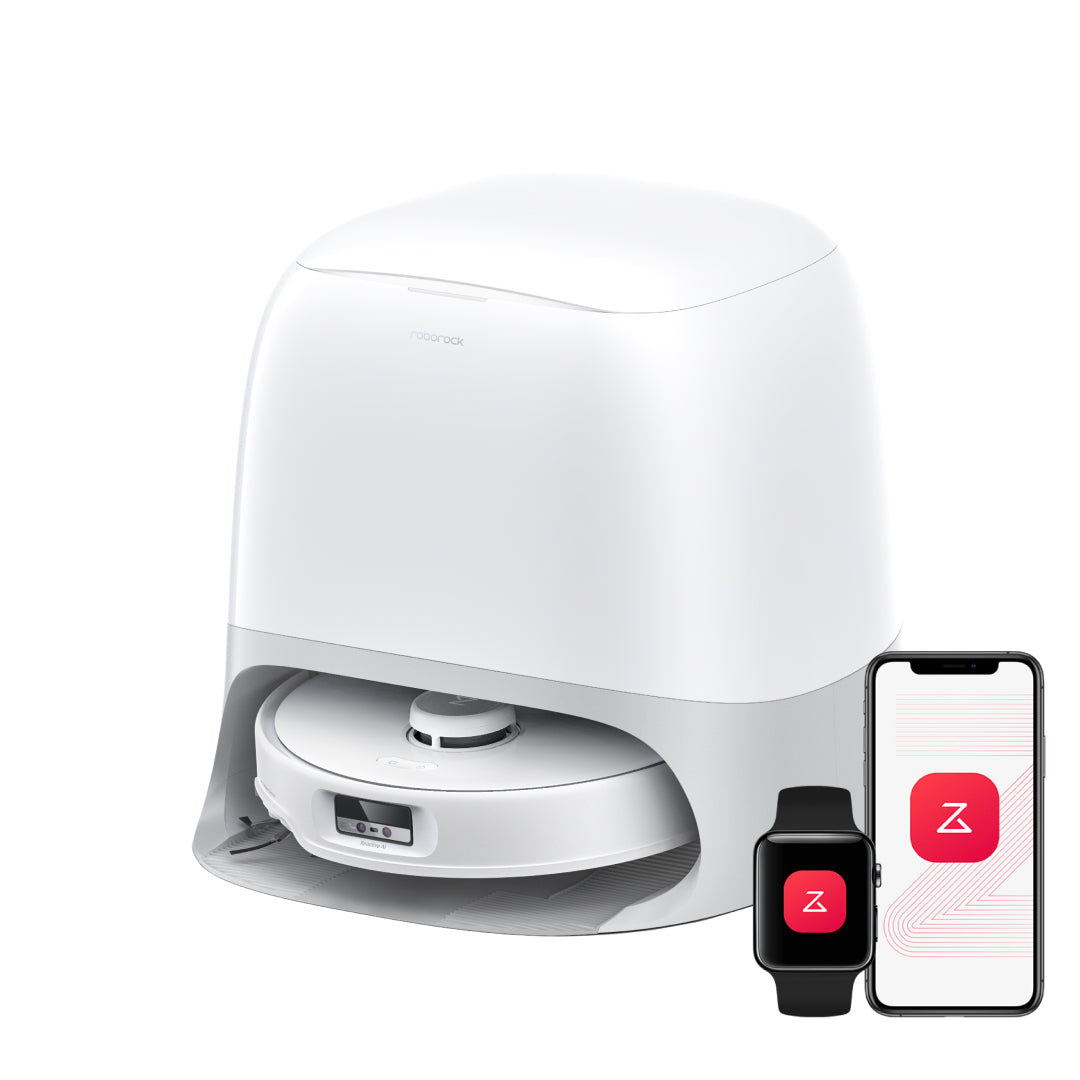
- Suction: 18,500Pa | Runtime: up to 240 min | Mopping: FlexiArm, hot-water wash/dry | Self-empty: yes, with dock | Typical: ~$900–1,150 | ~4.4/5 (limited ratings)
iRobot Roomba j7+ — the pet-owner's insurance policy
Camera-based PrecisionVision avoidance with the P.O.O.P. replacement guarantee, dual rubber brushes, Imprint Smart Mapping, and a Clean Base that seals debris into 2.5L AllergenLock bags for up to 60 days. Rated ~4.2/5 across roughly 32,000 Amazon ratings — the deepest owner dataset of any robot here. Frequently on sale for $500–600.
Honest drawbacks: No mop. iRobot publishes no suction figure and review consensus says it's mid-pack on deep carpet cleaning; owners report long hair still wraps the brushes and occasional clumps on some carpets. App bugginess and map resets are recurring complaints. Full price ($800) plus ongoing bag costs make it pricey for a vacuum-only robot.
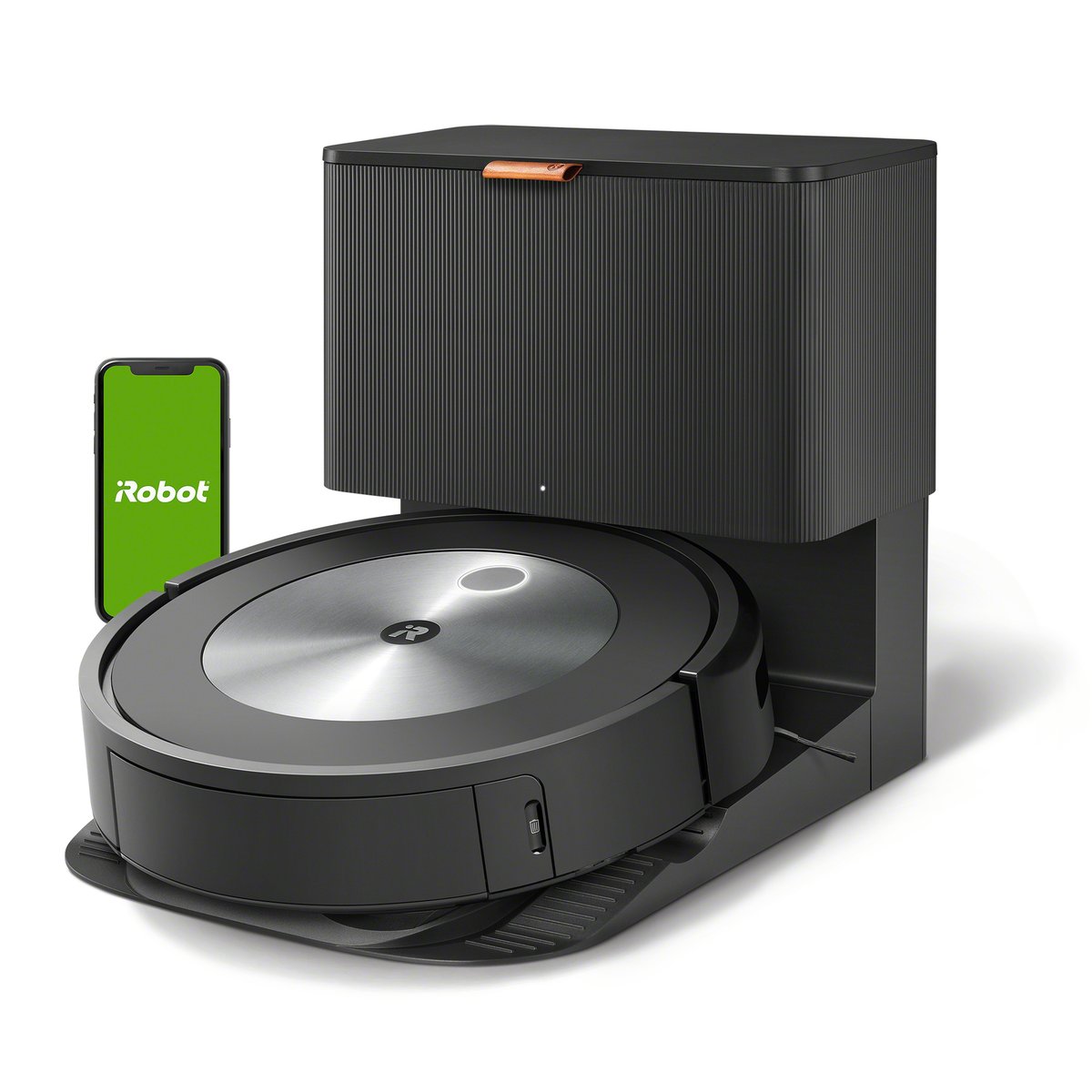
- Suction: not published | Runtime: ~90–120 min | Mopping: none | Self-empty: 60 days (2.5L bag) | Typical: ~$500–600 | ~4.2/5 (~32k ratings)
iRobot Roomba Combo 10 Max — the flagship that can't justify itself
iRobot's most advanced robot: 4-stage cleaning with dual rubber brushes, SmartScrub back-and-forth mopping with downward pressure, an auto-retracting mop pad that keeps carpets dry, Enhanced Dirt Detect, PrecisionVision avoidance, and the first iRobot AutoWash dock (empties debris, refills water, washes and dries the mop pad, self-cleans). Matter and Apple Home support. List $1,399, typical around $1,000.
Honest drawbacks: The value proposition collapses against competition — TechRadar rated it 2.5/5 for value, and expert aggregates score it well below Roborock and Dreame flagships on cleaning performance. Single mop pad vs. rivals' dual spinning systems. Owner rating data is thin, which at this price is itself a red flag. Heavier and louder than average in owner reports.
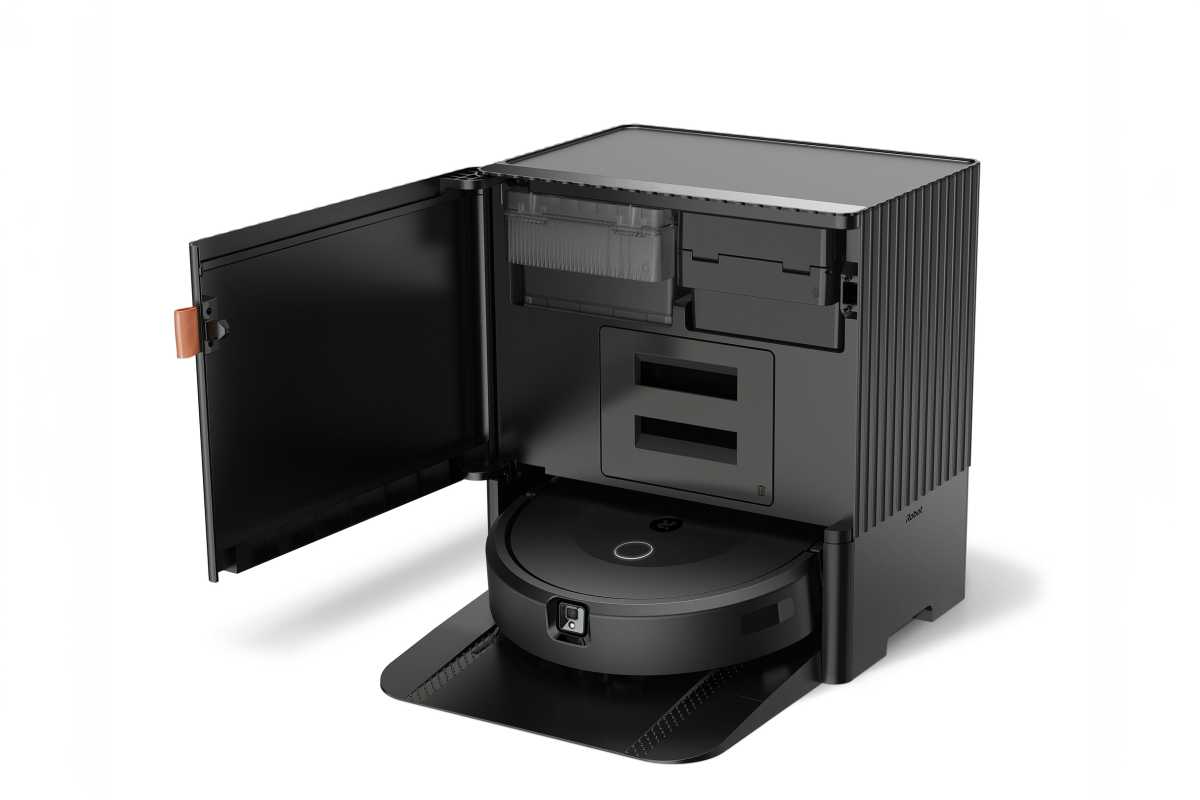
- Suction: not published | Runtime: not disclosed | Mopping: SmartScrub pad, auto-retract | Self-empty: ~2.5L bag + AutoWash | Typical: ~$1,000 | Owner data: limited, expert reviews middling
Who should buy which
Buy Roborock if: you want the most cleaning performance per dollar; mopping matters (hard floors, paw prints, kitchens); you like granular app control; you have thresholds or mixed flooring the Curv's lift chassis can handle.
Buy iRobot if: you have an accident-prone pet and want the P.O.O.P. guarantee; you value the most established brand with the widest parts availability; you want Matter/Apple Home integration (Combo 10 Max); you prefer a simpler app.
iRobot's bankruptcy and acquisition: what it means for buyers
The single biggest story in robot vacuums in 2026: iRobot filed for bankruptcy in December 2025 and was acquired by its Chinese contract manufacturer. The brand continues to operate — Roombas are still sold, the app still works, and warranty support continues — but the corporate backdrop is genuinely less stable than it once was, while Roborock is on a straightforward growth trajectory (and now leads the global market outright at ~21.7% share).
What this means practically: if you buy a Roomba today, the product you receive is the same one reviewers tested; nothing about the bankruptcy degrades the hardware. The risk is longer-horizon — future software support, parts availability five years out, and the company's ability to keep investing in new models. iRobot's new 2026 Max/Plus lineup (Max 875/775/715, Plus 678/575/515/415) is the post-bankruptcy attempt at a comeback, but review consensus remains that Roborock and Dreame offer more cleaning tech for the money. If long-term corporate stability factors into your decision, it's the one genuine cloud over the iRobot column — and a reason the "is Roomba still worth it" question dominates 2026 buying discussions. For the full lineup breakdown, see our which Roomba should you buy decoder.
Frequently asked questions
Is Roomba still worth it?
It depends what you're buying it for. The Roomba j7+ remains worth it for one specific buyer: pet owners who want the P.O.O.P. waste-avoidance guarantee, ideally bought on sale around $500. For general cleaning performance per dollar, no — Roborock and Dreame give you more suction, better mopping, and more automated docks for the same money in 2026, and review consensus across the industry now lands there. The bankruptcy doesn't make existing Roombas worse products; it just removes the "safe established brand" argument that used to justify iRobot's price premium.
Is iRobot going out of business?
iRobot filed for bankruptcy in December 2025 and was acquired by its Chinese contract manufacturer — but it is still operating, selling Roombas, and supporting its products. "Out of business" overstates it; "a diminished company under new ownership trying to rebuild" is closer. If you're worried about warranty support, the practical advice is the same as for any struggling brand: buy at a price where the product is worth it on its own merits today, don't pay a premium for the brand's future.
Why is Roborock cheaper than Roomba?
Different cost structures and different strategies. Roborock (and Dreame, Ecovacs) manufacture at Chinese scale, iterate hardware aggressively, and price to gain share — their suction and dock specs read like flagships at midrange prices because the hardware genuinely costs them less to build. iRobot carried US-brand overhead, a smaller manufacturing scale, and priced on brand equity built over two decades. Post-bankruptcy, that brand premium is exactly what's being questioned.
Should I buy Dreame instead of Roborock or Roomba?
Dreame is the rising third option and arguably the best hardware value of the three in 2026 — the L40 Ultra's hot-water mop washing, auto detergent dosing, and self-cleaning washboard out-spec Roborock's dock at a lower typical price. Roborock still wins on software maturity, navigation consistency, and overall brand momentum. Our full breakdown is in the Roborock vs Dreame comparison.
Which Roomba should I buy in 2026?
iRobot's 2026 renumbering (Max 875/775/715, Plus 678/575/515/415) is genuinely confusing — Max is the flagship tier, Plus is midrange, and the numbers within each tier mostly track feature trims. Our Roomba lineup decoder walks through every tier and names the two models we'd actually buy.
Our recommendations
Top pick: Roborock Qrevo S5V. For the large majority of buyers, it's the rational choice — flagship-adjacent cleaning and a fully automated dock at a mid-range typical price. iRobot has no answer at $500.
Best for pet owners: iRobot Roomba j7+. Buy the avoidance, not the suction. If your dog is unpredictable, the waste guarantee alone is worth the premium over similarly priced Roborocks — and it still cleans well day to day.
Premium pick: Roborock Qrevo Curv. If you're spending flagship money anyway, the Curv's suction, anti-tangle rollers, and threshold-climbing chassis deliver more than the Combo 10 Max for similar money.
Who should skip: bargain hunters should know the S5 drops to ~$500 on sale — don't pay list. And we'd skip the Combo 10 Max entirely at current pricing; a Qrevo Curv or even the S5 gives you more for less. High-pile-carpet homes should temper expectations for every robot on this list — none fully replaces an upright.
| Product | Best for | Approx. price | Owner rating |
|---|---|---|---|
| Roborock Qrevo S5V | Best value overall | ~$500 | 4.1/5 (~1,100 ratings) |
| Roborock Qrevo Curv | Premium cleaning power | ~$900–1,150 | ~4.4/5 (limited ratings) |
| iRobot Roomba j7+ | Best obstacle avoidance | ~$500–600 | 4.2/5 (~32k ratings) |
| iRobot Roomba Combo 10 Max | iRobot flagship (hard to recommend) | ~$1,000 | Limited owner data |
Prices are approximate typical prices observed in September 2026; they change with sales. Owner ratings are aggregated Amazon ratings rounded from listed data.