 Solid-Reviews
Robot Vacuums and Dark Floors: What Actually Works (2026)

Robot Vacuums and Dark Floors: What Actually Works (2026)
The short version: Dark floors cause robot vacuums two separate problems: (1) cliff sensors mistake dark surfaces for a drop and the robot refuses to clean them, and (2) hard brushrolls can micro-scratch dark hardwood finishes over time. Both are manageable. The fixes: choose a robot with rubber/anti-tangle brushes rather than stiff bristles, check recent owner reports for your specific model on dark floors, and know the workarounds (sensor tape, no-go zones, scheduling) before you buy.
This is one of the most under-covered issues in robot vacuum buying — a niche query with high intent and thin authoritative coverage. Here's the full picture.
Problem 1: the robot thinks your floor is a cliff
Almost all robot vacuums use infrared cliff sensors on their undersides to avoid tumbling down stairs. IR sensors work by bouncing light off the floor — and very dark floors, black rugs, and dark patterned carpets absorb that light instead of reflecting it. The sensor reads "no reflection" as "no floor" and the robot either refuses to drive onto the dark area, backs away from it, or throws a cliff-sensor error and stops.
How bad it is varies enormously by model and by floor. Some robots handle dark hardwood fine but balk at black rugs; others won't cross a dark-stained floor at all. Factors that make it worse: matte or textured dark finishes (absorb more IR), black area rugs on light floors (maximum contrast, maximum confusion), and low ambient light. This is genuinely a try-it-and-see situation — which is why "check recent owner reports for your specific model" is the most useful advice in this guide.
Problem 2: scratching dark hardwood
Dark floors show everything, including micro-scratches a light floor would hide. Two culprits: stiff bristle brushrolls that act like sandpaper over thousands of passes, and grit trapped under the robot (a grain of sand under a spinning brush will score any finish). Rubber or soft-roller brush systems are meaningfully gentler — one more reason the anti-tangle rubber brushes on modern robots (Roborock's dual system, Dreame's rollers) are the right choice for dark hardwood beyond just the hair benefit.
Prevention matters more than the robot choice: run the robot often (less grit accumulation per pass), keep the brushroll clean, and consider felt bumper strips if your robot bumps dark baseboards. No robot vacuum is zero-risk on a piano-finish dark floor — but rubber brushes plus frequent runs keep the risk minimal, and owner reports of visible scratching cluster around older bristle-brush models.
What to look for if your floors are dark
- Rubber/soft brushrolls, not stiff bristles. Better for scratch risk and better for hair anyway.
- Owner reports mentioning dark floors specifically. Search "[model] dark floors reddit" before buying — this is the one spec no manufacturer publishes.
- Adjustable cliff-sensor sensitivity or the ability to disable cliff sensors per map. A few models and third-party firmwares allow it; most don't.
- Good no-go zone and room-mapping. If the robot won't do your black rug, precise no-go zones at least let it clean everything else without errors.
- Mop lift height. On dark hardwood, a mop that drags grit across the finish is worse than no mop — 10mm+ lift (all three picks below) keeps pads off the floor over rugs.
The picks
Roborock Qrevo S5V — best all-rounder for dark floors
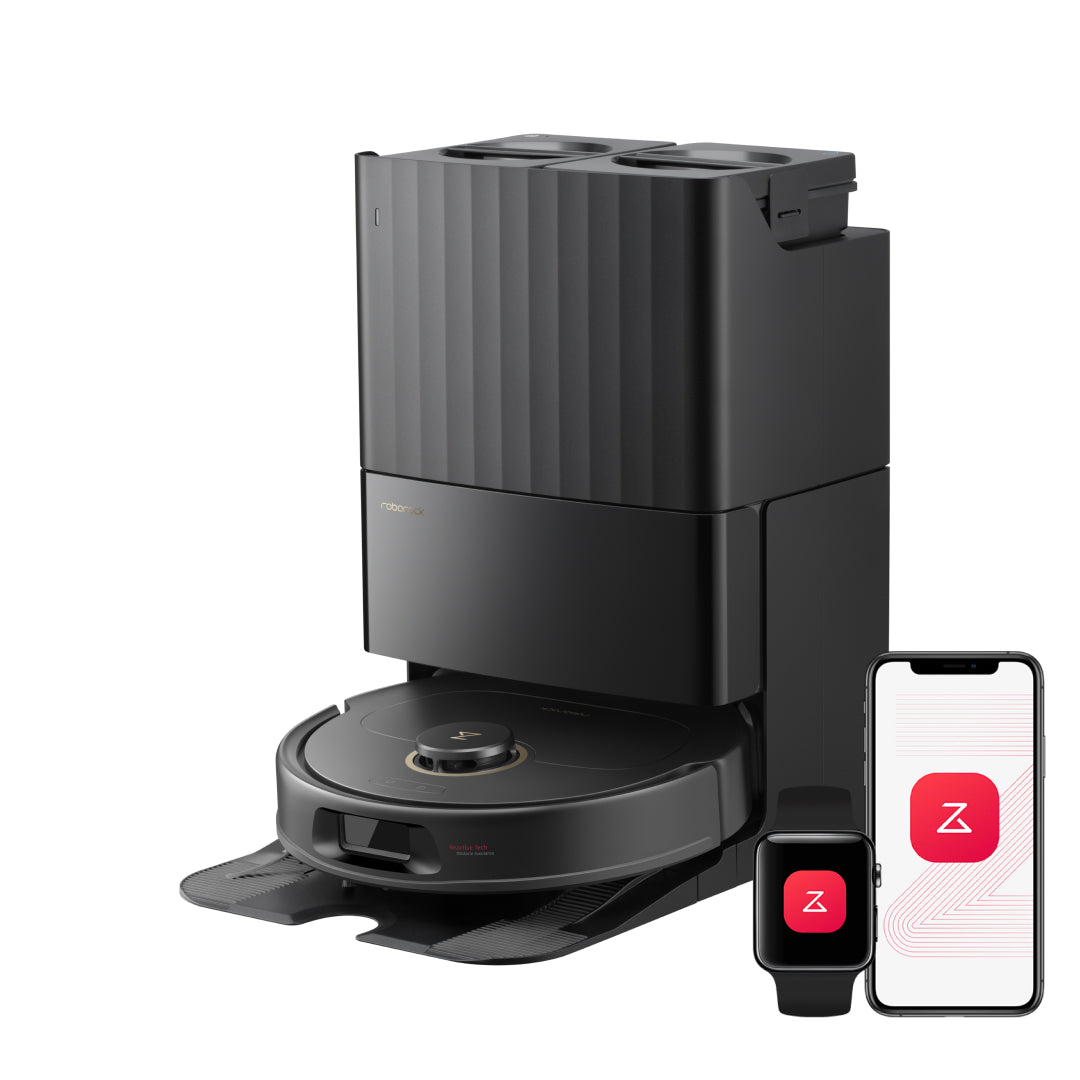
The S5's rubberized zero-tangle brush system is the gentlest on dark finishes among mainstream picks, its 10mm mop lift keeps pads off rugs, and its LiDAR navigation is the most methodical in the class — useful when you're setting no-go zones around a problem rug. Owner reports on dark hardwood are broadly positive. 12,000Pa suction, self-emptying dock, ~$500 typical.
Dark-floor caveat: like all IR-sensor robots, it can hesitate on very dark rugs — check recent owner threads for your floor type.
Dreame L40 Ultra — best for dark floors plus deep cleaning

11,000Pa suction with roller brushes, MopExtend edge mopping, and a dock that washes mops in 149°F hot water — strong for dark floors that show every speck of dust, since the hot wash keeps mops from redepositing grime. Four stored floor maps help if you want different no-go zones per floor. Often under $600 typical.
Dark-floor caveat: the stock brush tangles more than claimed — get the TriCut anti-tangle brush (also gentler long-term). Camera-based navigation wants ambient light; dark rooms with dark floors are its worst case.
eufy X10 Pro Omni — best avoidance on mixed dark/light floors
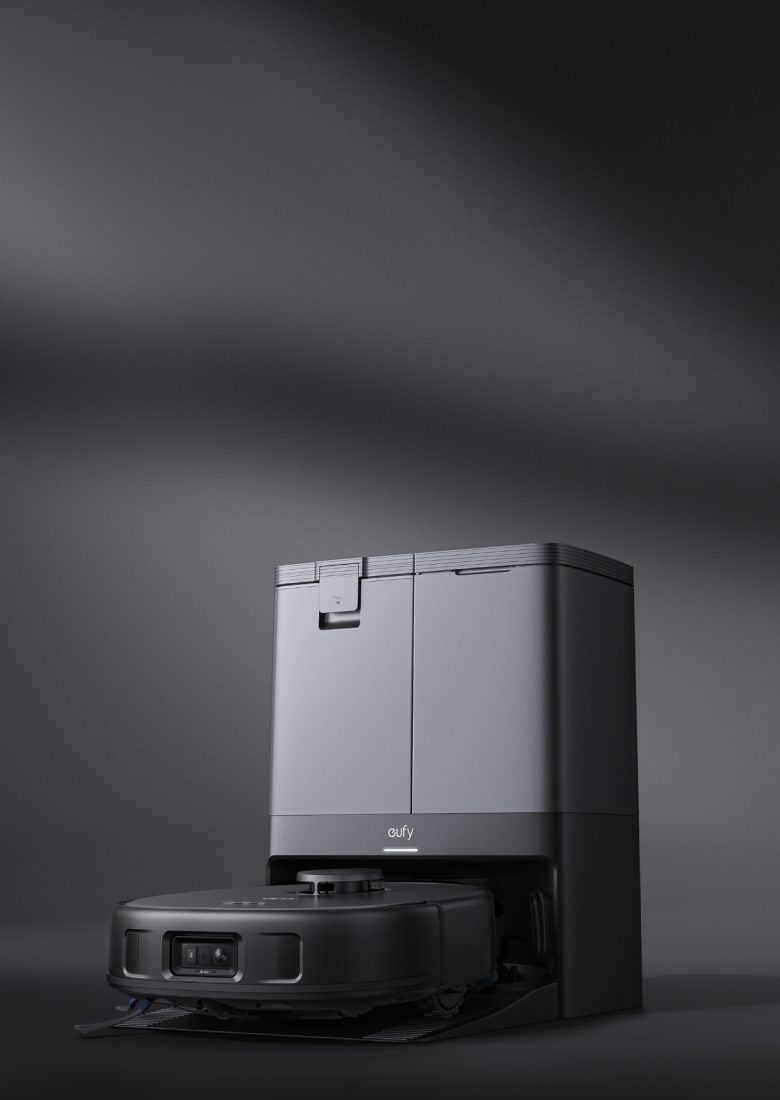
The X10 Pro Omni's AI obstacle avoidance (100+ object types, works in low light) is the best here at navigating the transitions between dark rugs and light floors without getting confused or stuck, and its 12mm mop lift is the highest of the three. Auto-detangling roller brush. ~$550–600 typical.
Dark-floor caveat: 8,000Pa suction is the lowest here — fine for hard floors, less convincing on dark carpet where embedded dust shows.
Workarounds that actually work
- White tape over the cliff sensors. The classic owner fix: a small piece of white or reflective tape over each cliff sensor tricks it into seeing "floor." It works — but it also blinds the robot to actual stairs. Only do this in a stair-free home, and remove it if you move the robot near a drop. This is the fix people search for; treat it with respect.
- No-go zones and virtual walls. If the robot errors on one black rug, zone it out and let it clean everything else. Methodical LiDAR robots (Roborock especially) handle this gracefully.
- Schedule around light. Camera-assisted robots behave better on dark floors in good light — run them during the day with curtains open.
- Rug tape or a lighter rug pad. Sometimes the issue is the rug sliding or curling, not the color — eliminate the mechanical problem first.
- Keep floors grit-free. The scratching fix is mostly maintenance: frequent runs, clean brushes, and entryway mats so grit never reaches the dark hardwood.
Frequently asked questions
Why does my robot vacuum avoid dark floors or black rugs?
Its infrared cliff sensors bounce light off the floor to detect drops. Dark surfaces absorb the IR light instead of reflecting it, so the sensor reads "no floor" and the robot treats your dark rug like a staircase. It's a sensor limitation, not a defect — nearly all brands behave this way to some degree.
Do robot vacuums scratch dark hardwood floors?
They can, over time — but it's usually preventable. The main causes are stiff bristle brushrolls and grit trapped under the robot. Rubber or soft-roller brushes (standard on current Roborock, Dreame, and eufy flagships) are much gentler, and frequent runs prevent the grit buildup that does the real damage. Visible scratching reports cluster around older bristle-brush models and neglected maintenance, not modern rubber-brush robots.
Can I turn off the cliff sensors on a robot vacuum?
Most brands don't offer it — it's a safety feature. A few models expose sensor sensitivity settings, and there's third-party firmware for some older robots, but for current models the practical answer is the white-tape workaround (stair-free homes only) or no-go zones. Don't buy a robot counting on a disable option that may not exist.
Will tape over the cliff sensors damage the robot?
The tape itself won't damage anything — it's a reversible physical workaround owners have used for years. The risk is what the tape disables: with sensors covered, the robot cannot detect stairs or drops. Only use it where there are no drops, and remove the tape if the robot will ever run near stairs.
What's the best robot vacuum for black rugs specifically?
Black rugs are the hardest case (maximum IR absorption plus a texture change). Prioritize: rubber brushes, strong suction (embedded dust shows on black), high mop lift so pads don't drag, and precise no-go zones as a fallback. Of our picks, the Dreame L40 Ultra's suction and the Roborock Qrevo S5V's navigation make them the strongest candidates — and search "[model] black rug reddit" for owner reports before committing.
| Product | Best for | Approx. price |
|---|---|---|
| Roborock Qrevo S5V | Best all-rounder for dark floors | ~$500 |
| Dreame L40 Ultra | Dark floors + deep cleaning | under $600 |
| eufy X10 Pro Omni | Mixed dark/light transitions | ~$550–600 |
Prices are approximate typical prices observed in September 2026; they change with sales.