 Solid-Reviews
Best Robot Vacuum and Mop Combos (2026)

The short answer
The robot vacuum and mop combo market has split in two. On one side: self-washing dock flagships that wash their own mop pads with hot water, dry them with heated air, empty their own dustbins, and refill their own water. On the other: basic pad-draggers that just drag a damp cloth behind a vacuum. The flagships are the ones worth buying now, and the price gap between the two tiers has nearly closed.
Our top pick for most homes is the Roborock Qrevo S5V. With 12,000Pa suction, dual spinning mops that wash and dry themselves in the dock, a 10mm mop lift for carpets, and edge-reaching FlexiArm mopping, it covers every base at $899.99 (list price). It is rated 4.1/5 across roughly 1,100 owner ratings on Amazon, with owners consistently praising the mapping accuracy and the genuinely hands-off dock.
If you want the most dock for the money, the Dreame L40 Ultra washes its mops with 149°F hot water, auto-doses detergent, self-cleans its own washboard, and extends its mop pads out to baseboards, for around $499 typical. If your home is mostly carpet with pets, the iRobot Roomba Combo 10 Max still cleans carpet better than most, but it is dramatically outgunned on specs and dock features for its price, so we would only buy it on a deep discount. And a reality check before you buy anything here: no robot mop replaces a real mop for stuck-on grime. These are maintenance cleaners. Run them often and your floors stay clean; expect them to erase a dried spaghetti-sauce splatter and you will be disappointed.
What actually separates the good combos from the bad ones
Four things matter more than the marketing:
- Mop pad washing and drying. The dock should wash the pads after every run (hot water is better, 140°F+ dissolves grease and kills odor) and dry them with heated air. A robot that parks wet pads in a warm dock is a mildew machine.
- Mop lifting over carpet. The robot must lift its mops 10mm+ when it rolls onto carpet or rugs, or it will drag a dirty wet pad across your rug. The best ones physically detach or park the mop entirely.
- Suction power. 8,000Pa is the floor for respectable carpet cleaning now; 11,000–12,000Pa is the current sweet spot. Anything above that has diminishing returns on hard floors but helps on carpet.
- Water tank design. Look for a dock with separate clean and dirty water tanks plus auto-refill of the robot's onboard tank. You should only be touching the dock's tanks every week or two.
Do robot mops actually scrub: or just drag a wet pad?
This is the skepticism query that shows up everywhere ("do robot mops actually work"), and the honest answer is: it depends which mop. There are two completely different things being sold under the name "robot mop":
Pad-draggers (cheap robots): a damp cloth pad dragged behind the vacuum with no pressure and no agitation. These spread dirty water around more than they clean. If a robot's "mopping" is a static pad and a gravity-fed water tank, treat it as a light dust wipe, not a mop.
Real scrubbing systems (everything in this guide): dual spinning pads with downward pressure (Roborock's 200 RPM pads, eufy's MopMaster with ~1kg of pressure, Dreame's rotating pads), iRobot's back-and-forth SmartScrub motion, or ECOVACS' roller-mop design. Combined with a dock that washes pads in hot water and dries them with heated air, these handle the 90% of floor maintenance that's dust, footprints, and light spills, genuinely well.
What no robot mop does: erase dried spaghetti sauce, scrub grout, or dissolve sticky residue that's been sitting for days. They're maintenance cleaners. Run them twice a week and your floors stay clean; ask them to rescue a neglected floor and you'll be disappointed. If your skepticism comes from owning an old pad-dragger, the current generation is a different category of device.
The contenders
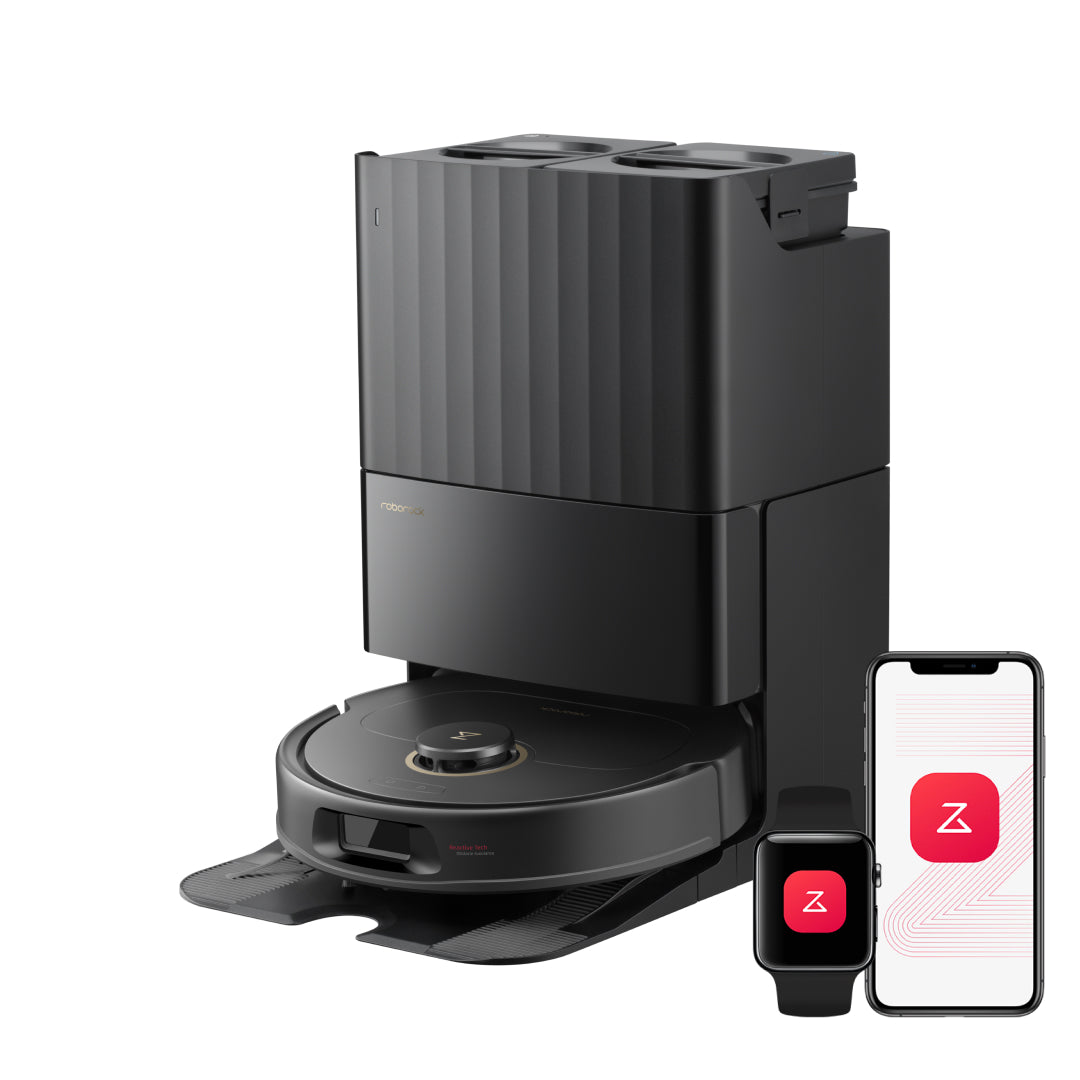
Roborock Qrevo S5V: Best all-round combo for most homes
The Qrevo S5V is the safest recommendation in this category: strong on every axis, weak on none. It pairs 12,000Pa of suction with dual spinning mop pads (200 RPM, 30-level water control) and an ultrasonic carpet sensor that lifts the mops 10mm when it detects carpet. The FlexiArm edge mopping swings a mop pad out to the side so it actually cleans along baseboards: the strip that round robots famously miss. The multifunction dock self-empties dust into a 2.7L bag (roughly 10 weeks of storage), washes the mop pads, dries them with warm air, and refills the robot's water tank from 3L clean / 2.5L dirty reservoirs. Navigation is LiDAR-based with multi-floor mapping, and it works with Alexa, Google Assistant, and Siri.
Review consensus is solid: owners rate it around 4.1/5 across ~1,100 ratings, with the most consistent praise going to mapping accuracy, pet-hair pickup (the dual anti-tangle brush design genuinely sheds hair), and how little maintenance the dock demands. Typical price: $899.99.
Honest drawbacks: Obstacle avoidance is only average. Reviewers note it can still bump into cables and small objects, so tidy floors help. It is Wi-Fi 2.4GHz only, which matters if your router doesn't broadcast a separate 2.4GHz network. And at this price you do not get hot-water mop washing; pad washing uses room-temperature water, so the pads need an occasional manual deep-clean.
Dreame L40 Ultra: Best dock features for the money
If you judge a combo by its dock, the L40 Ultra wins this roundup. It washes its dual rotating mop pads with 149°F (65°C) hot water, one of the hottest washes in the category, then dries them with hot air and self-cleans the dock's own washboard so grime doesn't accumulate where the pads get washed. It also has a built-in detergent tank that auto-doses cleaning solution, a feature rivals charge flagship prices for. Suction is 11,000Pa, and the TriCut brush has a built-in hair-cutting design that slices long hair before it wraps the roller. Pet owners consistently call this out as a standout.
The mopping hardware is clever too: MopExtend RoboSwing swings the right mop pad outward to scrub along edges and into corners, and the side brush extends and lifts the same way. Over carpet, the mops lift 10.5mm or can be left behind at the dock entirely. Owners rate it 4.3/5 across ~700 ratings, and reviewers consistently describe it as flagship hardware at a midrange price. It lists at $1,500 but sells for around $499 typical, though Amazon availability is spotty right now.
Honest drawbacks: The dock is enormous. Measure your space before ordering. Obstacle avoidance relies on a camera and 3D structured light, which means it needs some ambient light to see well and has raised the usual privacy eyebrows among some owners. The Dreamehome app is powerful but dense; expect to spend an evening tuning it. And like most of the category, it is 2.4GHz Wi-Fi only.

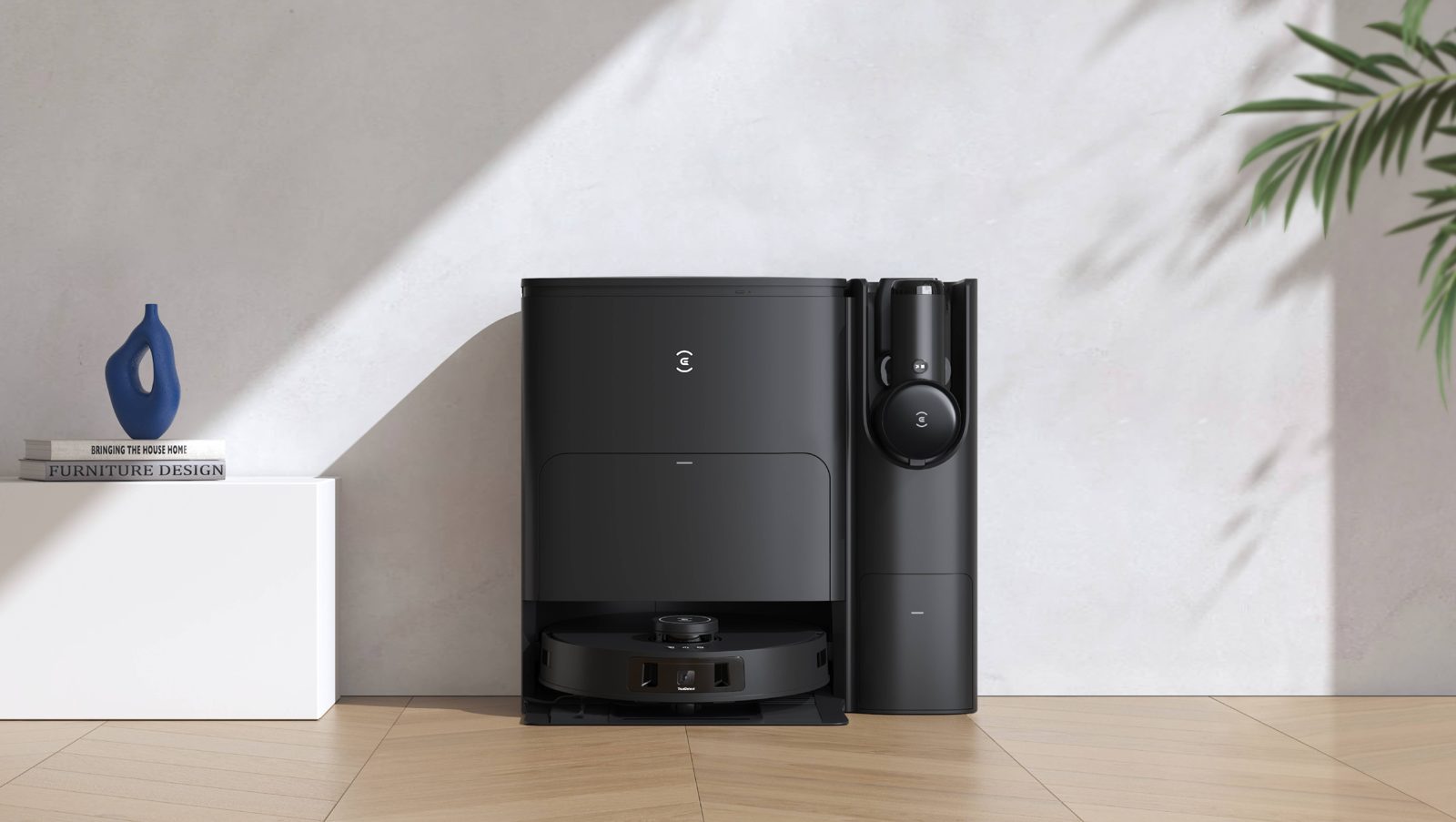
ECOVACS DEEBOT T30S Combo: Best deal, plus a bonus handheld vacuum
The T30S Combo's party trick is the one nobody else offers: the dock also houses a handheld vacuum that shares the station's dust collection. Robot vacuums cannot reach couch cushions, stairs, car interiors, or ceiling corners. The handheld covers everything the robot can't, and both auto-empty into the same bag. It is the most complete floor-to-furniture cleaning system in this guide.
The robot itself is no slouch: 11,000Pa suction, 158°F hot-water mop washing (the hottest wash here), hot-air drying, auto water refill, TruEdge adaptive edge mopping (ECOVACS claims 1mm edge accuracy via an extending mop arm), and ZeroTangle brush design. It lists at $1,199.99 but ECOVACS discounts it aggressively. It regularly drops to $380–$450, at which point it is the best value per feature in the category by a wide margin.
Honest drawbacks: The ECOVACS app is the most commonly criticized part of the package. Owners report it is feature-rich but buggy and confusing compared with Roborock's or Dreame's. The all-in-one dock (robot + handheld storage) has a very large footprint. And because the typical price swings so much, buying at list price is a mistake; wait for one of the frequent sales.
eufy X10 Pro Omni: Best for pet homes and cluttered floors
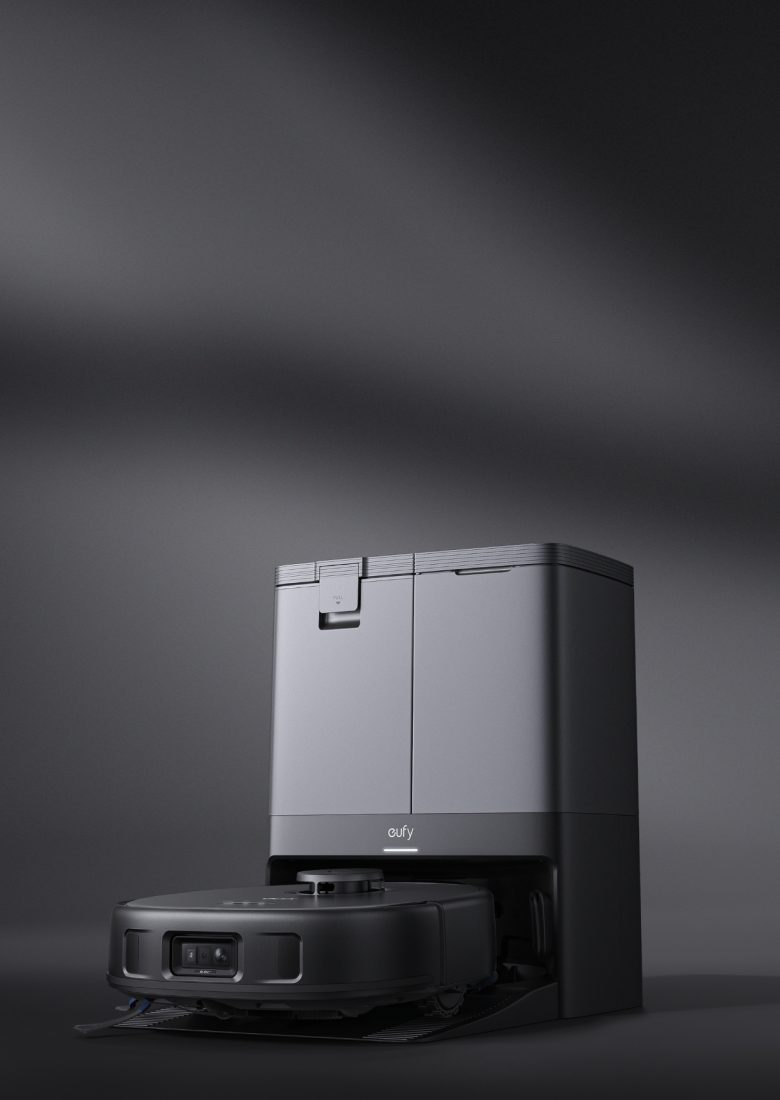
If your floors are an obstacle course of pet toys, shoes, and cables, the X10 Pro Omni's AI.See obstacle avoidance, which recognizes 100+ object types, even in low light, is the best in this group. Owners consistently report it dodges things other robots eat, and it is gentle on furniture. The MopMaster 2.0 system spins dual pads at 180 RPM with about 1kg of downward pressure, and the mops lift 12mm over carpet (the highest lift here). The Omni Station washes the pads, dries them with 113°F (45°C) heated air, empties dust into a 2.5L bag (about 2 months), and refills from a 3L clean tank. The auto-detangling roller brush reverses and combs itself clean. Owners with long-haired pets report going many cleans without touching the roller.
Suction is 8,000Pa. The lowest in this group, and noticeable on thick carpet, though owners say it handles hard floors and low-pile carpet well. It is listed at $899.99 on eufy.com. As of October 2026, eufy.com marks the X10 Pro Omni as no longer available and points buyers to the Omni C30 as its successor.
Honest drawbacks: 8,000Pa is fine for maintenance cleaning but it is not a deep-carpet cleaner; heavy-shedding homes with thick carpet should look at the 11,000Pa+ options. Mop washing uses room-temperature water (no hot-water wash), so pads need occasional manual attention. 2.4GHz Wi-Fi only, and the dock is bulky.
iRobot Roomba Combo 10 Max: Great carpet cleaner, poor value
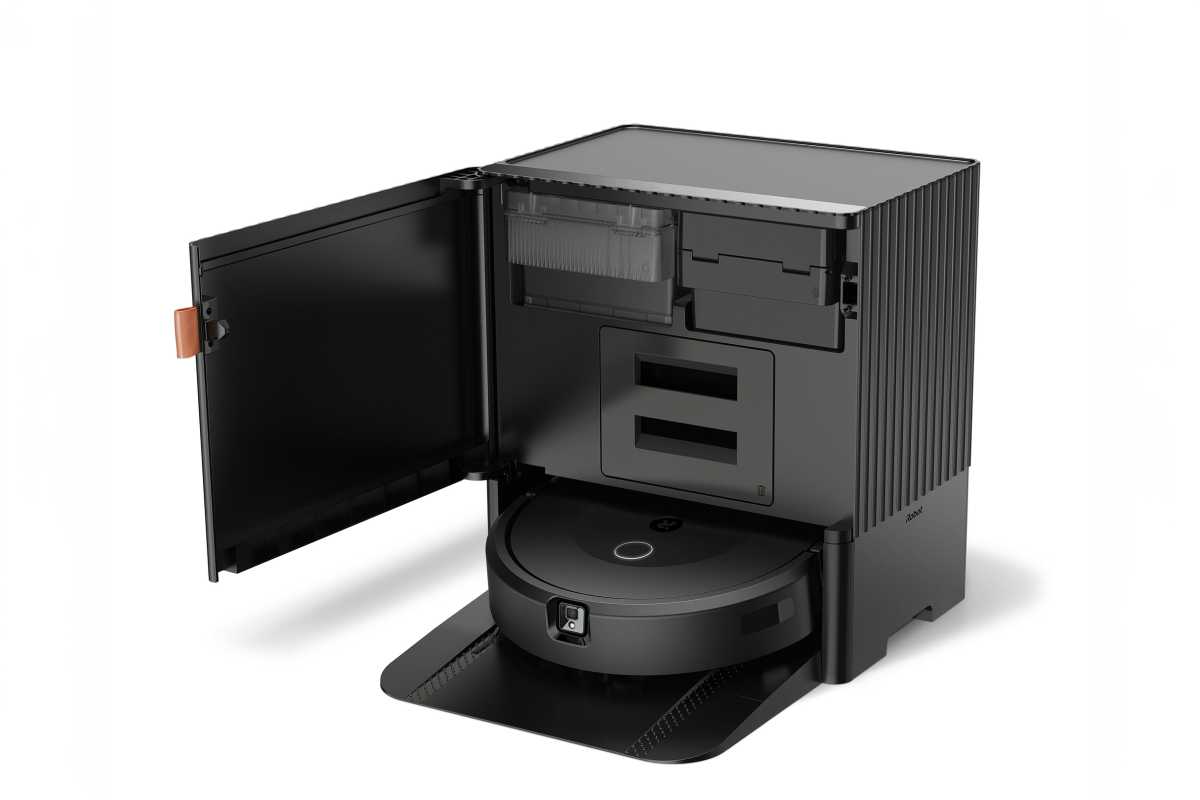
The Combo 10 Max is the interesting outlier. Its headline feature is genuinely clever: instead of lifting its mop pad a few millimeters, it retracts the entire mop pad onto the top of the robot when it is not mopping, so there is zero chance of dragging a wet pad across carpet. It also does a back-and-forth scrubbing motion on stains, mimicking how a person mops, and its Dirt Detect sensors make extra passes over dirty areas. The AutoWash dock empties dust, washes and dries the mop pad. Reviewers consistently say it is the best carpet vacuum of this group, with an aggregated pet-hair score of 8.8/10 and the most thorough dirt pickup on rugs.
The problem is everything around that: it launched at $1,399 (typical price is about $1,040 at Amazon, or $754.95 at Walmart), yet it uses a single fixed mop pad rather than dual spinning pads, publishes no suction figure to compete with the 11,000–12,000Pa crowd, and its dock washes pads without hot water. Aggregated expert ratings put it around 3.6/5 overall, with value-for-money scores near the bottom of the premium tier. You are paying a premium for the iRobot name, the retractable mop arm, and iRobot's well-regarded support. Not for raw cleaning hardware.
Honest drawbacks: The price is the big one. At about $1,040 at Amazon, or $754.95 at Walmart, it costs more than the Dreame and offers less dock technology than the Dreame and Roborock. The single fixed pad mops less aggressively than dual spinning pads. The dock is large. And iRobot's app, while improved, still buries some features in non-obvious menus.
The honest limitations (read before buying)
No robot mop replaces a real mop. Spinning pads with downward pressure handle dust, footprints, and light spills beautifully. That is 90% of floor maintenance. Dried-on sauce, grout grime, and sticky residue need a human with a mop or a scrub brush. Buy a combo to keep clean floors clean, not to rescue dirty ones.
Suction numbers are not the whole story. The jump from 8,000 to 12,000Pa matters on carpet; beyond that, brush design and airflow matter more than the headline number. Don't pay extra for 20,000Pa+ unless you have thick carpet throughout.
Budget for consumables. Dust bags, mop pads, filters, and (for the Dreame) detergent add roughly $50–$100/year. Heated-air drying and hot-water washing reduce how often you replace pads, which is part of why the dock matters.
Dark floors and black rugs can confuse cliff sensors. This is a category-wide quirk. If you have very dark flooring, check our robot vacuum dark-floor guide for which models behave and the workarounds before buying.
Frequently asked questions
Is a robot vacuum and mop combo worth it?
For homes that are mostly hard floors: yes, and it's increasingly the default purchase. Most 2026 flagship robots are combos. The value case is simple: one device, one dock, one schedule handles both dust and the light grime layer that makes floors look dull. The case against: if your home is wall-to-wall thick carpet, the mop hardware is dead weight (buy a dedicated vacuum); if you need real stain removal, no combo replaces a stick mop. And you have to actually run it. A combo that sits in its dock cleans nothing.
Do robot mops actually work?
The current generation's spinning-pad and scrubbing systems work well for maintenance cleaning: dust, footprints, paw prints, light spills. Hot-water pad washing at the dock (149–158°F on the Dreame and ECOVACS) keeps the pads from just redistributing grime. What they don't do is deep-clean: dried-on food, sticky residue, and grout grime still need a human. Set the expectation at "keeps clean floors clean" and you'll be satisfied.
Should I get a combo or a separate robot vacuum and a separate mopping robot?
For almost everyone, the combo. Separate devices made sense five years ago when combo mopping was a damp cloth dragged behind a vacuum; today's combos mop better than the old dedicated moppers did, and one dock plus one app plus one schedule beats managing two robots. The exception: if you want the absolute best mopping available regardless of cost, a dedicated mopping specialist (like Narwal's mopping-first designs) still edges out vacuum-first combos on pure mop performance.
How often do you have to clean the mop dock?
The dock largely maintains itself, but not entirely. Plan on: emptying the dirty-water tank and refilling the clean tank every 1–2 weeks, rinsing the washboard monthly (the Dreame L40 Ultra self-cleans its own washboard, which is why reviewers love it), replacing mop pads every 3–6 months, and wiping down the dock's sensors occasionally. Docks with hot-water washing and heated-air drying keep odor down; docks that park wet pads without drying are the ones that develop the mildew smell owners complain about.
Our recommendations
| Product | Best for | Approx. price | Owner rating |
|---|---|---|---|
| Roborock Qrevo S5V | Best all-rounder for most homes | $899.99 | 4.1/5 across ~1,100 ratings |
| Dreame L40 Ultra | Best dock features for the money | ~$499 typical ($1,500 list) | 4.3/5 across ~700 ratings |
| ECOVACS DEEBOT T30S Combo | Best deal; bonus handheld vacuum | $380–$450 on sale ($1,200 list) | Strong review consensus |
| eufy X10 Pro Omni | Pet homes, cluttered floors | $899.99 ($899.99 list) | Strong owner reports |
| iRobot Roomba Combo 10 Max | Carpet-first homes (only on deep discount) | ~$1,040 at Amazon ($1,399 list) | ~3.6/5 aggregated expert score |
Top pick: Roborock Qrevo S5V. It is the best-balanced combo you can buy. Strong suction, self-washing and drying dock, real edge mopping, and a large, satisfied owner base. If anything goes wrong, the Roborock app and parts ecosystem are the most mature in the business.
Best value flagship: Dreame L40 Ultra. Hot-water mop washing, auto detergent dosing, a self-cleaning washboard, and edge-extending mops for a typical price that undercuts every rival. Just make sure you have room for the dock.
Best deal: ECOVACS DEEBOT T30S Combo. At $400-ish on sale with 158°F hot-water washing and a handheld vacuum in the dock, nothing else touches it on features per dollar. Buy on sale, never at list.
Who should skip combos entirely: If your home is wall-to-wall thick carpet (buy a dedicated robot vacuum instead), if you need serious stain removal (get a stick mop), or if you won't run it at least twice a week. A combo that sits in its dock isn't cleaning anything.